
Egypt’s space program raises questions around education, scientific research spending
The government approved a project to build an Egyptian space agency last week as part of its plan to develop space technology and acquire the capabilities to launch satellites from Egyptian soil. This, the government says, serves the state’s development and national security strategies and enables Egypt to “fulfill its historical role in contributing to human development and sciences.”
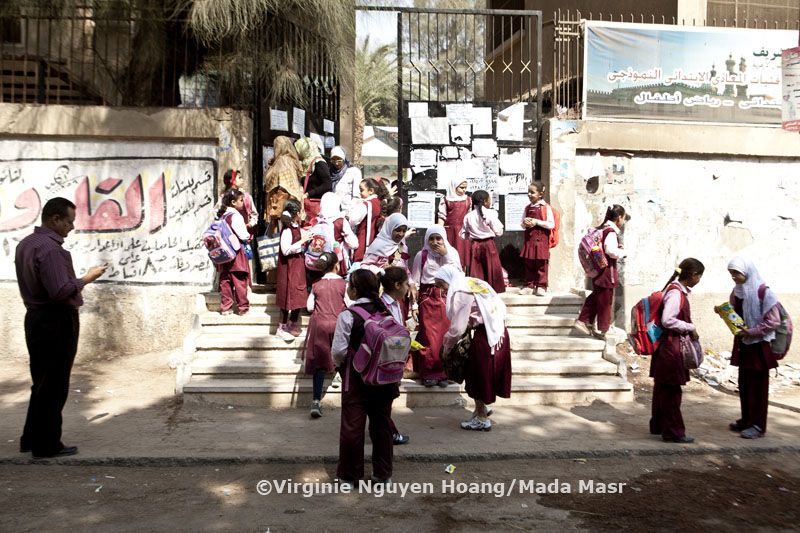
The government’s announcement raised questions about the feasibility of launching this scientific project in light of Egypt’s poor spending on education and scientific research, not only according to international standards, but also in regards to Egypt’s own Constitution.
The Constitution stipulates that the state allocates a proportion of its budget, at least 1 percent of gross national product (GNP) to scientific research, 2 percent to higher education, 4 percent to education, to be increased gradually until it is consistent with global averages.
However, the proposed budget submitted by the government to the parliament allocated LE2.3 billion to the Ministry of Higher Education and the State for Scientific Research, which amounts to only 0.023 percent of GNP.
Parliament’s Education and Scientific Research Committee had pointed out that the Constitution stipulates that the state allocate LE30 billion to scientific research. The committee, however, has found a loophole and amended the classification of expenses, adding the expenses of other sectors to education, higher education and scientific research, in a bid to pass the budget constitutionally.
Tarek Abdel Aal, head of the legal unit at the Egyptian Initiative for Personal Rights, said that this amendment is a “manipulation.”
According to Yasser Omar, member of the Parliament’s Planning and Budget Committee, the budget allocated to scientific research now totals over LE22 billion after the committee added expenditures.
“Scientific research centers expenditures amounted to LE7.76, including those not affiliated to the Scientific Research Ministry. The Knowledge Bank expenditures amounted to LE500 million, LE4.3 billion was spent on scientific research provisions, LE800 million on scientific research from other bodies, LE1.5 billion from general forums, LE6.7 billion from debt service interest, and LE451 million from public business sector,” he said.
Omar said that the committee added LE5.65 billion in “reserves” to the scientific research clause, recommending that spending on the new space agency is from either said reserves or from scientific research centers' expenditures.
A report by the Planning and Budget Committee had included a suggestion by the head of the Education and Scientific Research Committee, Gamal Sheiha, to allocate LE6 billion to launch a space agency. However, Sheiha told Mada Masr that he is not aware whether or not it had taken up his suggestion.
Around LE104 billion is allocated to education, according to the budget, which does not specify how much of that is allocated to higher education and education separately.
The report of the Parliament’s Planning and Budget Committee, however, includes suggested allocations from the government to the education sector of LE81 billion, and LE28 billion for higher education without clarifying the reason behind the discrepancy.
Akin to raising budget allocations to scientific research to comply with the Constitution, the parliamentary committee amended spending on the education and higher education sectors, adding expenditure provisions on cultural affairs at Al-Azhar totaling LE12.2 billion, LE125 million for student subscriptions, LE100 billion for academic scholarships from the Ministry of Social Solidarity, LE24 million for the National Authority to Ensure the Quality of Education, LE42.55 billion from debt service interest, all totaling LE136 billion – 4.9 percent of the GDP, rather than the original 2.84 percent.
The committee also amended higher education expenditures, for it to total LE50.3 billion, adding a portion from debt service interest, student subscriptions, scholarships, among others. It also requested adding LE5 billion to this budget, which would total LE55.3 billion — 2 percent of the GDP, as opposed to the original 0.98 percent.
Translated by Dalia Rabie
تقارير ذات صلة

Shifting from private to public school: From the frying pan into the fire
Those who can afford it get to buy the commodity and learn. Those who can’t, don’t”

With no new hires, teacher shortfall widens in government schools
A government freeze on new permanent contracts for public school teachers is in its seventeenth year
General budget approved despite apparent shortfall in spending on health, education
Successive cabinets have failed to hit the constitutionally mandated marks for health and education.
Your support is the only way to ensure independent, progressive journalism survives.
You have a right to access accurate information, be stimulated by innovative and nuanced reporting, and be moved by compelling storytelling. Subscribe now to become part of the growing community of members who help us maintain our editorial independence.
Join us