
Egypt’s cinematic gems: The Story of Tou
Toward the end of the 1980s and the beginning of the 1990s, the state's security apparatus unleashed its iron fist against a wave of religious extremism and terrorism. But as the media glorified security forces and anti-terrorism brigades, director Yehia al-Alamy and novelist Fathy Ghanem chose a path less travelled.
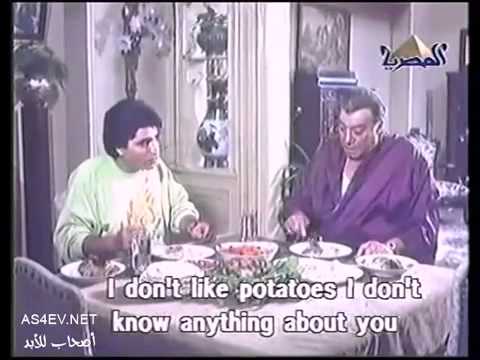
Hekayet Tou (The Story of Tou, 1989), which Ghanem wrote as a novel two years before, is a state television production about the son of a political prisoner tortured to death in an Egyptian prison. This youngish, strangely determined man, Tou (Mahmoud al-Gindy), meets his father's killer, notorious retired warden General Zohdy Ashour (Farid Shawky).
Tou, whose loss has made him resentful and bewildered, embarks on a love-hate-revenge saga with the sick and lonely general. An eerie childlike affection for his father's killer torments him, while the general is pestered by a crippling fear of his victim's son yet oddly compelled to try and make something of him.
The upper-class older man, who's still physically intimidating and clings on to his erstwhile power, passes time at an upscale Alexandrian sports club. The embittered college dropout, who's penniless, anti-political and hates policemen, passes time by hanging out with the club's rich kids.
Whether they meet coincidently or purposely we're not totally sure, but their short-lived, vindictive friendship is, inevitably, dramatically doomed.
The late journalist and novelist Ghanem, widely known for his novel Al-Ragol Alladhi Faqada Dhelloh (The Man Who Lost His Shadow, 1962), always wrote tales with a leftist bent. In an article in Akhbar al-Adab, Ghoneim's wife Zebeida Atta says The Story of Tou is inspired by the imprisonment of communist rebel Shohdy Attia, who with other leftist leaders was part of a “torture party” as he calls it, inside a prison under Gamal Abdel Nasser.
In The Story of Tou, Ghoneim dexterously shapes a young man not only torn between a desire for revenge and the impulse to survive, but between a leftist legacy and a present that's becoming more capitalistic by the minute.
Aside from rebellion and leftism, Ghanem was infatuated with the character of the journalist — being one himself. In The Man who Lost His Shadow, a journalist climbs up the professional and social ladder by betraying his old leftist colleagues. Ghanem used a similar character in Zeinab wal Arsh (Zeinab and the Thrown, 1980), which shed light on journalism in Egypt from 1952's July 23 revolution until 1973's October war. Yehia al-Alamy also took on that novel, making it into a TV series starring Kamal al-Shenawy and Soheir Ramzy.
In The Story of Tou, it's the character of Fouad Sallem, played in the film by Salah Zoulfikar, a retired Cairene journalist and novelist who in the solitude of the coastal city finds refuge from painful personal and political memories and the slow death of 1967, from which he never fully recovered.
In his novels Ghanem strayed from the herd of bootlickers, daring to point fingers and criticize in times of political propaganda and overrated patriotism. That may be why he did not get the accolades he deserved. He had immense human interest in the changes Egyptian society was going through and how people changed and adapted to them.
In The Story of Tou, Moneira (played by Shweikar in the film), a former aristocrat who turns smuggler to survive, constantly talks about the reasons for this shift. For some reason she knows Tou's mother but she's Zohdy's neighbor and he spends the night at hers sometimes. It's flippantly implied that Moneira is also a madam, but like many things in the film, that's a bit of a mystery.
Alamy, in his second collaboration with Ghanem, understands the depth of his characters and skillfully shows their many faces and details. Each reveals conflicting sentiments and characteristics, making them convincingly good, bad, loyal, introverted, extroverted, loving and hating.
Television movies, especially those produced by the Radio and Television Union, usually lack the glamor of cinema because of budget issues. The Story of Tou is no exception — fuzzy and alternately over and undersaturated, it's not visually spectacular, and the repetitively dramatic music sometimes accidentally verges on the comic. Yet the strong, angry storyline transcends these limitations and the director works with them creatively, resulting in clever sequences and very watchable performances of tricky characters with their strange contradictory emotions. Not to mention some remarkable 1980s outfits.

Amany Ali Shawky
Amany is a Lifestyle and Society Reporter with Mada. With 10 years in journalism and publishing, she has written for everything from news to culture, environment and fashion, street politics…
تقارير ذات صلة
Egypt’s Cinematic Gems: The Open Door
Ismail Fayed explores Henry Barakat’s adaptation of Latifa al-Zayat’s 'The Open Door'
Egypt’s Cinematic Gems: Love’s Last Story
Raafat al-Mihi’s third feature combines symbolism with an unflinching awareness of reality
Egypt’s cinematic gems: Sleepless Nights
Hany Khalifa's frank film broke the prudish "clean cinema" trend in 2003.
Your support is the only way to ensure independent, progressive journalism survives.
You have a right to access accurate information, be stimulated by innovative and nuanced reporting, and be moved by compelling storytelling. Subscribe now to become part of the growing community of members who help us maintain our editorial independence.
Join us