
Egypt’s new rights image met with skepticism in DC
After launching a new human rights strategy in response to years of stern rebuke from international organizations and governments as well as shifting geopolitical dynamics, Egypt and one of the key members of its public-facing “dialogue team” took their message to the heart of criticism: Washington DC.
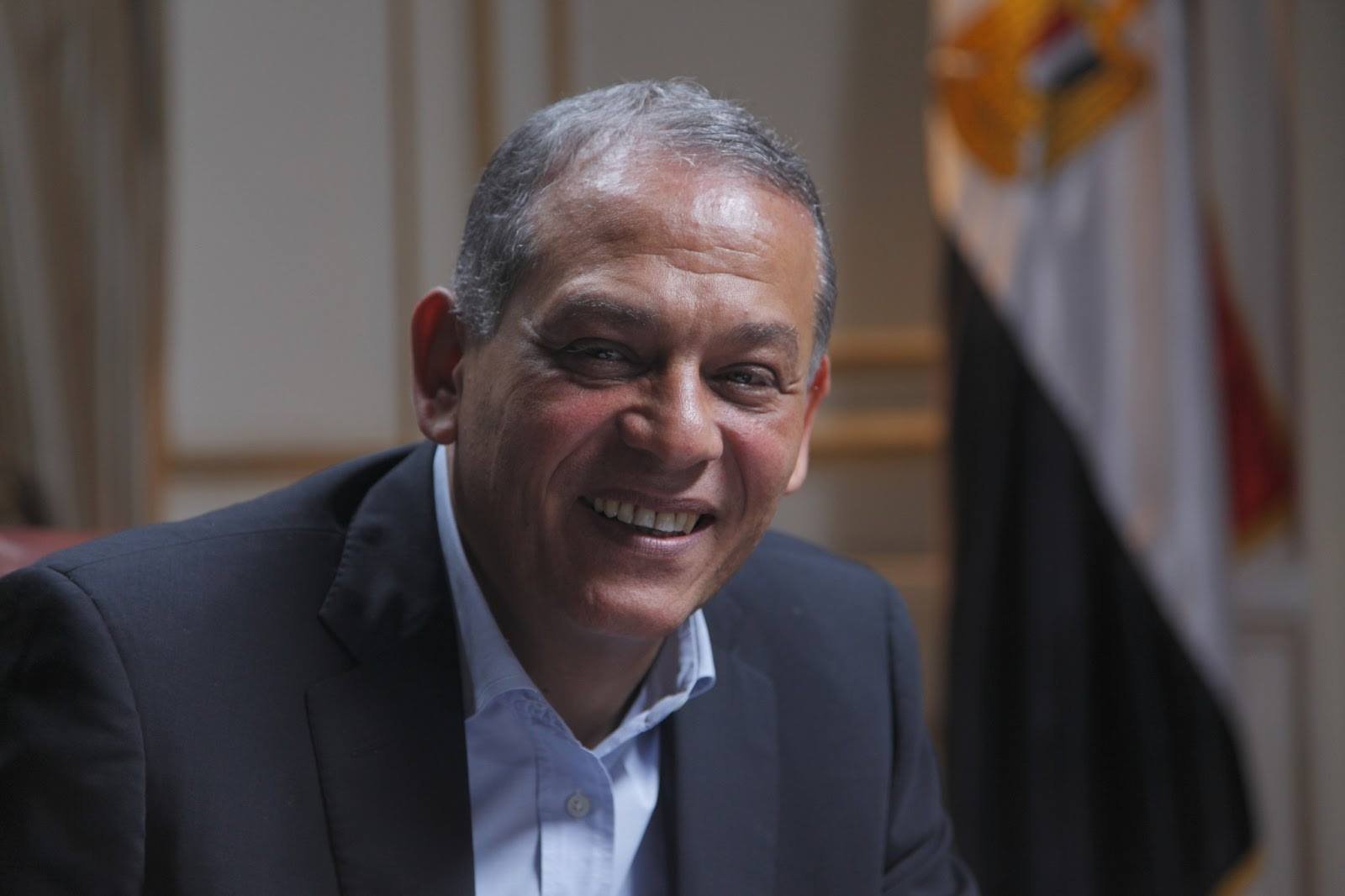
The response? More work must be done, Mohamed Anwar al-Sadat, head of the International Dialogue Group, a group that lobbies for the release of political prisoners, tells Mada Masr after returning from Washington, DC, where he led a delegation that held meetings in the US capital about the human rights situation in Egypt last week.
According to Sadat, the United States is continuing to insist that Egypt improve certain aspects of its human rights record before releasing US$130 million in aid that was withheld by the administration of President Joe Biden last month.
The International Dialogue Group delegation to DC included the new head of the National Council for Human Rights, Moushira Khattab, along with a number of parliamentarians from liberal and Islamist parties, who spent a week in DC, meeting with US officials including the US Assistant Secretary of State for Near East Affairs Yael Lempert, members of Congress, think tanks and Egyptian expatriates, including figures critical of the current government such as Mohamed Soltan, the son of Muslim Brotherhood member Salah Soltan, and an advocate for justice in the Fairmont Hotel rape case.
The visit was “as good as it could have been,” says Sadat, the head of the Reform and Development Party and a former member of Parliament, who described the discussions with all parties as characterized by frankness and clarity. “We did not come to whitewash the face of the Egyptian government, nor were we coming for a public relations trip for the government or as lawyers for the government.”
However, according to an Egyptian official briefed on the discussions, some of the meetings were beset by skepticism about the seriousness of Egypt’s commitment to achieving a leap in the field of rights and freedoms, with the launch of the human rights strategy being seen as essentially “part of a public relations campaign.”
This sentiment was echoed by sources who attended some of the meetings and spoke to Mada Masr on condition of anonymity, who say that they focused on putting an end to the widespread use of remand detention — an issue that has become a lightning rod for criticism — in Egypt due to the lack of hope for deeper structural changes to the overall human rights situation.
“What’s positive about this meeting is that it happened in the first place and that exchanges were quite frank and honest,” says Michele Dunne, a senior fellow at the Carnegie Endowment for International Peace and a former State Department official who attended the meetings. “But I don’t think that anyone who was involved is extremely optimistic of the outcomes in terms of the overall human rights situation in Egypt.”
According to Sadat, Egyptian expats in the US put forward several demands in their meetings with the dialogue group, including the release of imprisoned journalists; the rolling back of website censorship; restricting the use of the death penalty and reconsidering death sentences already handed down; and moving to address the cases of detainees held in remand detention and people forcibly disappeared. The attendees also called on the Egyptian government to amend laws limiting the construction of churches and abolish an article in the Penal Code pertaining to contempt for religion, as well as to issue a law to protect whistleblowers and witnesses, especially in light of the prosecution of witnesses in the Fairmont rape case, and to stop prosecuting trans people, Sadat adds.
Executive Director of the Tahrir Institute for Middle East Policy Ramy Yaacoub tells Mada Masr that the dialogue group’s initiative and the meetings it held in Washington are “the beginning of a process that will bear fruit in the near future."
While Sadat emphasized that the visit did not involve coordination with the Egyptian Embassy in Washington DC in arranging, organizing or attending of the group’s meetings, a second Egyptian official tells Mada Masr that Egyptian authorities are counting on the visit to encourage the US administration to hold a meeting between President Abdel Fattah al-Sisi and Biden during the United Nations on the sidelines of the COP26 scheduled to take place in Glasgow between October 31 and November 12. The source says that, if a meeting is not arranged, Sisi may not attend the climate change conference in person and opt to deliver a speech via video conference while sending the prime minister to attend instead.
And even though authorities may have specific intentions for the meeting, Sadat did return to Cairo with messages from his DC meetings for all state institutions, he tells Mada Masr. US officials, Sadat says, followed the launch of the National Human Rights Strategy and were waiting for its provisions to be carried out on the ground.
Last month, the Biden administration announced it would impose new human-rights-related conditions on $130 million of the around $1.3 billion in assistance the United States provides to Egypt annually. According to the Washington Post, those conditions include ending prosecutions in Case 173, which has targeted NGOs and human rights advocates, and either drop charges or release 16 individuals whose names have been raised by US officials with the Egyptian government.
While the identities of the 16 individuals have not been reported, the first Egyptian official said that State Department officials and members of Congress questioned the delegation about a number of specific cases, including Abdel Moneim Aboeul Fotouh and Alaa Abd El Fattah, and about the government's strategy of dealing with political opposition.
According to Sadat, he has communicated to state institutions that the release of the withheld aid will be contingent on the US State Department’s assessment that there is a response from the Egyptian side to the demands for democratic practices on the ground.
Dunne argues that this focus on democratic practices and human rights comes amid a wider shift from the new US administration to center its geopolitical strategy on the containment of China, a country that has had a notable role in supplying Egypt’s development and healthcare demands, particularly during the pandemic.
“The Biden administration is far more outspoken about US support for human rights worldwide than any other president, arguably since George W. Bush. Human rights is central to Biden’s policy,” Dunne says. This connects to the US’s pivot toward Asia and China, adds Dunne, in that the framing of how the US will deal with the rising Chinese threat or influence in the world is that it is a country being framed as an autocracy while the US is championing democracy in its policy.
This matters for Egypt, according to Dunne, insofar as there is increasing discomfort within the Biden administration that Egypt, as the second largest recipient of aid from the US, is also one of the worst in terms of its human rights record in the region and in the world.


تقارير ذات صلة

Proposed formulas for new US military Red Sea foothold not acceptable to Egypt
Since March 15, the US has carried out nearly daily strikes on targets in Yemen
Q&A | US Secretary of State Blinken on Egypt’s economy, human rights and Israel-Palestine
Mada Masr sat down with the US secretary of state during his 2-day visit to Cairo.
US push for new regional cooperation sets off Gulf jockeying, MBS eyes Egypt-Turkey rapprochement, managing Brotherhood to bolster position
Bin Salman hopes to be viewed by the US as “the balance-maker” in guaranteeing regional alliances
Your support is the only way to ensure independent, progressive journalism survives.
You have a right to access accurate information, be stimulated by innovative and nuanced reporting, and be moved by compelling storytelling. Subscribe now to become part of the growing community of members who help us maintain our editorial independence.
Join us