
Egypt, IMF agree to smaller loan after sticking points prove political nonstarters. But will it be enough?
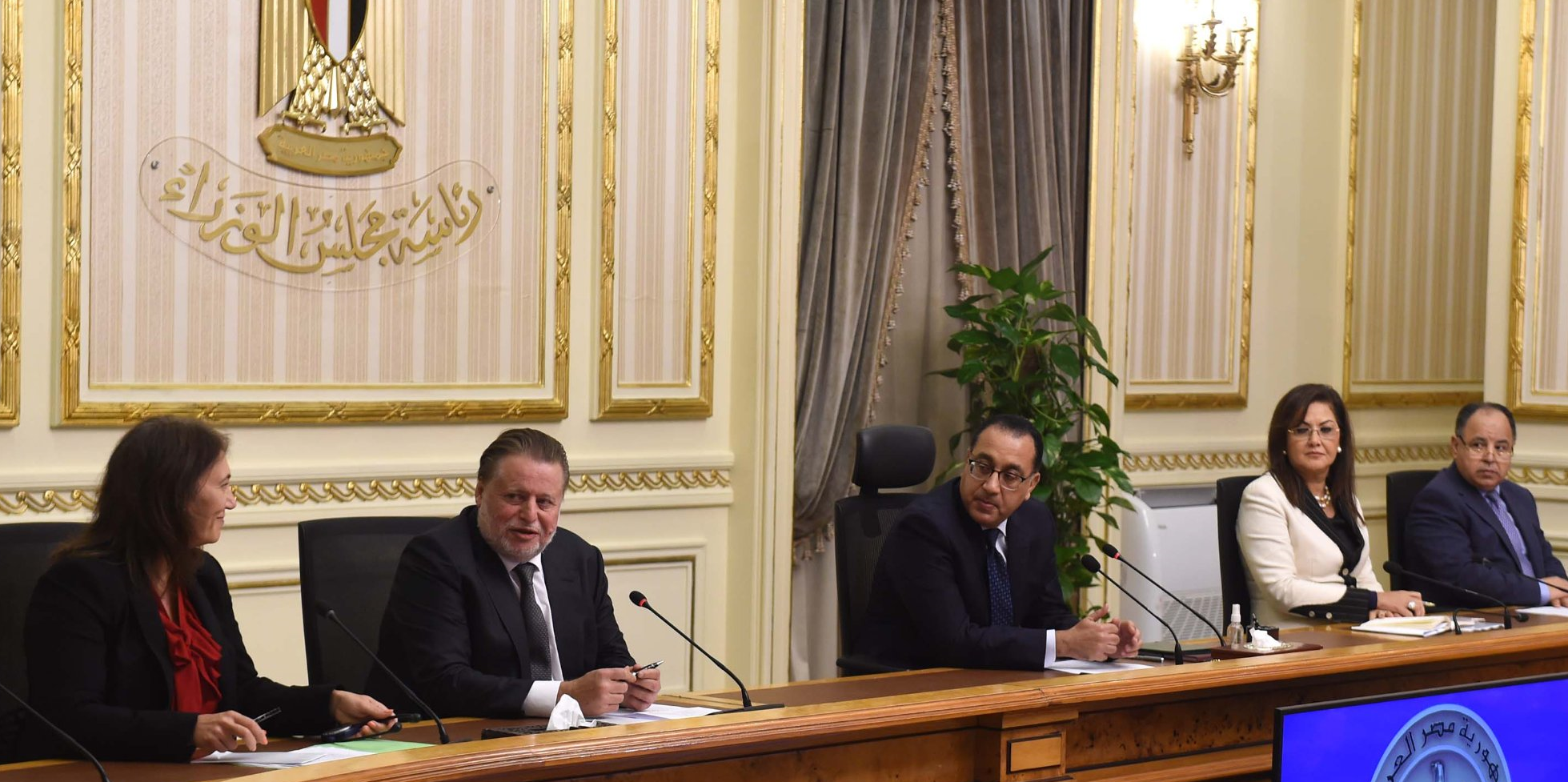
Following months of anticipation and negotiations, Egypt and the International Monetary Fund announced that the two sides reached a preliminary agreement on a loan package of US$3 billion to be disbursed over four years.
The IMF’s announcement comes more than a week after the Egyptian side declared an agreement had been reached on the technical level following the close of the annual IMF meetings in Washington DC on October 16. However, at the time, the fund only stated that the two sides held “very productive in-person discussions” that made “substantial progress on all policies,” and that both sides agreed to “finalize their work to reach a Staff-Level Agreement very soon.”
Egypt’s rush to unilaterally announce the agreement was due to what the Egyptian side described as “the need to announce results.” Specifically, there were presidential directives to close the loan deal before the Egyptian Economic Conference 2022, a source informed of the IMF negotiations told Mada Masr days earlier.
The Cabinet statement said closing the IMF deal will also allow the government to acquire an additional financing package of $5 billion from international and regional institutions, in addition to opening negotiations with the fund for another $1 billion as part of an alternative program. In total, Egypt is aiming to acquire $9 billion out of the deal.
This approach seems to compensate for Egypt’s inability to get the whole amount from the IMF itself, despite the initial desire to do so. According to various sources who spoke to Mada Masr over the past months, Egypt initially requested a loan of US$12 billion, but the negotiation stumbled as the two sides could not agree on the details of some of the conditions of the loan, leading to the loan amount being reduced.
In July, House of Representatives Planning and Budget Committee chair Fakhry al-Fiqy estimated the potential loan to be about US$7 billion, which was the only estimate announced by an official during the negotiations.
As recently as Egypt’s October 16 declaration that the deal had been finalized, the two sides still remained far apart on exactly what the final figure would be for the loan. On one hand, Egypt could introduce more far-reaching reforms and secure a larger loan, or it could adopt less significant ones and take a smaller amount, the source close to the talks told Mada Masr.
The main conditions that the IMF insisted on for a higher value loan were a flexible, rather than a managed exchange rate, in addition to the state exiting several economic sectors and minimizing subsidies. While Egypt did move to a free exchange rate a few hours before the fund announced the loan agreement today, it objected to the other conditions, causing the loan amount to drop to US$3 billion only.
However, according to sources that have spoken to Mada Masr, the other two conditions — the state’s exit from the economy and the lifting of subsidies — were politically unpalatable. But the reduced-value loan puts Egypt in another dilemma. Had Egypt obtained a substantial amount from the fund, it would constitute a “certificate of confidence” in the country’s economy that would have helped Egypt obtain loans and financing from other funding sources. The low-value loan, however, is insufficient to represent this kind of certification, according to analysts, meaning the new loan will act merely to slow down the current crisis, rather than to solve it.
Terms of the loan
The final phase of the negotiations began in early October and focused on a plan for lowering debt as a percentage of gross domestic product, expanding social security networks and increasing exchange rate flexibility to allow Egypt to rebuild its foreign exchange reserves gradually and sustainably. The negotiations continued until early this morning, when the government announced the loan agreement, which awaits final approval by the IMF’s executive board, pending its expected discussion in December.
The new loan comes as part of the IMF’s Extended Fund Facility (EFF) program, designed to address serious medium-term problems in a country’s balance of payments due to structural weaknesses, according to the IMF’s definition of this type of loan. Egypt and the fund agreed to an EFF loan in 2016, which hastened a government-led austerity program in exchange for $12 billion.
As for the funds Egypt announced it will receive through international institutions or its regional partners, they are intended to work on preserving economic stability, particularly in the face of the indirect effects of the Ukraine crisis, as well as assisting private-sector-led growth and job creation.
According to the source close to the negotiations, the $5 billion Egypt will receive from development partners will come from the World Bank, the African Development Bank, in addition to the Asian Development Bank.
In 2020, amid the COVID-19 crisis, Egypt took $5.2 billion from the fund in two loans through other mechanisms. One was through the Standby Credit Facility, for which the repayment period cannot exceed five years, and the other through the Rapid Financing Instrument, which is granted in exceptional situations.
According to the new program, the government’s fiscal policy should focus on reducing overall state debt and financing needs through improving the efficiency of the tax system.
Difficult political pills to swallow
But Egypt's refusal to acquiesce to two conditions, according to the source close to the negotiations, ultimately reduced the final value of the loan. The first of these conditions was that the government make a comprehensive exit from economic activity.
The newly announced loan program is intended to “unleash private sector growth,” according to the IMF’s Thursday statement, by “reducing the state footprint.”
Since the outset of the 2016 loan, the IMF has demanded that Egypt undertake the privatization of state-owned companies to reduce the government’s intervention in the economy. Egypt’s answer to these initial policy recommendations consisted of a stake sale program: a commitment that it would undertake public share sales in 23 companies in which the state holds a majority share.
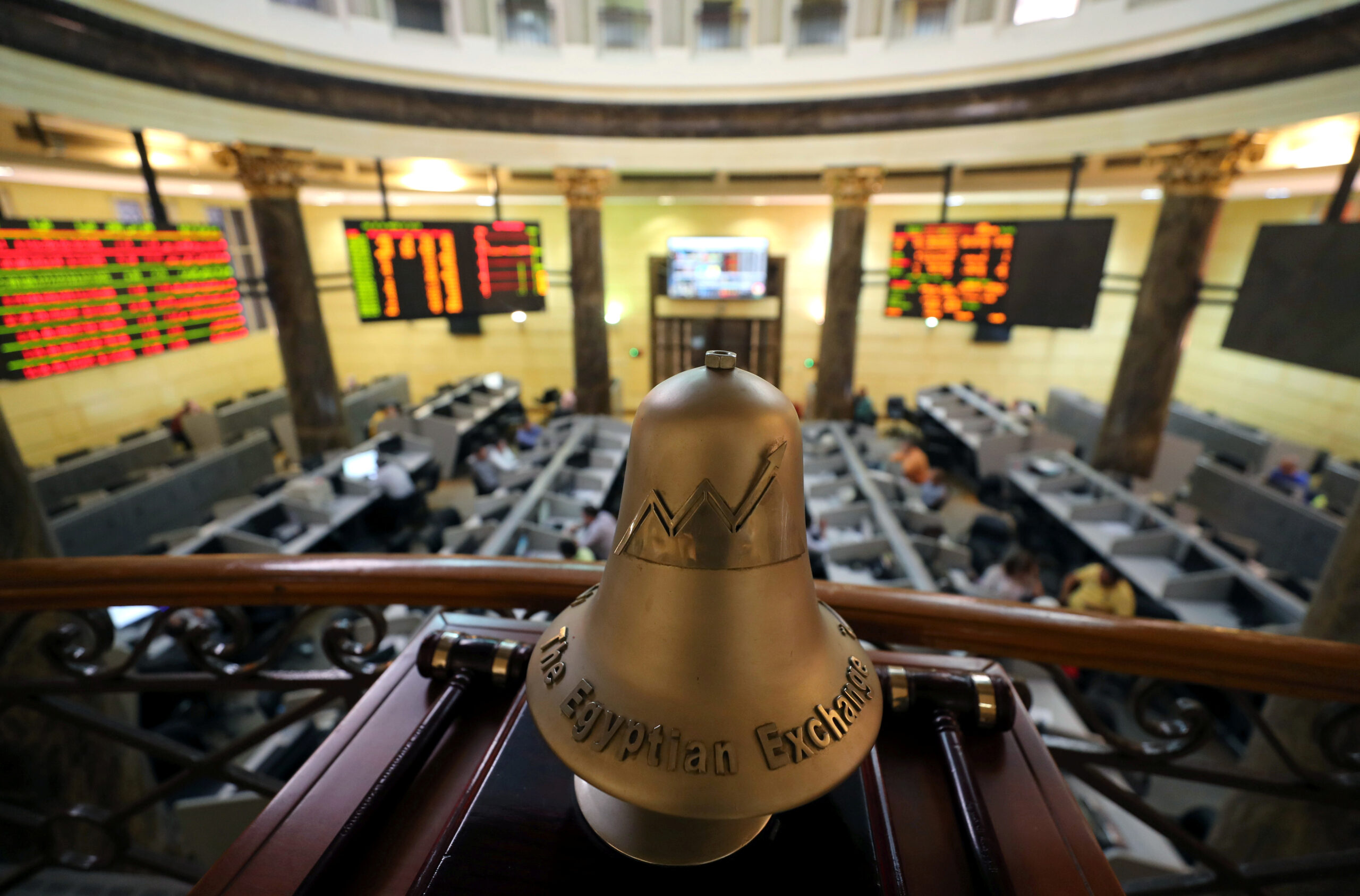
The program has faltered ever since it was first rolled out in 2018. Shares in the Eastern Tobacco Company and in e-Finance were offered on the Egyptian Exchange, while other planned sales were delayed or canceled. And shares in some companies that were originally chalked for the privatization program — such as Abu Kir Fertilizers and Chemical Industries, Misr Fertilizers Production Company, Alexandria Container and Cargo Handling Company and the Commercial International Bank — reappeared as part of a package of sell-offs to Saudi Arabia, the United Arab Emirates and Qatar worth billions over the course of this year.
But since 2020, when Egypt agreed to a Stand By Agreement Facility with the IMF, the fund’s policy recommendations regarding privatization have extended beyond the remit of specific companies, to entail a request from the IMF that the Egyptian government identify entire economic sectors from which the state should make a complete exit to “allow for private sector-led productivity gains.”
Accordingly, Egypt’s government laid out a draft plan in May this year to withdraw its arm from select sectors of the economy, including large swaths of agricultural and livestock production, construction industries and hospitality.
In September, news emerged that shares in six military-owned companies, including the Wataniya chain of fuel stations, the Safi bottled water company, and National Company For Food Industry, are chalked to undergo managed sales to “strategic investors,” among them investors in the Gulf, via the Sovereign Fund of Egypt, officials have said.
Egypt’s reluctance since 2016 to withdraw from the national economy is not without cause. Official statements regarding the delay or cancellation of share sales in specific companies noted market fluctuations and lack of liquidity in the stock market that meant the 23-company program would fail to reap the LE80 billion in target revenue. More managed sales, on the other hand, while preserving greater control over terms and value than public sales on the stock market, entail a separate set of political considerations.
For example, an attempt this summer by UAE majority-owned real estate firm SODIC to purchase 100 percent of the state-controlled Madinet Nasr for Housing and Development Company was aborted, a government source and two other sources with knowledge of the deal told Mada Masr at the time, due to security considerations associated with expanding Emirati investment in Egypt’s east.
Nonetheless, given the scale of the economic crisis, decision makers in the administration were considering farther-reaching interventions right down to the wire.
However, the political calculus regarding the sale of military companies was complicated by the fact that the Armed Forces frowned upon such deals, according to two government officials and a political and a security source. In the end, it was decided to shelve any decision on the question of rearticulating the role of the state and the Armed Forces in the economy.
Egypt was also unable to commit to reducing its subsidy bill, said sources with insight into this year’s loan negotiations who noted that the government feared the potential social and political implications of reducing the support available to the public while already sky-high rates of inflation are convulsing the domestic economy.
Drawing back subsidies — a policy recommendation that the IMF likewise billed as part of its 2016 loan program with Egypt — has long been on the political reform agenda.
As part of structural adjustments undertaken beginning in 2016, major cuts were made to government spending on fuel and electricity, while tens of thousands of beneficiaries were removed from social support programs.
In 2020, the government reduced the regulation weight of a loaf of subsidized bread for the first time since the 1980s, while in 2021, the president and the supply minister stated publicly that the time was ripe to cut back bread subsidies, which reduce the price-per-loaf at which around two thirds of the population purchase the food staple.
Yet with rising economic instability rippling through the global economy in the wake of Russia’s invasion of Ukraine, the government announced in August that it would not touch the cost of subsidized bread. A $500 million World Bank loan to support food security likewise specified that the bread subsidy system should remain unchanged in order to support the most vulnerable households nationwide.
Regardless, previous rounds of subsidy cuts have placed severe pressure on the public. A scheduled hike to electricity rates was postponed in the current year, given that rates of inflation are already at a four-year high. But in comparison to 2015-16, when public spending on electricity subsidies represented LE28 billion in the national budget, public investment in reducing household energy bills was reduced to zero in the current year’s spending program.
The government fuel pricing committee likewise increased rates and reduced subsidies six consecutive times in its quarterly pricing meetings, representing a price increase for benzene of 28 percent, 15 percent for diesel and 28 percent for mazut over the past year and a half, before the committee finally decided to hold rates steady in the latest quarterly review this month.
And while household subsidy programs continue to be paid out at the same rate, the LE50 that the government has spent per person since 2017 is now worth substantially less than it was four years ago due to domestic inflation.
An economic analyst with knowledge of the negotiations between Egypt and the IMF toward this year’s loan agreement noted that, since it is standard for the IMF to take an approach to decreasing nations’ budget deficits by reducing spending, it often recommends policy programs that include austerity measures and subsidy-related conditionality.
But in the Thursday IMF announcement, subsidy cuts were notably absent. Instead, the IMF noted that, “social protection will continue to be strengthened including through the temporary extension of the emergency support to ration card holders,” in reference to a September decision to provide the beneficiaries of social support programs with an additional LE100 per household member per month, a measure that was extended until June 2023 on Wednesday. The Thursday announcement also referenced “measures to protect the purchasing power of vulnerable wage earners and pensioners.”
That there are no measures related to subsidies with the current EFF loan granted to Egypt is not common, said the economic analyst. A source close to the IMF who spoke to Mada Masr on condition of anonymity said that during this year’s talks toward a loan agreement, Egypt raised the issue of social unrest in response to the question of reducing subsidies, as well as pointing to other factors, such as surcharges and climate debt that make it hard to implement budget cuts of that nature.
Will it be enough? What comes next?
By making political compromises, however, the Egyptian government will now continue to face hurdles in closing its financing gap for the budget and meeting urgent debt servicing needs.
How will Egypt be able to meet these needs? One way will be a return to hot money, which analysts and political sources say is likely to be a pillar of the next course of action.
Former assistant undersecretary of the central bank and lecturer at the American University in Cairo, Hany Genena tells Mada Masr that he expects the government to resort in the coming days to borrowing from foreign debt markets through offerings for bonds and treasury bills, whether in Egyptian or foreign currency, in what is considered a return to hot money, of which about $25 billion fled from Egypt in less than a month.
At the beginning of the year, Finance Minister Mohamed Maiet said that the government had learned its lesson and would not rely on hot money again, given its volatility and the unfavorable global monetary conditions with the US Federal Reserve raising interest rates in an attempt to rein in global inflation.
An informed political source agrees with Genena, saying that the amount of money in Thursday’s loan announcement is “insignificant,” but that there is hope it will be a “certificate of confidence” that will allow for hot money to return to Egypt.
“They are not sure they will get hot money, but they are not sure they will get it due to many things, including the disturbing political projection,” the political source says.
Beside that, Genena expects the three state-owned banks (National Bank of Egypt, Banque Misr and Banque du Caire) to release new annual high-yield certificates, to join the 16 and 17.25 percent certificates they already offer, in order to bring in as much liquidity as possible. This may increase the banks’ foreign currency reserves as well as customer savings if the banks offer an attractive yield rate surpassing the inflation levels expected for the coming period, which will naturally go beyond 17.25 percent, he says.
The state will also have to continue forward with the carefully managed sale of certain assets in a way that does not rock the boat.
The chair of Egypt’s sovereign fund Ayman Soliman told Al-Borsa on Wednesday that the fund will announce the companies to be included in the pre-IPO fund on the Egyptian Exchange after the COP27 climate conference, saying that he expects the full amount of the offering to come in at LE6 billion.
Meanwhile, the government will also have to find ways to deal with the plummeting value of the pound and its downstream social effects, as well as the future problems that ballooning debt will bring.
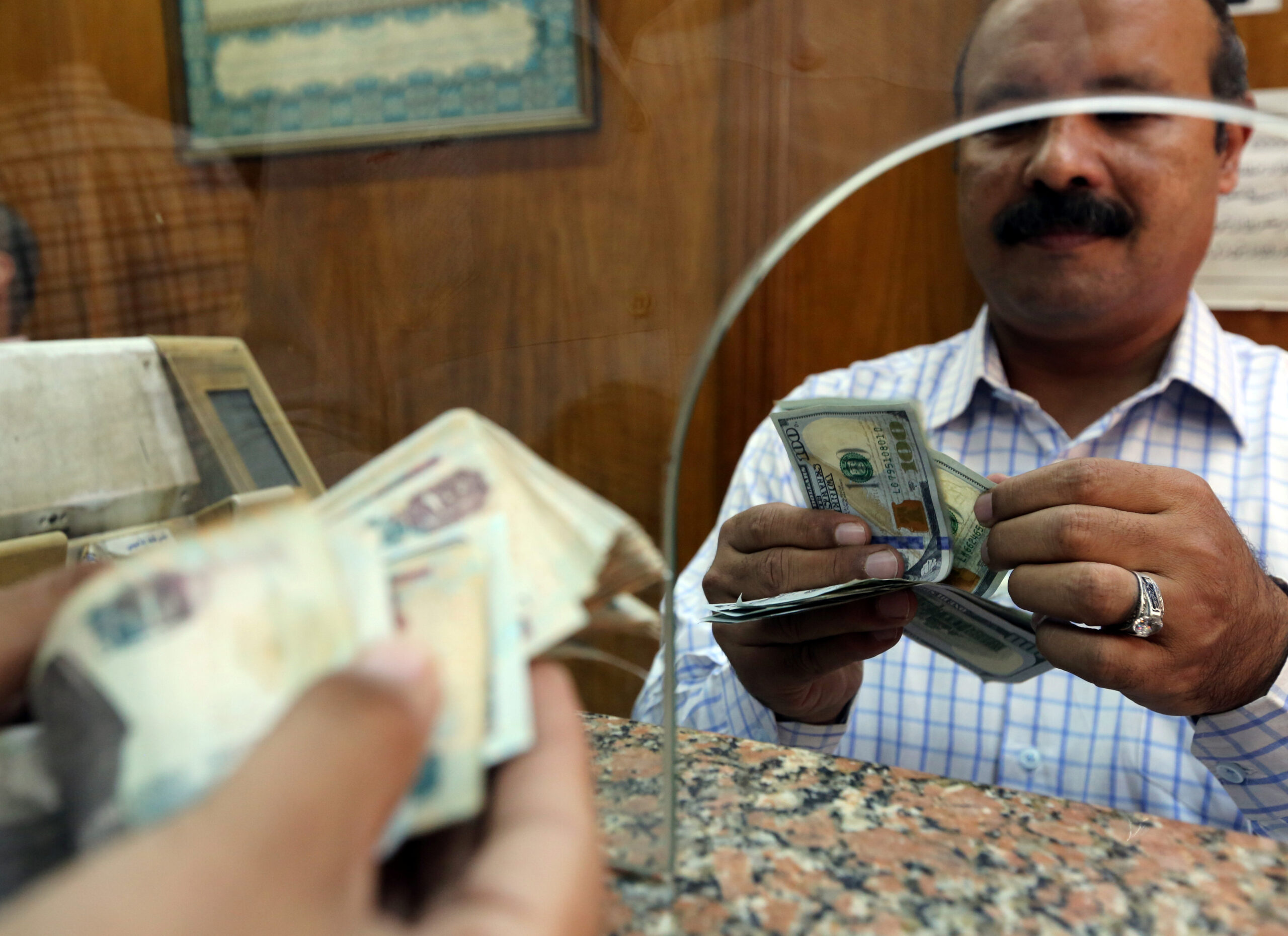
Within a few hours of the decision to float the exchange rate, the value of the pound to the US dollar dropped by over 15 percent to reach LE23 for US$1.
Genena tells Mada Masr that the pound’s drop against the US dollar is natural with the central bank leaving the market subject to the mechanisms of supply and demand, which may push the pound as low as LE25 to US$1 in the coming period, before rising again when the market settles. “The market was really thirsty, so it had to receive a shock in what is called ‘overshooting’ of the price of the dollar, after which things will settle and the pound will have its actual value,” Genena says.
The loan will also surely add to the din of voices within the government and the economic analyst community who are worried about rising debt.
Research institute Trading Economics had expected Egypt's external debt to grow from $155 billion by the end of June to reach $190 billion by the end of the year, $230 billion during next year, and US$260 billion in 2024.
Will the additional debt brought on by Thursday’s decision allow Egypt to solve its underlying economic problems?
For Hesham Hamdy, a financial analyst at an investment company, the loan is no more than momentary pain relief, as long as the balance of Egypt’s imports against its meager rate of exports remains fundamentally off kilter.

تقارير ذات صلة
How will the Israel-Iran war affect the Egyptian economy?
The Egyptian economy continues to tremble with uncertainty in the face of the widening regional war escalated when Israel attacked Iran on Friday night. By the end of Sunday’s trading…
New law to regulate state ownership: Pushing through the IMF review with the same old recipe
Sources say the draft state ownership law aims to appease the IMF
A day afloat
Egypt will be getting another US$5 billion in loans from the International Monetary Fund as an increase to the 2022 $3 billion loan, IMF representative in Egypt Ivanna Vladkova Hollar…
Your support is the only way to ensure independent, progressive journalism survives.
You have a right to access accurate information, be stimulated by innovative and nuanced reporting, and be moved by compelling storytelling. Subscribe now to become part of the growing community of members who help us maintain our editorial independence.
Join us