

Egypt at COP26: What shapes Egypt’s agenda in fraught global climate talks?
An Egyptian delegation is in Glasgow with President Abdel Fattah al-Sisi at its head to participate in this year’s United Nations Climate Change Conference, COP26, which launched on Sunday with representatives of 197 countries coming together for 12 days to discuss global action on climate change.
A primary aim of the climate talks is to secure concrete commitments on targets to reduce emissions, ensure sufficient adaptation to the effects of climate change and to hit funding targets set in the 2015 Paris Agreement, though the prospect that the talks will succeed remains in doubt. Meanwhile, a recent UN Emissions Gap Report shows that current contributions and commitments by nations to reduce emissions aren’t nearly enough to avert "catastrophic changes in the Earth’s climate."
In his speech at the conference on Monday, Sisi headlined Egypt’s efforts to increase renewable energy sources to represent 42 percent of Egypt’s energy mix by 2035, as well as plans to expand “clean transportation” projects, including ongoing work on the metro, rail and electric vehicle networks. Sisi also focused on what he called the “gap between the available funding and the size of the actual needs of developing countries” to adhere to their commitments and called for a more ambitious funding goal. He concluded by saying Egypt looks forward to hosting COP27.
Current and former Egyptian environment officials likewise told Mada Masr that Egypt’s main aim at this year's conference negotiations will be to push for developed countries to commit to climate financing targets, expanding on its priorities in doing so.
Mohamed Nasr, a Foreign Ministry official who is a member of Egypt's delegation, told Mada Masr from Glasgow that the talks will comprise 70 actionable items on the agenda for talks over two weeks. Yet Nasr said the real focus would be in negotiations over how to determine different countries’ obligations to the legally binding aims set out in the 2015 Paris Agreement.
From the perspective of Egypt and for the African Group of Negotiators in which it participates, the most important part of these obligations is getting developed countries to supply the climate financing needed to achieve those aims, according to Nasr.
During the 2009 UN climate change summit in Copenhagen, developed countries pledged to increase climate financing to developing nations to $100 billion each year by 2020 to help them to those ends. Yet, climate finance barely reached $80 billion in 2019, and a recent report from Oxfam suggested the $100 billion target is unlikely to be met, even by 2025.
The continuing effects of the COVID-19 pandemic on the economy and the ongoing potential for a global economic depression have contributed to developed countries not meeting their financing commitments for 2020, former Environment Minister Khaled Fahmy told Mada Masr. Meanwhile, a former climate adaptation consultant who participated with the Arab Group of Negotiators in previous iterations of the conference and spoke to Mada Masr on condition of anonymity, said that the pandemic-related economic downturn has also contributed to Egypt requiring more than the $73 million it staked out in its 2015 submission to the United Nations Framework Convention on Climate Change (UNFCCC) to achieve the Paris Agreement goals, a sum it has not yet received.
A UN report further suggests developed countries are overreporting how much they have contributed by as much as $3–4 billion each year. In some instances, Fahmy added, developed countries “have reworked the statements for the aid they already deliver to include stamping existing aid as climate aid without actually increasing the amount.”
To meet the climate funding needs of developing countries, Egypt will be among the countries pushing for a new funding goal set at least at US$1 trillion per year, Nasr told Mada Masr.
Nasr is also a member of the UNFCCC Standing Committee on Finance, whose latest assessment suggests that developing countries need close to US$6 trillion by 2030 to finance less than half of the climate actions listed in the nationally determined contributions they submit to the UN to lay out their mitigation and adaptation plans, far surpassing previous requirements.
A major challenge is to get countries to commit to definite financing plans, instead of rhetorical pledges, Nasr said, and to push for financing to come in the form of grants or soft loans instead of regular loans or commercial investments, since many developing countries are already saddled with large debts and cannot take on additional loans.
Despite the fact that Egypt registered among the top 15 countries with the fastest increasing CO2 emissions in 2019 and faces substantial issues as a result of air pollution, including health costs equivalent to around 1.4 percent of GDP, the country’s emissions and adaptation targets remain secondary to its demands for funding.
Another key target of this year’s climate conference is to set rules on a global carbon exchange, but the former environment minister suggested that the disincentives for carbon emissions being discussed at present would be actively damaging to developing countries.
Carbon pricing for example, he said, would instead only work to increase production costs for developing countries, which cannot afford the premium that carbon pricing would place on their industry and exports.
Egypt’s energy mix currently relies largely on natural gas and oil as well as a persistent usage of coal, and requires comprehensive upgrades to reduce emissions and their impact on the environment, even with its current target of pushing the contribution of renewables to the energy mix up to 42 percent by 2035.

“All of this requires huge investments,” said Nasr, “and these huge investments cannot be borne by developing countries alone, so we are currently negotiating how developing countries can get the support they need to implement the measures they can take to contribute to reducing emissions and dealing with climate impacts.”
In the absence of sufficient funding, Egypt’s environmentally oriented projects are delimited by the funds on offer, leading to a focus on infrastructural projects to alter road patterns and the transport system.
The globally defined target to switch from gasoline to electric-powered cars, for example, finds a local iteration in Egypt’s markets, where the Public Enterprise Ministry’s El Nasr Automotive Manufacturing Company is working with China’s Dongfeng Motor Corporation to manufacture E70 electric cars locally starting in mid-2022.
Yet, for Christian Henderson, a lecturer and scholar of political economy and development in the Middle East and North Africa at Leiden University, the focus on energy technologies, while important, is a symptom of a broader issue within the climate policy discourse. It is almost exclusively discussed as an “investment opportunity” or channel for surplus global capital, said Henderson, a framing that reduces the remit of the talks to a kind of “techno-politics” that precludes much-needed discussion around the more fundamental question of how political economy determines our relationship to the ecosystem.
The former environment minister likewise identified limitations within the current framework for talks. “It's developed countries that could ultimately benefit from selling [green] technologies if they seek to export them,” Fahmy told Mada Masr, arguing that advanced economies should commit to releasing the patents for green technologies to developing countries if they are serious about implementing any change.
Such a seismic shift, however, appears to be far beyond the horizons of COP26, with major contributors to emissions both regionally and globally such as China, Japan, Australia, Saudi Arabia and Brazil all apparently still pushing back against key principles of the talks such as the importance of moving away from fossil fuels and the advantages of a plant-based diet. Meanwhile, France and the United States pushed over the weekend for major energy-producing countries such as Russia and the OPEC states to boost production at the G20.
In the Middle East, Saudi Arabia has sought to position itself as a regional climate leader, hosting the first Middle East Green Initiative this October and recently releasing ostensibly the region’s most ambitious plan for net-zero carbon emissions by 2060. Yet the kingdom came under criticism in the run-up to the conference in Glasgow after a leaked paper showed it had pushed for scientists to renege on their conclusion that countries should focus “on rapidly shifting to zero-carbon sources and actively phasing out fossil fuels.”
The former adaptation consultant who participated with the Arab Group of Negotiators in several earlier rounds of the climate conference noted that to an extent, Egypt’s ability to set its own climate agenda is tied to the aims of regional actors. If there is an unwillingness to commit to certain principles within regional groups, they said, it’s hard for any of the member states to locate their own targets substantially outside of that framework.
تقارير ذات صلة
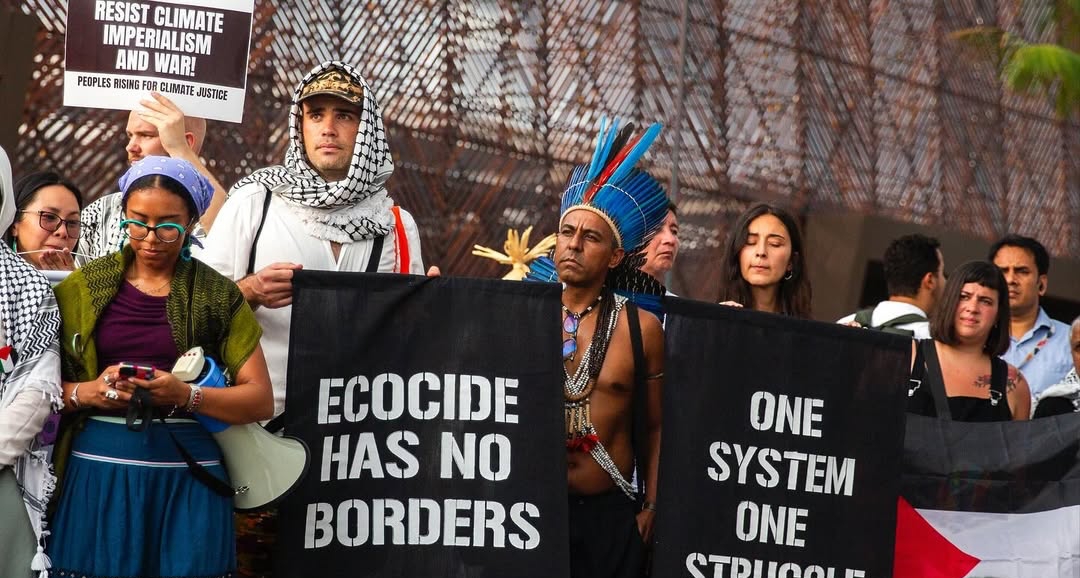
Climate goals flounder in headwind from militarization, competition, AI
COP30 kicked off in Belem, Brazil earlier this week. Delegates from 200 countries are attending. The Climate Action Tracker report released on November 13 shows that the planet is on…
Cashing in on greenwashing? Egyptian solar companies sell carbon certificates to Global North
Some note that carbon trading does little to reduce the net production of harmful emissions.
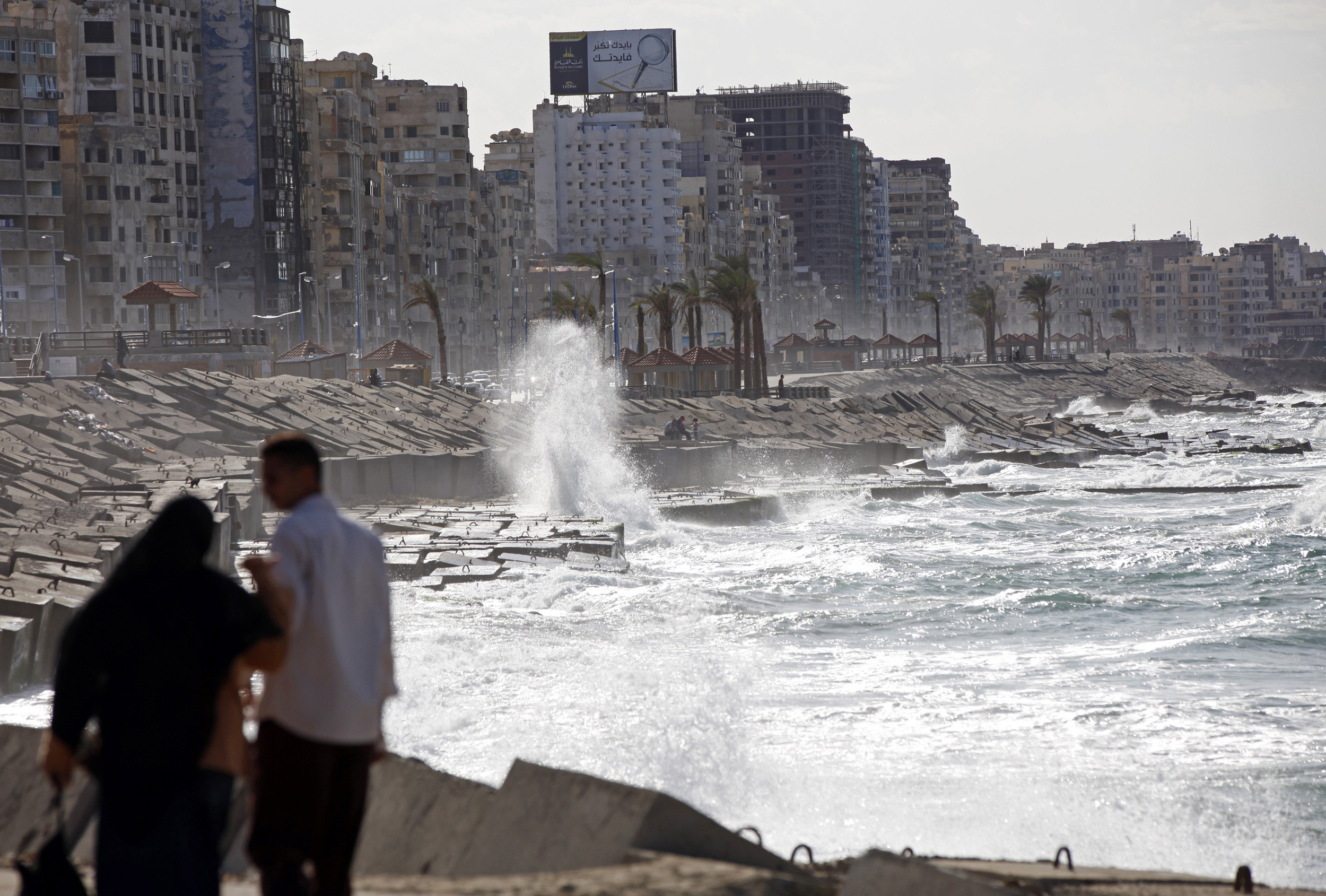
As IPCC report shows rising global south emissions, environment expert points to historical responsibility of developed nations
Mitigation is not a priority for Egypt, and Africa in general
Your support is the only way to ensure independent, progressive journalism survives.
You have a right to access accurate information, be stimulated by innovative and nuanced reporting, and be moved by compelling storytelling. Subscribe now to become part of the growing community of members who help us maintain our editorial independence.
Join us