
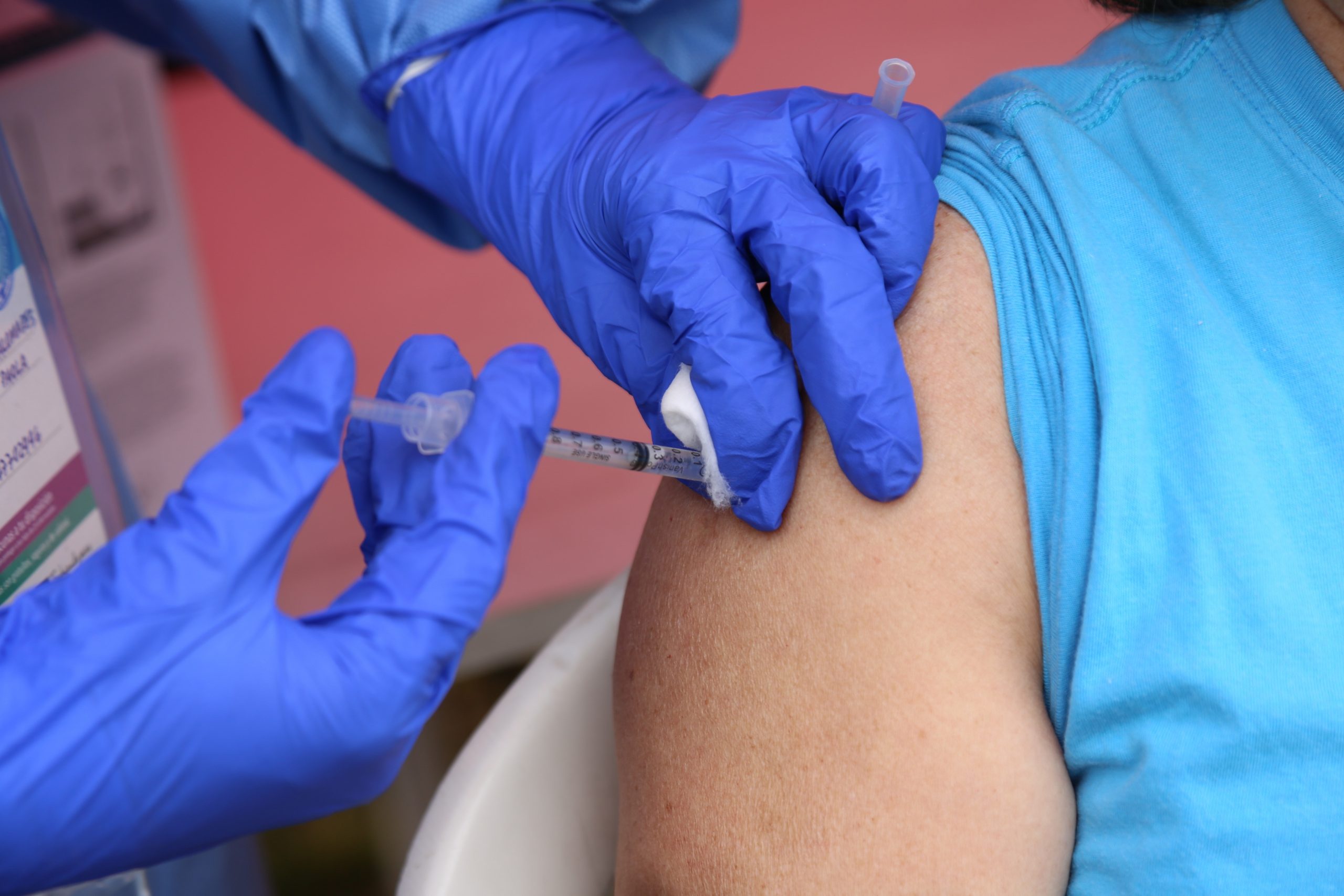
Doctors in Egypt voice concerns over Chinese vaccine, citing lack of transparency
Citing a lack of transparency, doctors and medical professionals in Egypt are voicing concerns about the use of a Chinese coronavirus vaccine that is slated to be the first administered to Egyptians.
Egypt received its first shipment of 50,000 doses of the vaccine developed by Chinese state-owned pharmaceutical giant Sinopharm on Thursday from the United Arab Emirates. Health Minister Hala Zayed held a press conference at Cairo International Airport with Emirati and Chinese diplomats, announcing the government’s pledge to administer the vaccine for free, giving priority to frontline medical staff in isolation, fever and chest hospitals and to people in high risk categories, such as patients suffering from kidney failure and cancer, in addition to people suffering from chronic diseases and people over 60 years old.
The UAE, which provided the 50,000 doses to Egypt as a gift, said last week that the Sinopharm vaccine is 86 percent effective, citing an internal analysis of late stage clinical trials. Egypt participated in phase three clinical trials of two Sinopharm vaccines between September and November.
Yet doctors who spoke to Mada Masr are concerned that the results of the trials have not been made public and also pointed to the limited number of doses that Egypt has received so far.
The Sinopharm vaccine will be administered in two doses 21 days apart, the Health Ministry said, so the 50,000 doses are enough to vaccinate just 25,000 people.
The director of a fever hospital who spoke to Mada Masr on condition of anonymity said that he would not rush to get access to the vaccine in light of the lack of transparency over the trials. The director also pointed out that a majority of doctors in his hospital have already contracted and recovered from the coronavirus and that many may already have antibodies and be immune, which would allow him to wait for a potentially more effective and reliable vaccine. The source added that the Health Ministry has not provided any official directives to fever hospitals about when the Sinopharm vaccine would be made available.
A doctor working at an isolation hospital who spoke to Mada Masr on condition of anonymity echoed those concerns, saying that the Health Ministry has not provided sufficient information about the vaccine and that he would wait for another, more effective vaccine, as the limited number of doses of the Sinopharm vaccine provided to Egypt so far meant it would probably be months before it is made available at his hospital.
Health Minister Hala Zayed said in a televised interview on Friday that Egyptians willing to take the vaccine can register through an official website the ministry will launch next week. She added that the UAE shipment will be followed by other shipments of the Chinese vaccine, as well as other vaccines, although she did not specify which.
Ibrahim al-Zayat, a board member of the Doctors Syndicate, told Mada Masr that the syndicate is planning to formally contact the Health Ministry to inquire about the results of the Sinopharm vaccine trials and the logistical procedures for obtaining a dose as soon as the ministry announces a date to begin administering the vaccine. Zayat added that any person receiving the vaccine must first undergo a PCR test before receiving each dose to ensure they have not contracted COVID-19, which will pose a challenge given Egypt’s limited testing policies. Zayat added that the syndicate has yet to receive any information about the Chinese vaccine in order to make an informed assessment about it.
The Health Ministry announced in September that 6,000 Egyptian volunteers were being recruited to take part in third stage clinical trials of two vaccines produced by Sinopharm. Forty-five thousand people across the world were to take part in the trials, with the UAE’s G42 company rolling out trials in the region and sourcing other patients from the UAE, Bahrain and Jordan. In late November, the Health Ministry announced that the trials in Egypt had come to an end after only 3,000 volunteers participated. It did not publish any results of the trials.
The Sinopharm vaccine has been approved for emergency use in a few countries and the company is still conducting late-stage clinical trials in 10 nations. The vaccine has already been used on about 1 million people in China in an emergency program. Sinopharm’s product is a killed vaccine, similar to those used for polio immunization. Vaccines being developed by Western companies such as Pfizer and its German partner BioNTech, are mRNA vaccines, targeting the spike protein of the coronavirus. The United Kingdom already has begun vaccinating people with the Pfizer shot.
Pfizer reports its shot is 95% effective, while another mRNA candidate from Moderna is said to be 94.5% effective. A third vaccine from Oxford University and AstraZeneca is reportedly about 70% effective.
On December 4, Zayed and Finance Minister Mohamed Maait signed a deal with the Geneva-based Vaccine Alliance (GAVI) to secure 20 million doses of a coronavirus vaccine for Egypt, adding that it will likely be the Oxford/AstraZeneca vaccine. On Friday, Zayed said she had contacted the British ambassador two days earlier, as well as AstraZeneca company officials, to finalize an agreement to provide it in Egypt. Meanwhile, Zayed also announced on Friday that Egypt is in talks with another Chinese company, Sinovac Biotech, to manufacture another vaccine.
Egypt has seen an increase in confirmed coronavirus infections in recent weeks as the government announced the onset of a second wave of the pandemic. Egypt reported 464 new COVID-19 cases on Saturday and 23 deaths, bringing the country’s overall tally to 120,611 cases, with 6,877 deaths.
However, the number of cases in the country is assumed to be higher than the official toll. On Tuesday, WHO Regional Health Emergency Director Richard Brennan said that the number of daily COVID-19 cases recorded by Egypt’s Health Ministry does “not reflect the actual number of infections in the country” and that Egypt has “decided to focus its tests on a certain group of citizens who suffer from complicated diseases or are in critical condition.” Brennan’s assessment confirms Mada Masr’s report earlier this month, which found that a large number of cases are unaccounted for and that the official count mostly represents patients with the severest symptoms.

تقارير ذات صلة

Devaluation drama and hot money’s return: What happened with the pound’s historic plummet?
'As long as there is more demand than supply, the price of the pound will continue to decrease.'
Q&A: Egypt’s emissions, the environment, and the relationship between air pollution and COVID-19
The loudest voices in this area are not those of environmental scientists, but of investors
Q&A with anthropology professor Hania Sholkamy | On the need to rethink social spending as crisis response after COVID-19
The pandemic exposed flaws in the way social protection is thought about in Egypt
Your support is the only way to ensure independent, progressive journalism survives.
You have a right to access accurate information, be stimulated by innovative and nuanced reporting, and be moved by compelling storytelling. Subscribe now to become part of the growing community of members who help us maintain our editorial independence.
Join us