
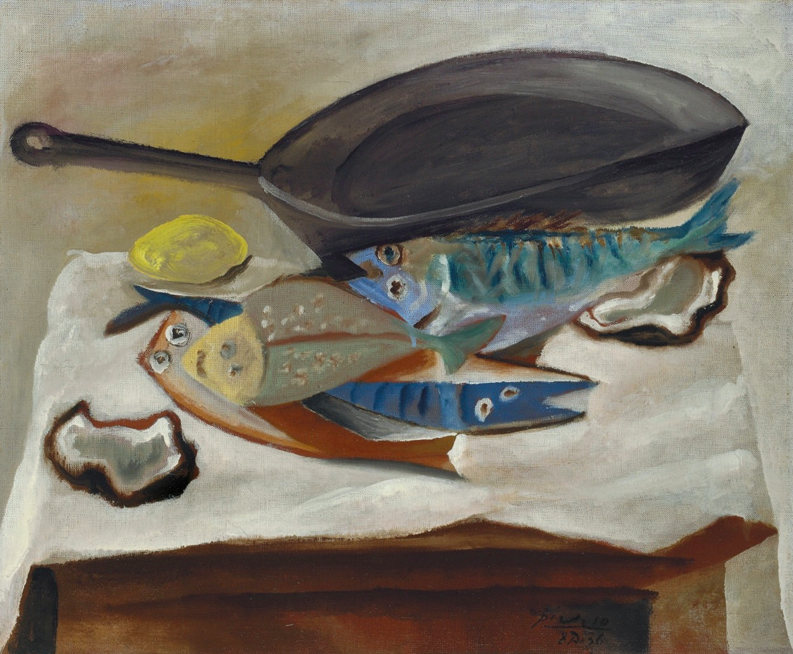
WHAT’S UP?
Our time on this earth is split between work and leisure, and there’s no doubt that the former takes up more of our days, often bleeding into those supposedly meant for the latter. There are always those small tasks that we need to finish over the weekend, for instance, before the start of the new work week. Work often manifests itself on our days off whether because we’re either talking about it or thinking about it. In some cases, it ends up taking over our existence. In this issue, however, we urge you to take a break from whatever impending work plans you might be pondering, and take a minute to read two stories about people who managed to find a way out of this endless tug-of-war.
It is often said that seeing fish in a dream is an omen of wealth to come, and here we present the tale of a journalist who sold fish and in that process found the key to solving a work dilemma that had been ongoing for more than four years. In our other story, an advertising executive breaks free of her soul-crushing job in a more decisive manner: a total career shift. She offers a few pieces of advice meant to make that difficult decision — for those who are entertaining it but remain hesitant — a little bit easier.
[wonderplugin_video iframe="https://youtu.be/-RHh-SdxKS4" lightbox=0 lightboxsize=1 lightboxwidth=960 lightboxheight=540 autoopen=0 autoopendelay=0 autoclose=0 lightboxtitle="" lightboxgroup="" lightboxshownavigation=0 showimage="" lightboxoptions="" videowidth=600 videoheight=400 keepaspectratio=1 autoplay=0 loop=0 videocss="position:relative;display:block;background-color:#000;overflow:hidden;max-width:100%;margin:0 auto;" playbutton="https://www.madamasr.com/wp-content/plugins/wonderplugin-video-embed/engine/playvideo-64-64-0.png"]
A tale of two jobs
“I’m my own boss here. I don’t have to follow the news ... I don’t even know what day it is today,” my friend says as he deftly but carefully lays the fish on ice cubes. We are in a restaurant where I’m a customer and he is a founding partner.
I’m not sure how to lead the conversation. When I talk to him about an essay he recently published online, he smiles but doesn’t say anything. We start to speak about what each of us has been up to, but soon enough he’s offering me his freshest catch in an impressive demonstration. I make my order, then ask him if we could step outside for a minute to catch up; I want to know more about how he is doing, how his little family is: “I’m okay, man, as you can see. Working. And I still go to the paper one or two days a week,” he assures me.
One visit to the restaurant after the next, I started to slowly understand what happened to my friend, from the fragments he told me about his journey towards the current life he was leading in the second half of his thirties: a journalist in a state-owned newspaper and a member of the syndicate, a father of two beautiful girls, and a fishmonger.
Our paths had crossed several times when we were younger, often with long gaps in between, so such distance had become an inherent part of our friendship. Such is life. In our teenage years we used to be rowing partners: we’d run laps along the banks of the Nile then carry our boats into the water for a ride in the early morning. We were never on a team or anything, but we did get to know the city from a new perspective through the sport. After this phase is when we lost touch the first time.
We were reunited again as undergrad students studying journalism, and after that trained in different places as journalists (or as aspiring literary writers who practiced journalism, timidly experimenting with fiction). And so it wasn’t the spontaneity of the encounter that was interesting to me but rather how far his new endeavor had taken him from the field. It was refreshing seeing him navigate this new realm of work; he seemed more secure and more at ease than many of us who enjoy the stability of jobs they’ve known forever but are constantly flipping on the inside, like fish on a grill.
“Financial need was the main driving force,” he tells me. He explains that with the devaluation of the Egyptian pound in 2016, his salary of LE4,000 had become almost worthless overnight, in terms of purchasing power. The fish industry was his salvation, after a seemingly endless search for an extra source of income.
“I traded in dates as well after a visit to Siwa. In the first season I managed to sell a part of the harvest of one of the oasis residents. The following season I took over the selling of the entire harvest,” he recounts. Although things seemed promising for a while, revenues unfortunately began to dwindle. He gained considerable experience in the market, he says, but at a high price. That’s when he started his project of selling fish to make up for his losses.
I remembered a picture of him on a yacht that he had once shared on Facebook, holding a big fish that he’d just caught. I ask him if his current career stems from this hobby of his — fishing — but he says no. “I love fish. I see a fish swimming in the sea and it gives me joy. I do love fishing but it requires clarity and peace of mind,” he tells me, implying that he doesn’t have much of either.
In spite of this, I notice he’s still a clever storyteller as he shares with me some of his experiences in the Obour market, where he buys the fish for his business. They are stories that are worth writing, he knows, yet he never gets around to it. “One needs a quiet space, serenity, and time to read and some music to listen to …” then he apologizes because he has to take a call. He grabs a stack of small white pieces of paper from the edge of his neatly arranged table. In the top left corner of the paper, he draws a small rectangle and writes the delivery time in it. Then he jots down the fish order in kilos, how it is to be cooked, and the sides required, and on the back of the paper he scribbles the address. The paper then goes into the workflow: One of the workers weighs the fish ordered, it is priced, cleaned, then grilled or fried or baked in the oven with lemons and oil, and finally it’s packaged and delivered.
He then starts to talk to me about a subject he’s been obsessed with for some time: What were the religions in the Gulf region like before Islam? He’s been reading research papers and literary works about the topic, he tells me, but has been finding it very difficult to write about.
As I write this now, I go back to the latest piece my friend has published. I won’t share it here, because he doesn’t want anyone to know about his parallel job. But his writing remains seamless, and there is a certain serenity to it, perhaps even more than before. He is still consuming all kinds of history books, retelling the stories he reads in an engaging narrative style, interweaving them with insights of his own. He may not think he has the peace of mind required for such work, but he is clearly doing something right.
Six tips that could change your life
One night, another friend of ours was on her way home from work. She was driving on the Ring Road at 4 am, wondering how she was meant to wake up in just a few hours to take the same road again and head back to work. She found herself crying hysterically and at this moment she knew she couldn’t go back to her office. In a leap of faith, she quit her job in an advertising agency and decided to become an interior designer — a passion she discovered when she moved into a new apartment two years ago and became engrossed in the process of furnishing it. She remembered how she’d initially wanted to attend the Faculty of Fine Arts before she ended up studying economics under pressure from her parents. While she’s still trying to prove herself in her new career, she says she’s lighter and happier. Our friend, who has requested to remain anonymous, volunteered to offer some advice in light of her experience, to try and lessen the fear of the unknown that people considering career shifts might be feeling:
- First of all, making a career shift is a very brave decision. Making this decision will involve an internal struggle, a struggle with the HR department in your old job, a struggle with your parents and loved ones and more. You have to be ready for all those confrontations and to fight for your choice. You’ll be told to “stick with what you know,” but remember that the reason you decided to leave your job was to maintain your mental health, which is far more important. What is the value of stability if the cost is frayed nerves and constant anxiety?
- You should have an idea of what you want to do after you quit, even if it’s not a solid plan. Find your passion before you quit your job; people don’t quit their jobs to figure out what their true passion is except in Hollywood films. This will also help you in the struggles mentioned above. On the days that will be full of self-doubt (and hopefully only temporary poverty) you’ll need to be able to answer the question: “Why did I do this to myself?”
- This piece of advice is closely related to the last one: save some money. Keep enough from your salary to live off of for a few months in case you don’t find another job right away (which is the most likely scenario). Chances are you won’t regret quitting your job, but you’ll definitely regret not being more mindful of your spending back when you had a proper paycheck.
- If you do have some savings, you’ll be able to take some time for yourself before starting your new adventure. A holiday, even if just for one month, is so important. Breathe; go to the beach; get to know who you are away from work; exercise; spend time with loved ones … soon enough you’ll be busy once more but this time around, if you’re lucky, you can create a new work rhythm where you won’t crave days off as desperately as you did before. Then your holidays can become a chance to take some well-earned rest rather than attempts at escape.
- This is a good moment to test out how solid your contact base is. Your new job will likely come from an acquaintance, so don’t be shy to ask for help or contacts; you’re bound to return the favor later.
- You need to set your ego aside. Your years of experience and the perks you acquired in your old career probably won’t be that useful in your new job. You’re a rookie now, so you must be willing to learn, be able to handle criticism, and be ready to apologize for the many mistakes you’ll make.
We wish you a great work week, dear readers.
Until next time, stay safe.

تقارير ذات صلة
Detox | An ode to the delivery worker
On curfew nights, only the roar of delivery motorcycles and the barking of dogs pierced the silence.

Detox | The final puff
I decided to quit, with the hope that I would continue to be kick-ass even without cigarettes.
Detox | A tuk tuk ride through the world of anthropology
We chat with anthropologist Mai Amer, the creator of a new show called Tuk Tuk.
Your support is the only way to ensure independent, progressive journalism survives.
You have a right to access accurate information, be stimulated by innovative and nuanced reporting, and be moved by compelling storytelling. Subscribe now to become part of the growing community of members who help us maintain our editorial independence.
Join us