
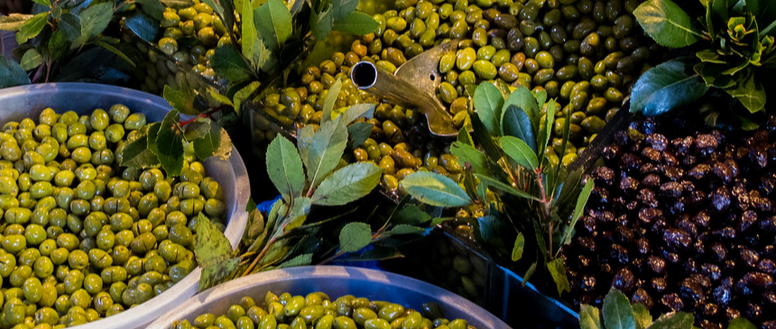
Climate change strikes another crop in Egypt: Olive harvest drops by half
Weather fluctuations have severely affected the olive harvest in Egypt, with an erratic rise in temperature during the blooming season in March causing this year’s yield to fall by at least half, according to agricultural sources.
Eid Naguib, an olive farmer and merchant in Minya’s Beni Mazar, tells Mada Masr that his 60-feddan olive grove produced a mere 100 kg per feddan this year, less than 5 percent of the annual two-ton average. Other vendors he buys from also had precipitous drops in yield and had very little to offer for sale. Meanwhile, Hussein Abu Saddam, the head of the Farmers Syndicate, told Mada Masr that he observed losses of up to 50 percent at several olive groves around the country, including his own.
The Food and Agriculture Organization of the United Nations estimated Egypt’s 2019 olive production at over one million tons, placing it among the top ten producers of olives in the world. Yet this year’s poor olive harvest did not come as a surprise to farmers. They had foreseen losses since the blooming season in March and April, when they counted fewer flowers — the part of the tree that bears fruit — than usual. Mohamed Fahim, director of the Agriculture Ministry’s climate change information center, had warned of a low harvest, explaining that olive flowers need mild temperatures to blossom and that, given the unseasonably warm spring, there would be a major yield crisis.
Farmers in Siwa fared no better. Rimon Fouad, who owns a two-feddan grove in the Western Desert oasis, told Mada Masr that he was unable to recoup even 1 percent of his farming expenses this year because of the poor harvest, even as olive prices rose commensurately.
The brunt of the low yield will in fact be borne entirely by farmers, according to Abu Saddam, who notes that olives are not a staple in the national diet. “If they’re too expensive, [people] just won’t buy them,” he said.
According to Fahim, of the Agriculture Ministry, while the effects of weather fluctuations cannot be avoided altogether, they can be mitigated. Farmers can use intensive fertilization along with root stimulators to help plants bloom quicker. It is also important for the state agricultural guidance system to alert farmers to upcoming weather fluctuations, inform them of the kind of negative impacts that can be expected, and provide them with the tools to manage them.
Abbas al-Shinnawy, the head of the Agriculture Ministry Services Division, says advanced technologies can also be utilized to stave off the effects of weather fluctuations on crops, such as modifying seeds to survive long-term harsh climate conditions, though he also says that any damage to crops is to be expected on account of climate change, which has affected agricultural yields around the world. “Everybody in agricultural production knows the risk,” Shinnawy told Mada Masr. “They also know they shall be generously rewarded by God.”
Yet, there is disagreement over how well the agricultural impact of global warming can be absorbed. Naguib, the olive farmer from Minya, says he followed Fahim’s advice on intensive fertilization to no avail. Meanwhile, Abo Saddam believes that the effects of weather fluctuations are too severe to effectively mitigate, and called on the Agriculture Ministry to introduce a social fund to compensate farmers for their losses, which have been increasing in tandem with accelerating climate change, global market volatility and rising prices of farming supplies, which are mostly imported.
In 2014, President Abdel Fattah al-Sisi issued a presidential decree creating the Agricultural Solidarity Fund, primarily to cover damages incurred as a result of natural disasters and disease. But the fund has not been created because the law’s executive regulations have yet to be approved.
Olives are only the latest in a growing list of Egyptian crops whose productivity, as well as quality, have been negatively impacted by climate change — hurting farmers most of all. Earlier this year, the mango harvest was severely affected, with farmers witnessing a precipitous drop in yield.
According to the sixth assessment report by the United Nations Intergovernmental Panel on Climate Change released in August, human-induced changes to global climate systems are “unprecedented.” And among the areas most vulnerable to climate change is agriculture. A 2018 report titled “Sustainable Agriculture and Climate Changes in Egypt” found that climate change can have drastic effects on agriculture through changes in temperature, rainfall, CO2 levels and solar radiation. Meanwhile, a 2020 European Union report also found that climate change will pose a threat to global food production in the medium to long-term through projected changes in daily temperature, precipitation, wind, relative humidity and global radiation.

تقارير ذات صلة
‘We inherited this land, we cannot leave it:’ Rent hikes over 170% threaten farmers on Endowments, Agricultural Reform land
The hikes come within a recent push to maximize state revenue and prioritize large-scale farming
Rice export ban for everyone but Argany
In early February, the Egyptian Customs Authority renewed its ban on rice exports, which has been in place for over eight years per the given rationale that it will help…

Video | Hibiscus for your heart
Well known for lowering blood pressure, hibiscus is especially loved during Ramadan
Your support is the only way to ensure independent, progressive journalism survives.
You have a right to access accurate information, be stimulated by innovative and nuanced reporting, and be moved by compelling storytelling. Subscribe now to become part of the growing community of members who help us maintain our editorial independence.
Join us