
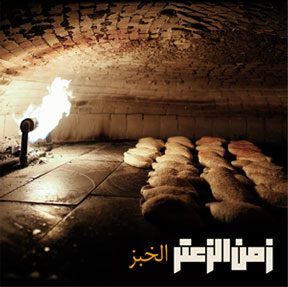
Band of the week: Zaman al-Zaatar
I remember a boat trip. Fifteen of us float up the Nile on a felucca; mostly journalists, activists and artists — even some folk formerly from Al Jazeera.
The wind is at a perfect 12 knots, ideal for smooth sailing on the Nile, the beer is cold and the music playing on the speakers is a Jordanian fusion ensemble called Zaman al-Zaatar. It feels like we are the only ones in the world — there isn’t a boat in sight. The only sound is that of our own laughter and the handclaps that accompany a wordless soundtrack made up of sympathetic sounding ouds, string sforzandos, and just enough western ornamentation to keep the boat rocking. My thoughts drift east toward Jordan and Amman, a city some people call “boring.” I have only visited it while daydreaming on a felucca.
A recommendation from Mada Masr’s chief editor during a Facebook poll, Zaman al-Zaatar (Sign of Thyme) is an oriental fusion band led by Yacoub Abu Ghosh, a widely acknowledged composer and bass guitarist who plays in Jordan and throughout the region. Ghosh is the co-founder of various other performance projects too, including Music Matbakh, RUM, Tareq al-Nasser and Black Iris.
On oud is Ahmad Barakat, known for his remarkable improvisation savvy and a modernist approach to his traditional instrument — in the videos it almost looks as though he’s plucking and strumming away on an electric guitar rather than the familiar old oud. Manning percussion are Nasser Salameh, a self-taught musician who I’m told specializes in Middle Eastern and world percussion, and Maan al-Saayed, who contributes much of the group’s rhythm and groove with both Spanish and Arabic textures. Then there is Yarub Smeirat on the violin — he captivates me the most. One of Jordan’s most recognized violinists, Smeirat seamlessly slides between genres that span Arabic, rock, jazz, classical, and contemporary music.
Formed in 2004, the band has three albums under its belt: “Like All People” (2005), “Zad” (2007), and their most recent, “Al-Khubz” (2012), which was released exclusively online and distributed for free. In April last year, the band came to Egypt to perform at Alexandria’s Jesuit Culture Centre, and according to their website, it continues to perform across the region in “an ongoing attempt to express — through music — the extreme diversity of influences that one is subjected to by living in this place (Amman) and time, and portraying the capability of spiritual growth within society in Amman and the whole region.”
On the felucca, we reach the song “Um al-dunya” (Mother of the World). The boat and the album suddenly seem to be taking us on a whole new course. The song opens up with the only vocals on the album — in a bone-chilling yet resounding spoken poetry piece:
“When I fell in love, I was truly in love.
Love was my companion.
We gave birth to a nation.
We cultivated a revolution of hope.
So don't forget me.”
The song is one of the more riveting fusions I’ve heard recently. It simultaneously holds the high-pitched jigs and jumps of a Gaelic ballroom while maintaining the low oud-driven pitches of most traditional Arabic/oriental music. Throughout the album the bass guitar, violin and the layers of tablahs, riqqs, doffs and cymbals continue to blend East and West into harmonious, albeit moody melodies.
In my memory, as the last bit of winter sun creeps behind the sand-hued skyline, our friend who is prone to outbursts of some of the loveliest belly-dancing you’ll see jumps onto the felucca’s bow and begins to shake her hips slowly yet sharply to Salameh’s sultry beat in the album’s closer, “Al-sa7rawi.” Some of us are dancing alone, some together, swaying and twitching to the tremolo of the strings. Others stay seated, clapping, sky-gazing, smoking cigarettes or reflecting upon the crescent moon that hangs above us. We are happy, safe and as free as the music that surrounds us.
But in reality, there were only four of us journalists on the felucca yesterday. The rest were all tied up, mostly at work, while others remain in jail, fighting the cold in insect-infested cells, where there is no dancing and probably very little sun.
“When I fell in love,
I was truly in love.
Love was my companion.
We gave birth to a nation.
We cultivated a revolution of hope.
So don't forget me.”
Zaman al-Zaatar's latest album can be downloaded for free here.
*Every fortnight, #MadaMix will introduce more musings on musicians and bands from Africa and the Arab region, alternating weeks with pieces on Egyptian music.

Maha ElNabawi
After graduating from the American University in Washington, DC with a Bachelors degree in Business, Maha began her publishing career in NYC with indie pop culture magazines, the likes of…
تقارير ذات صلة

Mada Mix: El-Morabba3
El-Morabba3’s second album leaves politics behind but pushes regional indie music forward
Mada Mix: On student heavy metal band Worsens
A new Cairo band synthesizes a classical German poem with quintessential heavy metal sounds for their debut album
Mada Mix: Ta7t El-Sefr and Hawas
Like many bands that emerged after 2011, these two differ from their predecessors in several ways.
Your support is the only way to ensure independent, progressive journalism survives.
You have a right to access accurate information, be stimulated by innovative and nuanced reporting, and be moved by compelling storytelling. Subscribe now to become part of the growing community of members who help us maintain our editorial independence.
Join us