
As invasion of Ukraine plays out, are there alternatives to Europe’s dependence on Russian gas?
Russia’s invasion of Ukraine early on Thursday morning has thrown into question more than the fate of the national sovereignty of its Eastern European neighbor.
Ukraine is a lynchpin of the global order. It supplies wheat to a large portion of the world, through the interconnected global food supply chains. It is also a major node in Europe’s energy infrastructure, as one of the portals for the supply of cheap Russian gas to European markets.
So far, things are holding steady. On Thursday, Russian energy giant Gazprom announced that gas exports via Ukraine have continued as normal and are in line with requests from customers.
However, if the invasion of Ukraine is about to prompt Europe to rethink its political, security and economic cooperation with Russia, can Europe reconsider its dependence on Russian gas?
To unpack this question, Mada Masr took a look at Europe and Russia’s energy interdependence and potential alternatives to the Russian supply of gas, including Egypt’s LNG terminals at Idku and Damietta.
Europe and Russian gas interdependence
Russia is one of the world’s largest producers of natural gas, ranking only second behind the United States. In 2020, Russia produced 638.5 billion cubic meters of natural gas, ranking second behind the United States’s annual 915 billion cubic meters.
Of this production, Russia exports approximately 196 billion cubic meters of gas per year.
Because of the proximity of the two regions, Europe has found a natural partner in Russia to feed its energy-hungry domestic markets.
Russia dominates the EU gas market, providing about 38 percent of its total supply. Norway, the economic bloc’s next largest supplier of gas, provides around 19 percent of the market, according to Reuters. In turn, Russia is also dependent on European markets as consumers, with OECD Europe purchasing about 72 percent of Russia’s total natural gas exports.

To pipe gas to Europe, Russia relies on a vast network of pipelines, many of which run right through areas currently involved in the invasion of Ukraine.
| Pipeline | Capacity (per year) |
| Brotherhood network (via Ukraine) | 110 billion cubic meters |
| Northern Lights (via Belarus) | 45 billion cubic meters |
| Yamal (via Belarus) | 32 billion cubic meters |
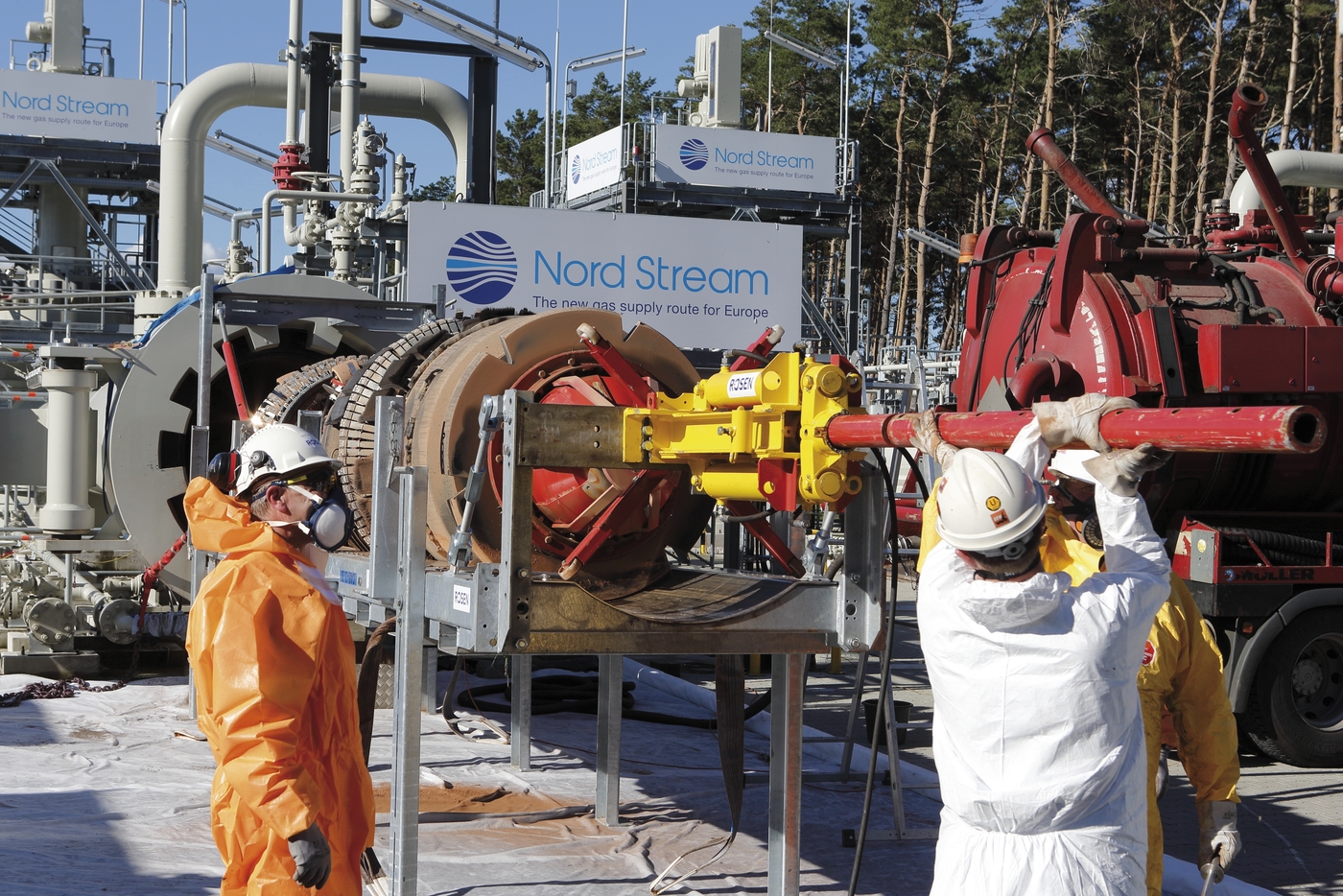
| Nord Steam (via Germany) | 55 billion cubic meters |
| Nord Stream 2 (via Germany, project frozen earlier this week) | 55 billion cubic meters |
Nord Stream 2 is a 1,200-kilometer pipeline under the Baltic Sea completed last September at a cost of 9.5 billion euros. Gazprom paid for half the cost, and Western energy firms Shell and the French firm ENGIE paid the rest.
The pipeline will double the capacity of the existing Nord Stream, which it runs alongside. However, operation of the pipeline is still pending certification by Germany and the European Union.
Earlier this week, Germany froze the regulatory approval process, which could threaten the whole project, a fact that the United States and Europe have wielded during negotiations with Russia. The United States followed suit, announcing on Wednesday that it had imposed sanctions on the company in charge of building the gas pipeline. The sanctions target the Nord Stream 2 AG company and its CEO, Matthias Warnig.
As the tit-for-tat rhetoric escalates between Russia and the West, will the conflict in Ukraine lead to a full halt in Russian gas flows to Europe?
At the end of January, S&P Global Platts Analytics said that a complete suspension was a “highly unlikely scenario.”
Nonetheless, even small disruptions could have costly downstream effects in the European market.
Transport through Ukraine, the infrastructure which currently transports the lion’s share of gas, is already down from weekly 2015–2020 averages. And gas flows through the Yamal line which passes through Belarus, where Russian troops are staging their attack into Ukraine, are also significantly down, as shown by the following graph.

S&P Global Platts Analytics drafted projections for several scenarios in the coming years if the conflict continues, represented by the chart below. If transport via Ukraine halts and Nord Stream 2 never comes online, Europe is looking at a steep decline.

If Europe were to lose gas flows via the Nord Stream 2 pipeline and those through Ukraine, it would have a shortfall of 36.5 billion cubic meters per year, according to S&P Global Platt’s projections. This comes out to be a total of 26.6 million metric tons of LNG.
Alternatives to Russia?
As it became clear in mid-February that Russia might invade Ukraine, the search for alternatives to Russian gas in Europe began.
At the end of January, Reuters reported that the United States government was holding talks with several energy companies on contingency plans for supplying natural gas to Europe if conflict between Russia and Ukraine were to disrupt supply.
This was followed last week by public comments from European Commission President Ursula von der Leyen to the effect that the European Union would be able to cope with a partial disruption to gas imports from Russia. The EU, von der Leyen said during a presser in Strasbourg, has spoken with the United States, Qatar, Egypt, Azerbaijan, Nigeria and South Korea about increasing gas and LNG deliveries, either through additional shipments or contract swaps.
"We have also spoken to major suppliers of LNG in order to ask whether we could swap contracts in favor of the EU," she said, adding that Japan was willing to do this. "These efforts are now distinctly paying off."
Earlier in February, Japan said it would divert some LNG cargoes to Europe in response to EU and US requests. European LNG imports hit a record high of around 11 billion cubic meters in January, with just under half coming from the United States.
However, not all parties that the EU has reached out to have been so conciliatory.
Qatar, which has increasingly become a primary interlocutor of the United States administration, has taken the opportunity to push back against European market regulations of the gas sector. A source briefed on the talks between the two countries told Reuters that Qatar has requested that the EU restrict the resale of gas outside the EU in order for Doha to consider supplying gas to the bloc and prevent a short-term crisis. Other conditions put forward by the Qataris include: the resolution of a long-running EU probe into Qatar’s long-term gas contracts; and for the EU to be less dependent on spot sales and more on long-term contracts to boost its energy security.
Although Qatar lacks the spare gas sufficient to single-handedly meet any rising demand from the EU in the event of diminished supply from Russia, it has signaled it would be willing to divert some volumes from Asia with mediation from the United States.
Doha has not yet made such a request to divert shipments, according to the sources who spoke to Reuters.
Exports from Egypt might be another option, given its proximity to Europe. In 2021, exports from Egypt’s LNG facilities posted a 10-year high, though imported Israeli gas represented a vast majority of the exported quantity as Egypt’s domestic demand has overtaken its own dwindling production.
Egypt has long had an ambition to become an energy export hub for the eastern Mediterranean. And while that ambition was initially tied to the fees it could extract for allowing neighboring countries to use its gas infrastructure, Egypt’s incentive for increasing exports has increasingly become tied to its own energy-hungry domestic market.
According to a report published this week by Mada Masr, Egypt often settles liquefaction and transportation fees for Israeli gas with in-kind gas transfers instead of cash, in an attempt to bridge the growing inability to meet domestic consumption and against the backdrop of the Zohr field drying up faster than expected.
Egypt shipped about 6.8 million tons of LNG in 2021, about a four-fold increase from 2020 when a COVID-19-induced slump sent global demand plummeting and prompted Cairo to shut its facilities rather than export at a loss.
Even this 10-year high, however, represents a fairly marginal 1.7 percent of total global LNG exports.
Nonetheless, would Egypt and Israel be more willing partners than Qatar, a much larger LNG exporter at over 70 million tons per year?
Well, Egypt and Israel would face many of the same problems as Qatar in needing to divert away from its existing customers in current markets, alongside hurdles posed by the balance it is seeking to strike in using its export potential to feed its own domestic market.
To get an idea of Egypt’s market commitments, we can look at the destinations for LNG shipments from its two LNG facilities. The Damietta terminal sent out approximately 3 million tons of LNG for export in 2021, with 52.9 percent going to Asian markets and 37.9 percent to European markets. The Idku terminal sent out approximately 3.8 million tons of LNG, with the percentages tipping much further toward Asian markets at 71.4 percent compared to 24.9 percent, according to data provided by KPLER and MEES.

Extra quantities of natural gas are inbound to Egypt, as Israel’s energy minister announced last week that Israel will increase the natural gas it sends to Egypt by as much as 50 percent by the end of the month.
Israel is to supplement the existing flows of its gas into Egypt through the East Mediterranean Gas pipeline, by sending more gas to Egypt through Jordan via the Arab Gas Pipeline.
While the Israeli Energy Ministry said the new route was approved to meet the growing demand within Egypt, the 2.5–3 billion cubic meters that will flow to Egypt via the new route in 2022, potentially increasing to 4 billion in the coming years, will exceed Egypt’s immediate domestic needs.
Would a combination of Qatari LNG and Israeli gas exported from Egypt’s liquefaction plants mean the EU could weather a disruption to Russian gas flows?
Peter Stevenson, an industry analyst focused on the region for the analysis firm MEES, is doubtful. “The simple answer is no. Maybe in the short term Qatari and Egyptian LNG can plug part of the hole left, but it's not a long-term solution,” Stevenson says.
“For one, Egypt itself is having to import more gas from Israel to maintain LNG exports. Such is the nature of Egypt's LNG exports that the majority are sold on the spot market and, here, prices have sky-rocketed over the last 18 months,” he adds, arguing that the cost would be too high for Europe.
To bolster its regional ambitions as a hub for gas liquefaction and re-export, Egypt is trying to bring further LNG portals online and is hoping that US gas company Chevron — which operates both the giant fields off Israel’s coastline and Cyprus’s Aphrodite field — will move forward with a plan to build a pipeline connecting Leviathan and Aphrodite to Egypt’s Idku terminal.
Stevenson, however, doesn’t think the situation in Europe will be a boon for Egypt’s regional gas hub hopes, as the demand for gas from Egypt’s domestic market plays an important factor.
“The main sticking point for piping [imported] gas to Idku is the cost of the pipeline and the compensation fees Cairo would pay if the gas is diverted to the domestic market instead of exported as LNG,” Stevenson says. MEES reported in October that Chevron was reticent to sign off on an Idku deal given that Cairo was pushing for a clause that would allow it to reroute the gas to its domestic market. If Egypt’s asking demands are too high, Stevenson adds, Chevron could turn its attention to Turkey, given Ankara’s growing relations with Israel.

تقارير ذات صلة
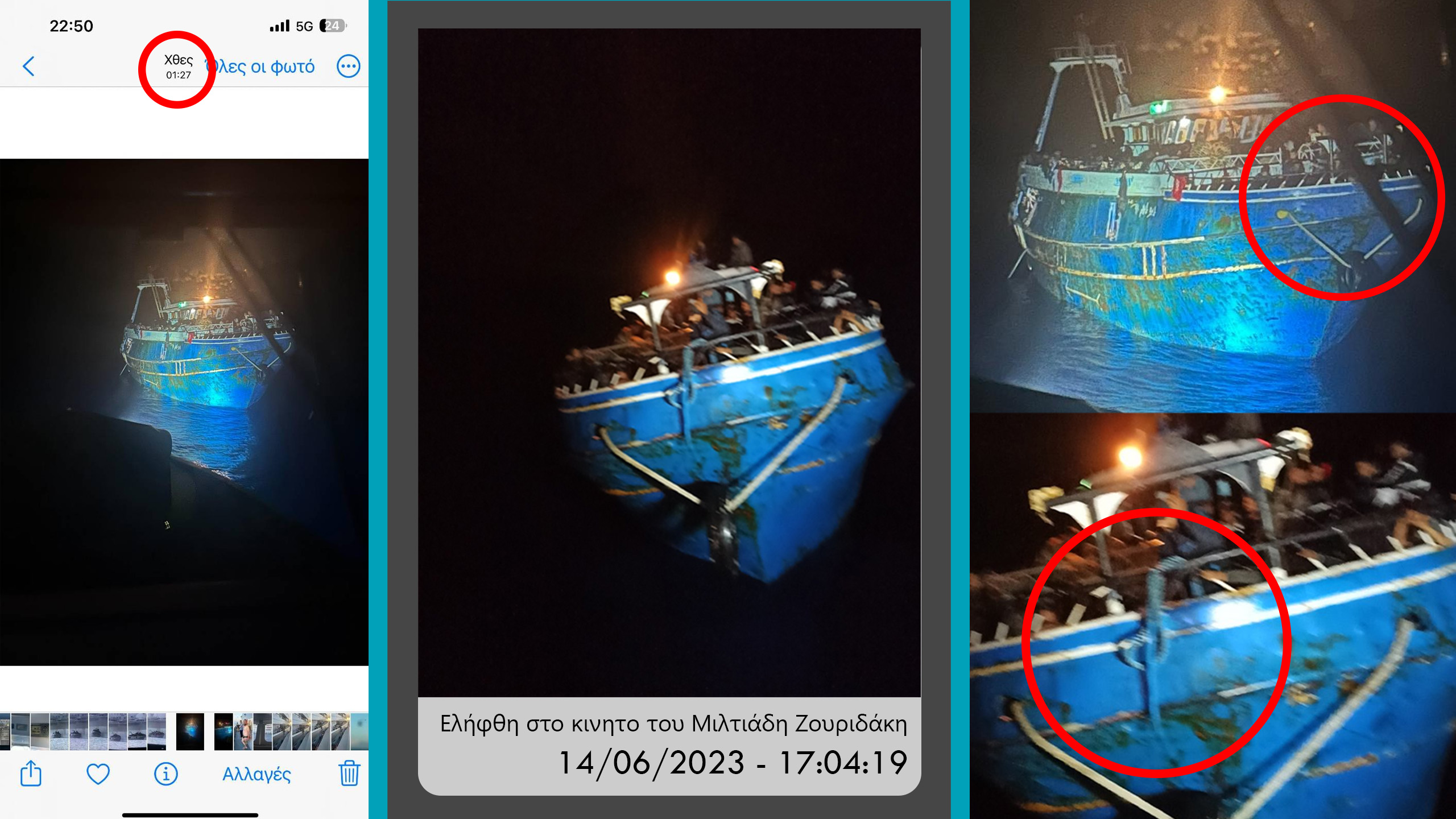
The Pylos shipwreck, the disappearing blue rope, and the trial ‘to determine the kind of world we want to live in’
A boat carrying hundreds of migrants, including 200 Egyptians, sank off the coast of Pylos in 2023
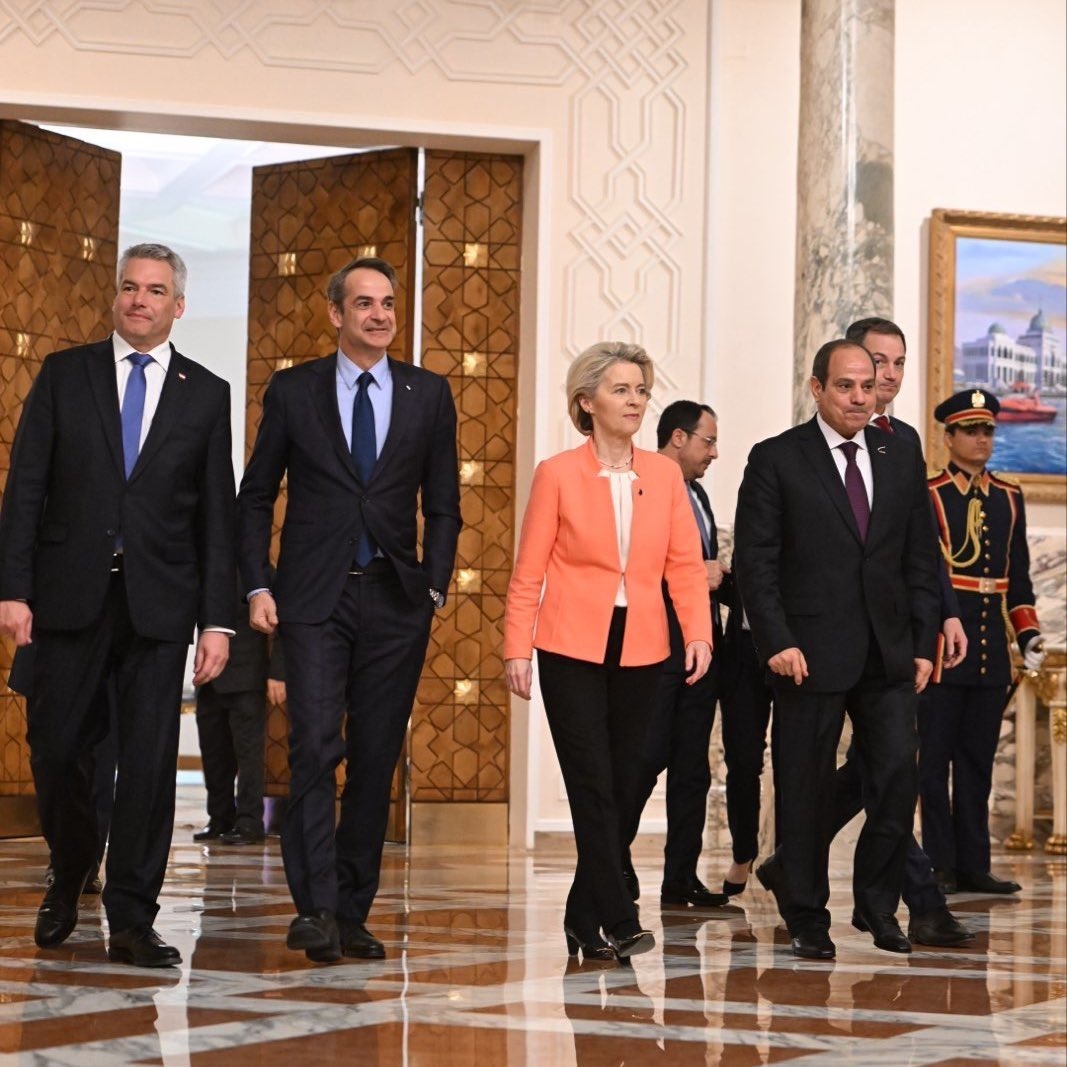
The billions of euros deal reshaping Egypt-EU relations
The partnership is set to be in effect between 2024 and 2027.

Pylos scapegoats: The nine shipwreck survivors facing criminal charges in Greece
A collaboration between the newsrooms of Mada Masr and OmniaTV.
Your support is the only way to ensure independent, progressive journalism survives.
You have a right to access accurate information, be stimulated by innovative and nuanced reporting, and be moved by compelling storytelling. Subscribe now to become part of the growing community of members who help us maintain our editorial independence.
Join us