
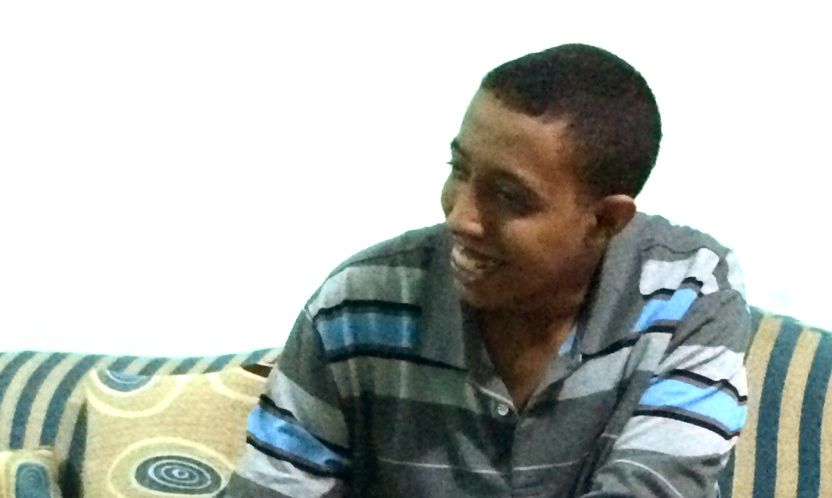
On January 28, 2011, Mohamed Soliman stood between protesters and police forces in Ramses Square and screamed “peaceful.”
The next thing he remembers, people around him yelled that a protester had been hurt. He looked around but didn’t find anyone injured. He then felt his body being carried and dragged away.
“I wanted to ask them why they’re carrying me, I wanted to tell them to go find this injured person and help him, but I wasn’t able to speak,” Soliman recalls.
It wasn’t until he could feel the blood on his neck that he realized it was him they were speaking about.
A bullet to his left side and over 150 pellets in his head had caused a brain hemorrhage, damage to the optic nerve and retroperitoneal hemorrhage — an accumulation of blood in the abdominal cavity.
Soliman recalls the events of the “Friday of Anger” shortly after returning from a physiotherapy session. Today, he is well on his way to regaining full mobility. However, he has lost his eyesight.
The 22-year-old student hadn’t initially planned on joining the mass protests on January 25 against police brutality, since he anticipated it would cause a lot of bloodshed.
State media, he says, were showing people handing police officers flowers.
“I thought to myself, Egyptians are a lost cause,” he says.
As he watched the events unfold on other channels, such as Al Jazeera, and followed updates on Facebook, he realized there was a different story.
“I read about some guy who stood in front of an armored vehicle… I was caught up in the bravery and the enthusiasm of it all,” he recalls.
On the morning of January 28, 2011, Soliman told his mother he was joining the protests and left for Friday prayers. He marched from Nasr City to Ramses Square, where the violence started.
He jokes that he did not get to be part of the 18-day action, saying “my revolution only lasted five hours.”
Hundreds of thousands of protesters took to the streets on the “Friday of Anger,” one of the most violent of the 18-day uprising, which ousted Hosni Mubarak. By the end of the day, police forces had withdrawn from the streets and the army was deployed to bring order.
Soliman’s mother, Reda Hassanein, received a phone call at 10 pm from the hospital informing her that her son was in their intensive care unit.
“He was in such bad condition that people were telling me, ‘May he be in God’s hands’ rather than ‘May God heal him,’” she says.
Hassanein says her son was in a coma for a week, and when he finally came through he had trouble remembering and recognizing his family and friends.
His first question when he awoke was, “Is Hosni gone?” Hassanein recalls.
It wasn’t until February that his memory was fully restored.
Soliman says her son’s treatment was supposed to be at the expense of the state. They pleaded with the Armed Forces Hospital in Maadi to admit him, but after they allowed him to stay for a few days, they released him saying nothing more could be done.
A disgruntled military doctor asked Hassanein why they would “bear the brunt, when the police are the ones who did it.”
Soliman was then treated at his own expense until he was flown to Austria, where he stayed for months for treatment and rehabilitation, which the European country paid for.

He says that he was disconnected from the news back home, and his mother adds that he was in a bad psychological state, refusing to see or talk to anyone. She admits that she had shielded him from any news coming out of Egypt, then governed by the Supreme Council of the Armed Forces (SCAF).
Soliman returned to Egypt to news of the massacre in Port Said in February 2012, which claimed the lives of over 70 football fans.
“This was a wakeup call, it made me realize that SCAF are not the angels I thought they were,” he says.
As the political and security climate has deteriorated in Egypt following the 2011 uprising, many believe the revolution remains unfinished and its goals unmet.
Today, Soliman’s mother believes her son paid a price but received nothing in return.
“I don’t care about the finances of his treatment, I only care about the fact that he sacrificed something but didn’t get what he paid for — bread, freedom and social justice,” she says.
Hassanein says that to this day, no one has been prosecuted for crimes committed during the uprising. Her son paid the price for freedom and still hasn’t received it, she laments.
Soliman however is slightly more optimistic. While he agrees that repression is still rampant, and that the police state is the worst it’s ever been, he still believes that the January 25 uprising managed to achieve one significant goal — eradicating fear.
He acknowledges the crackdown on freedom of expression still exists but proclaims, “even if they arrest one person for speaking their mind, 10 others will come after him and speak… they can’t stop us.”

Three years later, Soliman’s injuries have done little to weaken his resolve. He says he is always begging his mother to join protests but that she vehemently refuses.
“We were able to oust the head of the regime but we still haven’t ousted the regime itself,” he says. “For justice to prevail, the people must fight for their rights and fulfil their duties.”
He likens the youth in Egypt to a “delivery service, trying to deliver the revolution to the people. Around us are thieves — religious fascists and military fascists — trying to steal it.”
But Soliman says he is determined to “deliver” the revolution. “I am willing to die for you to be able to speak your mind, even if we disagree,” he says.
Despite his injuries, Soliman has no regrets.
“If I lived 1,000 times over, I would still do it all over again.”

Dalia Rabie
Dalia has a pragmatic perspective on things and has a way of telling it just like it is. This informs her professional practice, with all the humor and wit that characterize…
تقارير ذات صلة

The khot of Upper Egypt
Mohamed Mahsoub clashed with police, decrying injustice in Upper Egypt before being killed.
January 25 lived by teenagers
We are Wizza and Inaam Hanim, two Egyptians who belong to a young generation that witnessed Egypt’s 2011 revolution from behind TV screens. The uprising is a movement that sprouted…
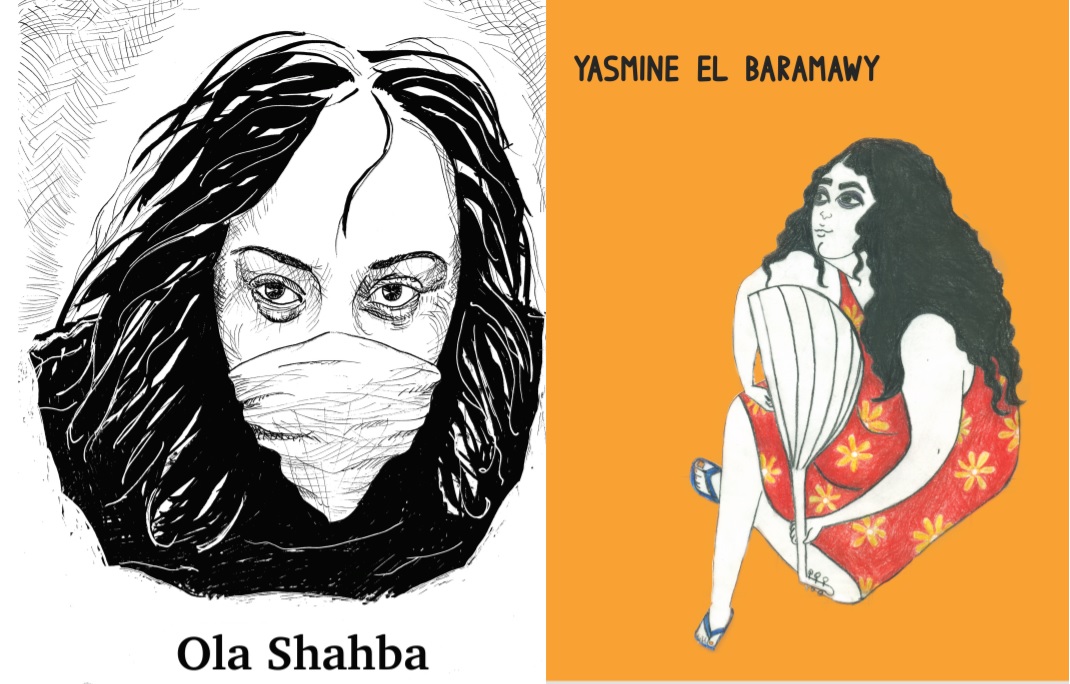
Stories from the Egyptian revolution: Ola Shahba and Yasmine El Baramawy
The comics express the anger and betrayal the women felt, especially toward revolutionary friends.
Your support is the only way to ensure independent, progressive journalism survives.
You have a right to access accurate information, be stimulated by innovative and nuanced reporting, and be moved by compelling storytelling. Subscribe now to become part of the growing community of members who help us maintain our editorial independence.
Join us