
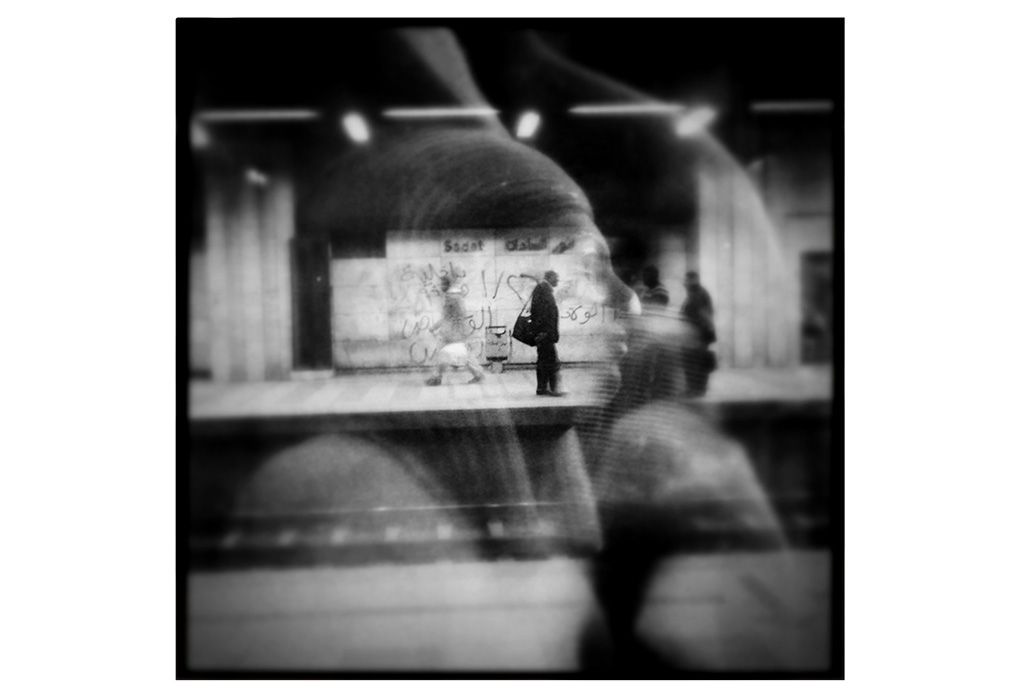
Photographing without a camera
What I really love about the idea of photography by mobile phone camera, other than portability and accessibility, is that it gives equal opportunity to all users. You don't have to be a professional in order to practice photography. You don't need to be an expert in complicated photographic technology or even how to use sophisticated applications to produce meaningful photos. You no longer need a camera kit worth thousands of pounds in order to deliver special work. Apart from gallery halls, judges and journalistic photographic editors, alternative media gives the photographer the absolute freedom to exhibit his/her photographs without barriers between photographer and audience. You can work individually on artistic project or documentary story without relying on any other institutions. You can even cover political events using only your mobile phone, and upload photos directly for the world to see without censorship. Recently, a famous foreign magazine devoted its pages to photographs taken by mobile cameras, including fantastic coverage from the Libyan revolution by Michael Christopher Brown.  In this collection, I wanted to go back to my early days practicing photography of the streets and daily life. I used to be more interested in this category of photography because it's the most faithful in documenting life in the city with all its details.
  I didn't want to carry complicated camera kits, so I left my camera and all the lenses I normally use, to roam in downtown's streets with just my mobile phone camera, using it as a perfect camera. I wanted to focus on what caught my eye, regardless of the procedures of professional photography.
  I wanted to move away from the political events in Tahrir's streets as far as I could. I also wanted to abandon journalistic and documentary pursuits of seeking bizarre features in the streets, and focus on their "ordinary" aspects. I was trying to recover what I used to see everyday in the streets of downtown.
  I used to make collections of photographs, and store each photograph with its relevant set until they formed a perfect collection that deserved to be exhibited. Photographs accumulated in one collection, and with the passing of time lost their value, and I also lost my eagerness to display the collection until the images faded and died before being seen by anyone except me. This collection is naturally different, because they were shot with a mobile phone camera, which allowed me to edit, post them in social media and to see the reactions of my audience, all in a few minutes. It allowed more interaction between producer and receiver. All of this encouraged me to complete this collection and to improve it until it was exhibited in a contemporary exhibition, where it took on another dimension as it was exhibited in a gallery hall and not only seen on a mobile phone screen.
  I realized I had underestimated the role and importance of photographs taken by mobile phones. The same thing happened with digital photography, which was underestimated a few years ago, before gaining the title of "main stream" photography.
  Personally, I believe that the final picture is more important than the equipment used to produce it. Good pictures do not require complex equipment.


Your support is the only way to ensure independent, progressive journalism survives.
You have a right to access accurate information, be stimulated by innovative and nuanced reporting, and be moved by compelling storytelling. Subscribe now to become part of the growing community of members who help us maintain our editorial independence.
Join us