
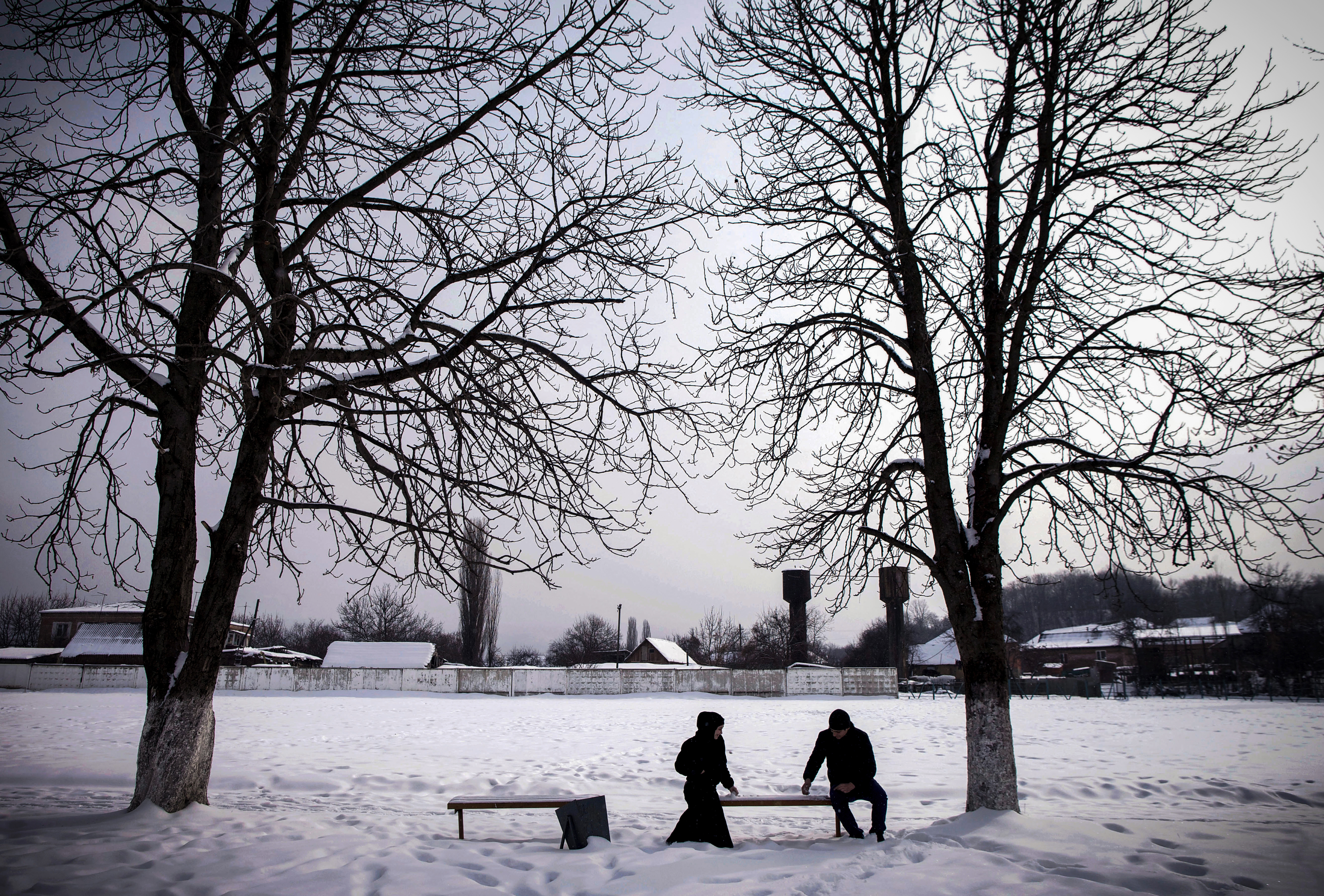
Growing up in Chechnya
An intimate view of the lives of young Muslim girls who witnessed the horrors of two wars and are now coming of age in a republic that is rapidly redefining itself as a Muslim state. Diana Markosian talks to Panorama about how she found her focus in Dagestan. What are the main ideas you wanted to portray in this story? I wanted my project to reflect a more intimate perspective on the lives and decisions of young Muslim girls coming of age in post-war Chechnya. Through my reporting, I discovered that for the younger generation, which lost its childhood to war, Islam is becoming the cornerstone of identity as the Chechen government builds mosques in every village and prayer rooms in public schools, and enforces a strict Islamic dress code. When faced with such a broad subject and area, how did you decide where to photograph? The decision didn't come overnight. I spent nearly two years traveling to Russia's North Caucasus, a region that has witnessed long periods of deportation, violence, suppression and war. I came to Chechnya as an outsider. I started by stringing for various agencies and magazines before eventually moving to Grozny. In the beginning, I remember finding it incredibly difficult to relate to my subjects. I would come home, write things down — my feelings, their experiences and how they contrasted. I honestly never thought I would find a story so personal in a place like Chechnya. After a certain point, I understood that I had to be there and used every excuse to travel to the region. The decision to document young girls developed only after I moved to Chechnya. I chose this topic because I started to recognize that being a woman in Chechnya often meant not having many rights. Most of the girls I met never finished their education — and often used marriage as a gateway to independence and societal respect. The Chechen president himself publicly stated that women are the property of their husband and their main role in society is to bear children. Are there ideas that you wanted to show, but never found the right situation to illustrate? These images were just the start to my project. I envisioned this piece having more depth and intimacy. There were several themes that I didn't get a chance to explore. At one point, I wrote about honor killings in Chechnya, but never had a chance to document the story visually. The written piece became extremely controversial after it was published. The Chechen government started backing away from a statement that was public knowledge. They denied honor killings and the prejudice towards women in Chechnya. For a period of time, my website was also banned by the Russian authorities. There is a lot of paranoia in the region on behalf of the local authorities. This makes it that much more difficult to work there. I was very naïve when I first started working in the region. I was detained more than a dozen times — often for no reason at all. It was frightening, of course, but you learn from situations like this. I don’t think anything but experience can prepare an individual to work in a place like Chechnya.


Your support is the only way to ensure independent, progressive journalism survives.
You have a right to access accurate information, be stimulated by innovative and nuanced reporting, and be moved by compelling storytelling. Subscribe now to become part of the growing community of members who help us maintain our editorial independence.
Join us