
Creative attempts to stave off starvation in Gaza (for those who can afford it)
Since Israel shut down Gaza's border crossings on March 2, no foodstuffs or other supplies have entered the strip — aside from trickles this week that have yet to be distributed — triggering a food shortage so severe it cannot be resolved in the near future, regardless of any new measures that might be taken.
Those who can afford it have resorted to surviving on bread made with pasta, eaten with a little zaatar and dukkah made of ground wheat and hot pepper. Scant amounts of vegetables are available in the markets, and few people buy them due to their exorbitant prices — a kilogram of tomatoes now costs 35 shekels (around US$10), ten times the pre-blockade price.
The depletion of foodstuffs and flour led to the closure of all bakeries and most restaurants on April 2, followed in early May by the shutdown of World Central Kitchen's relief operations, which had been offering daily meals of lentils, rice, beans or pasta to the displaced.
Only a few simple restaurants remain operational, selling falafel fried over wood fire at seven times the prior cost. Among the more creative endeavors to provide food while generating needed income is a food stall in Gaza City's Sahaba market that serves canned meat sandwiches cooked over a wood fire. These too are expensive, as scarcity has driven up the prices of all foodstuffs.
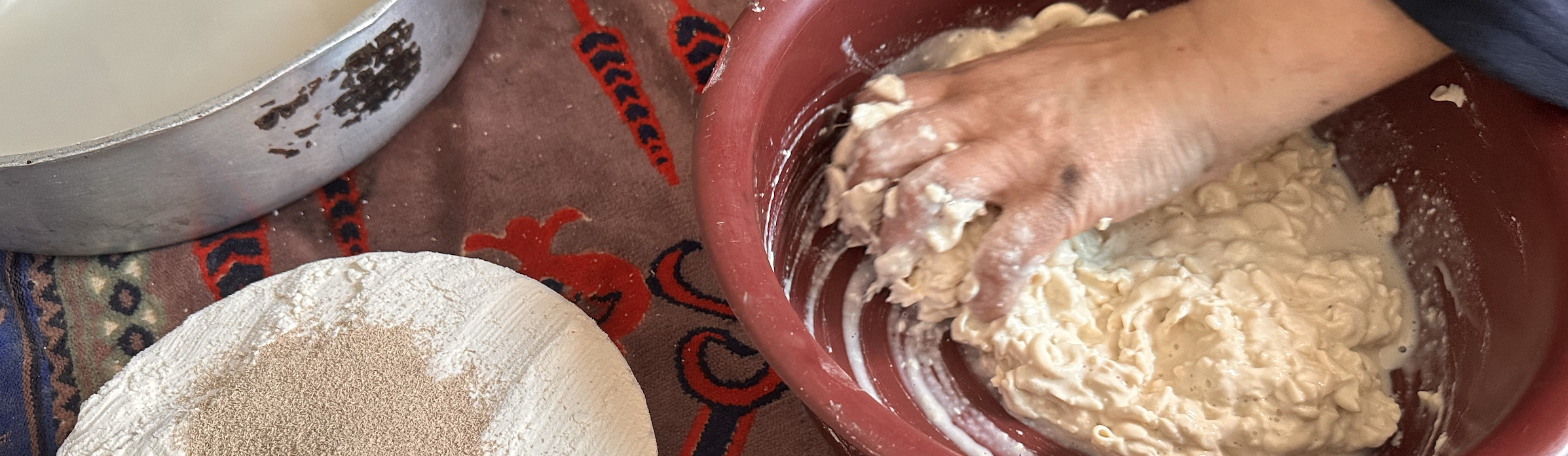
To survive the worsening crisis, many who can still afford it have turned to baking bread with dried pasta as a substitute for increasingly scarce and costly flour. The pasta is soaked for four hours until soft and sticky, then mixed with a bit of flour and kneaded into a dough. Yet demand for pasta as a flour alternative has also driven up its price, creating yet another obstacle to securing basic sustenance amid widespread scarcity.


Text and images by Zuheir Dola and Mostafa al-Bayed
بانوراما أخرى

Gaza’s phase two arrives. Kind of …
Consensus over key questions lags behind the United States' announcement of progress.

Gaza’s child amputees

Israel finally approves Egypt’s gas deal after nail-biting battle
In an unexpected move, Israeli Prime Minister Benjamin Netanyahu announced on Wednesday Israel’s final approval of a controversial gas export deal with Egypt, months after Israeli hesitation following the initial…
Your support is the only way to ensure independent, progressive journalism survives.
You have a right to access accurate information, be stimulated by innovative and nuanced reporting, and be moved by compelling storytelling. Subscribe now to become part of the growing community of members who help us maintain our editorial independence.
Join us