
To try and take a picture of Hassan Eslaih

I can't say I knew Hassan that well. I was connected to him by a colleague in October 2023 and I reached out to speak with him about images and video for what I had begun to try and fashion from the daily surge of violence into stories, something that would make sense. He responded immediately, generously filling me in on what was happening, sharing the numbers of people he thought it would be good for me to speak to. I would ask him about what was happening and we would agree tentatively on a format, interviews, a site to shoot in, with a voicenote in which he would explain the scene. I didn't always keep it up. We don't have a permanent video production team at Mada and it was mostly me and two or three other colleagues trying to make material from what Hassan sent us, his voicenotes and videos, our reels. But Hassan was someone who was always working anyway. When I didn't ask him to obtain particular footage he began to send regardless — initially suggestions, later things on his own initiative, several videos each day from al-Wasata: Deir al-Balah, Bureij, sometimes Khan Younis and Rafah too. When Israel's attacks were at their most intense in the north, he started collecting footage from other journalists to capture the scenes further from where they lived, sending it to us and suggesting we publish it.
In between, he and I would speak now and then. One time, when I checked up on him, he showed me the house he and his family had built in Khan Younis, razed to the ground in 2024. He told me it was home to him, his daughters and his son. He didn't often volunteer information about himself, but he was eager to tell me about the home they had lived in, different branches of the family staying on different floors. He spoke about wanting to rebuild it.
I am not the most experienced journalist and I was frequently uncertain, asking more than I insisted on particular questions or angles, often overwhelmed by the pace and magnitude, not knowing where to focus. He was consistent, though. On the one hand, unflinching in directing his lens to the worst of what is being done to his community. Unflinching to a tee — on more than one occasion, I said we couldn't publish footage he shot in the morgues of Khan Younis and Rafah's hospitals, silent images of body bags holding children from the Farra family, a shrouded baby on the pavement in Rafah, the sounds of clicking lenses. These were images that weren't ours to trade in, but he would share them insistently on his own social media pages, refusing to conceal the horror of what was happening.
The same insistence was present in moments of joy. He spoke with anticipation about Eid, filming communal celebrations in the street, the excited buzz at the hair salon, transmitting gentle moments to his viewers of barbers executing the holiday haircuts children had picked, or from the craft fairs where people still gathered to sell carefully stitched embroidery. He shot the aerial images, too, that showed hundreds of thousands of people walking along Rashid Street to the north during the short-lived ceasefire; images that exist in my imagination and probably the imagination of millions of others as a bookmark in history. Sections of those videos were cut to remove his watermark, repurposed to various stripes of background music and subtitles by a coterie of influencers and media personalities and Al-Jazeeras. He and I spoke about filming some scenes before they happened. I asked him if he would be filming drone shots after the ceasefire, both the joy and relief and the complexity of capturing what people were returning to after 15 months of destruction wiping out around 66 percent of Gaza's buildings. "Of course I’ll be filming," was his response.
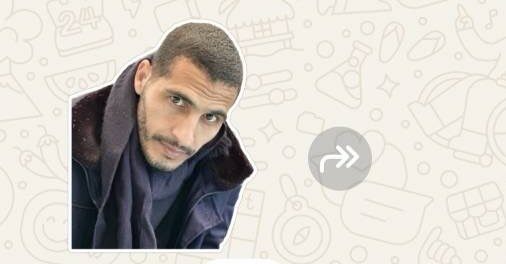
The other side of Hassan I saw, alongside the complete surrender of himself to the moment, was that he was also light and dry in his humour, in handling what was matter of fact. In his Instagram stories he would share shots from the tent where he was staying in Deir al-Balah, encouraging a teen he later told me had been orphaned and who was sleeping in the bed next to him to sing renditions of songs I don't know, in a shaky voice that Hassan could not stop laughing at. He cut through my uncertainty in our conversations, sending silly stickers of himself that showed him in the field, clutching a camera, with the words "we'll stay in touch."

When I would thank him for footage I'd asked for, commenting on its quality, the clarity emerging from a set of interviews, the clear sight of Israeli tanks converging along the Philadelphi Corridor on the Egyptian border — images no one else in the world had seen yet — he would acknowledge the gift he was giving me, the world, sending a wry little Whatsapp sticker of a purple-wrapped bonbon. We'd agree on a project and he'd tell me تمام التمام, a catchphrase that slipped into my Arabic and prompted a friend to ask if it came from Masha and the Bear, a source derivation Hassan would later confirm saying his children watch it.
I am heartbroken that he's gone, not because he and I were the closest of friends or because I imagine that what we shared is the most important of what has happened now for nearly 20 months amid an almost total and terrifying political apathy. I am heartbroken because Hassan and I existed in parallel to one another at a moment in time, different and distant, but sharing meaning and warmth in the glancing moments where we came together. He'd like my stories where I shared snaps of my cat, my plants, my brother, the sea. I am heartbroken because after he was targeted and injured by Israel's cowardly strike on the journalists tent at Nasser Medical Complex on April 7, he went offline for a few days, and when I finally managed to reach him, he was understandably less forthcoming, saying only that he was better thank God and that he'd send images from some of his colleagues for now. He stopped sharing things on Instagram, his last post was April 6, and we only spoke once or twice after that. I am heartbroken because although he said he was glad we had made one another's acquaintance because of the war, we never got to work together on the stories he said he wanted to tell afterward. Because after a colleague left us at Mada it became more difficult to produce video for publication, and our communication lapsed. I learned about Hassan's injury as I learned about his death, from a collective outcry from his colleagues and friends and acquaintances and followers online. This morning I listened to a voice interview of him where he was speaking about the smear targeting him. He was saying it is typical, the way Occupation seeks to smear away the picture, to justify itself.
I was scared that Israel would kill Hassan, but now I'm more scared by the way they killed him, prefaced by a smear campaign that has seen many outlets cut ties with him, prolonged by an attempted assassination and injury that limited his public profile and made it unsafe for him to share pictures that might reveal his location, and finally with a direct strike to his bed in the Nasser Hospital, not enough to spark already-tired outrage about the violation of a medical facility, just enough to kill him and one other person on the ward.
I have been scared by the grinding method that comes with Israel's bloodthirstiness, the way it wedges tiredness and distraction and worry between us, and makes us sometimes silent in the moments where our voices should sound out, whether in the quiet exchange of voicenotes between colleagues to share a joke or a reassurance; in the sharing of thoughts and plans to understand how we got here and how we can get purchase on a way to keep moving forward; or too in a cry of anger.
I never spoke with Hassan about whether he felt fear, though I felt his tension in an urgent voicenote he shared one night, months ago, to say his family was in immediate danger from troops advancing on their neighborhood. I imagined the existence of fear while I held back from pressing him for updates in recent weeks. In the same voice interview where he addressed Israel’s first attempt to assassinate him, he says that this method, the accusations whose purview he ultimately fell within, is a new version of an old thing. He spoke about Occupation journalists who came into the strip to document what their military was doing. Literally, he said, “it is what’s written for them, not for us.” I didn’t understand what he meant, and sent the interview link to some colleagues to ask what they thought. They told me they understood him to mean that depicting narrative is something that is assumed to be written for them, as in, permitted for Israel, and not permitted to Palestinians.
Hassan’s work recorded the visual, even in moments that could breed silence. He would say to me when I asked him for some spoken reports, that he was ready and could describe "the picture." I asked him once if he was archiving his work, the sheer breadth and scope of what he had documented, prisoners' recollections, the stories of displacement. He reassured me that he was. I hope that archive stands as testament, a document of how one might live and die recording a picture of the very thing that could consume us.
آراء أخرى

This is a rebel song
«Just when history, we were told, had allegedly ended in the 1990s, Sinéad O'Connor, icon and iconoclast, insisted on making it. By singing or swearing, shouting…»

Farewell, hero: On this land, we carry on
«Her work remained focused on the street, among the people and about them, among us and about us.»
Knowing Etel Adnan (1925–2021)
«Etel was perhaps never one to ascribe ideological or programmatic clarity to her convictions.»
Your support is the only way to ensure independent, progressive journalism survives.
You have a right to access accurate information, be stimulated by innovative and nuanced reporting, and be moved by compelling storytelling. Subscribe now to become part of the growing community of members who help us maintain our editorial independence.
Join us
لا توجد تعليقات بعد