
Vegetables, transportation push inflation back up after energy price hikes

Egypt’s annual consumer price inflation accelerated in August to reach 26.2 percent, compared to 25.7 percent in July, the Central Agency for Public Mobilization and Statistics announced Tuesday.
The new data represents the first acceleration after inflation trended downward over the past five months.
The increase in prices was recorded after the government hiked the prices of energy, electricity, bread and transportation over recent months in line with austerity measures recommended by the International Monetary Fund in its ongoing loan program, Egypt’s fourth with the fund in less than a decade.
The uptick is set to further affect household purchasing power, namely among lower-income segments of the population who have struggled to secure their basic needs in recent years, with inflation skyrocketing over the past two years of economic crisis.
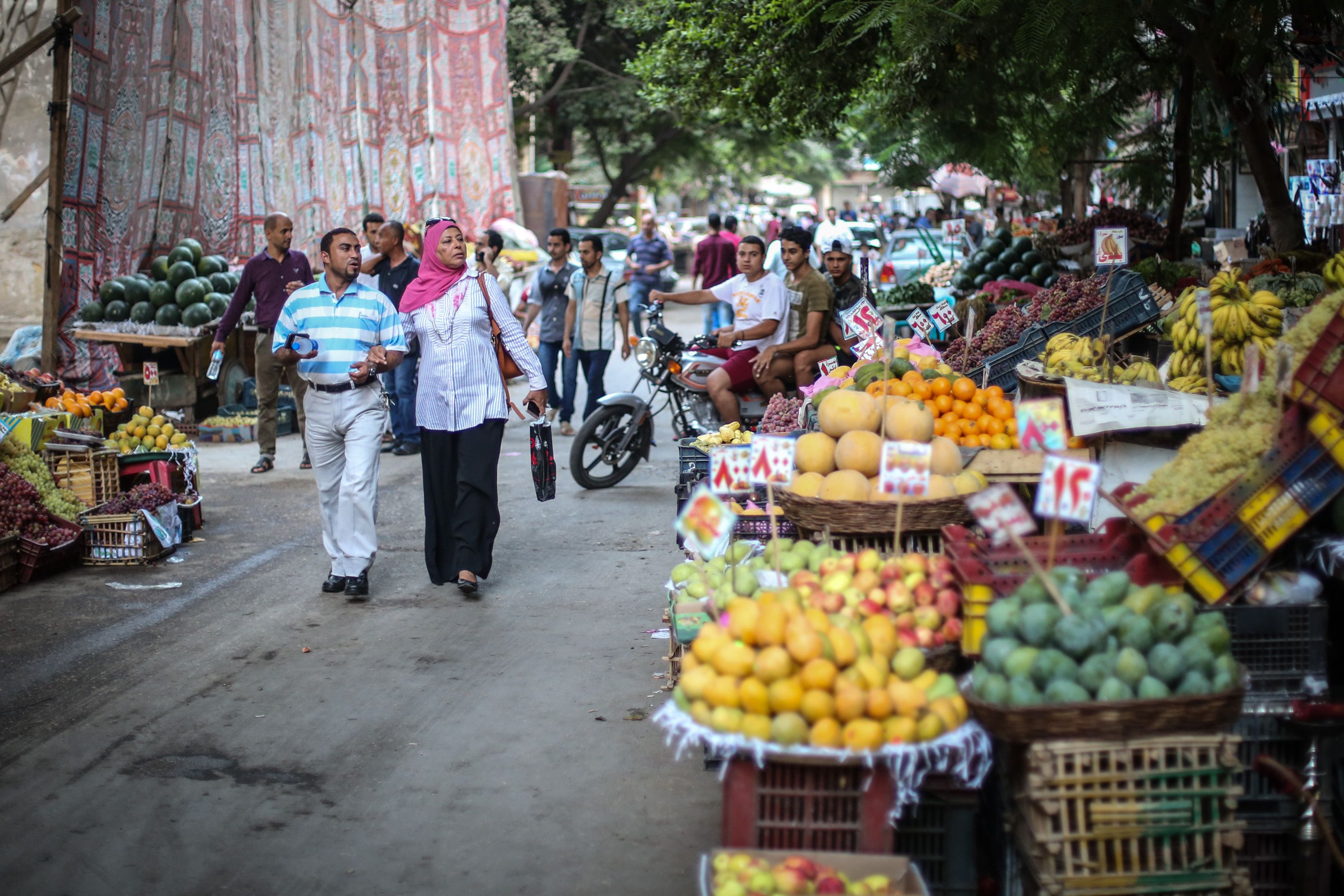
Data from CAPMAS showed that the increase in inflation over August was driven by the vegetables grouping of the Consumer Price Index — a basket of goods and services used to measure price increases.
According to the data, vegetable prices saw an increase of 14.3 percent month-on-month, while transportation also increased by a substantial 14.9 percent month-on-month.
Hesham Hamdey, deputy head of research at investment firm Naeem Holding, told Mada Masr on Tuesday that the main reason inflation increased in August for the first time in recent months is the recent increase in energy prices.
“For transportation costs, the increase is due to the hikes in the prices of fossil fuels ranging from 10 to 15 percent, ” the analyst said. The government increased fuel prices for households and businesses in July, shortly before a scheduled loan program review with the IMF.
Hamdey added that the increase in energy prices was also a factor driving up the cost of vegetables, given the cost of transporting crops from rural areas to urban centers.
CAPMAS reported that month-on-month inflation in urban areas, which is generally higher than the headline rate, increased by 2.1 percent in August from a 0.4 percent increase in July. The agency noted that food prices saw a slighter hike, with a 1.8 percent rise in August compared to a rise of 0.3 percent in the previous month.
Hamdey noted that increased temperatures over the summer also compounded to increase vegetable prices, as they led to a shortage in the supply of the two strategic vegetables to the Egyptian diet.
According to CAPMAS, food and beverages inflation figures witnessed a 1.8 percent increase compared to July.
Going forward, the April-June BMI Egypt Consumer & Retail Report of which Mada Masr obtained a copy predicted that higher goods and services prices will raise month-on-month inflation and push inflation up to around 30 percent in 2024, citing government subsidy cuts as the main factor.
Commenting on the trend going forward in light of August’s data, Hamdey said it is unclear how inflation will develop, though added that both the ongoing impact of fuel price hikes and the recent electricity price hikes could continue to impact the September and October inflation data.
The question rises on the capacity of households to weather another upward trend in inflation, amid the already increased cost of living for citizens across the country, especially in rural areas.
“This will definitely have an effect on the purchasing power of households given the inflation rates paired with fixed wages, the purchasing power will go down in the short term,” Hamdey said.
Minimum wage for the public sector was increased to LE4,000-LE6,000 per month in February, with the private sector being directed to implement the same rate, but the failure of many public and private companies to do so has driven workers to strike on multiple occasions over recent months. Recent data on wages is not available via CAPMAS.
But according to Fitch, which publishes the BMI consumer report, a majority of households nationwide are in rural areas with low overall incomes and an average disposable income of less than US$1,000 per year, making them more vulnerable to the impact of inflation.
Fitch predicted in June that the central bank will be “cautious” to ease its monetary policy direction in 2024 given that inflation rates remain above its target rate of five to nine percent, along with the “volatile nature” of the food component in Egypt.
Last week, the Central Bank of Egypt’s Monetary Policy Committee fixed interest rates, following an unprecedented hike of six percentage points in March.
أخبار ذات صلة

With no new hires, teacher shortfall widens in government schools
A government freeze on new permanent contracts for public school teachers is in its seventeenth year
Infographic: Egypt’s labor market dominated by ‘severe disparities,’ CAPMAS study says
The report highlights disparities in gender participation and legal protections for workers

Do not rest assured: People in need are still not getting their food subsidies
The announcement came two days after Sisi wrote on his Facebook page about the food program cuts

Q3 2017 sees slight decrease in unemployment rate
Unemployment has reached 11.9 percent, compared to 12.6 percent in the third quarter of 2016
Your support is the only way to ensure independent, progressive journalism survives.
You have a right to access accurate information, be stimulated by innovative and nuanced reporting, and be moved by compelling storytelling. Subscribe now to become part of the growing community of members who help us maintain our editorial independence.
Join us