
US Dept of Agriculture: Egypt’s cotton industry continues to decline
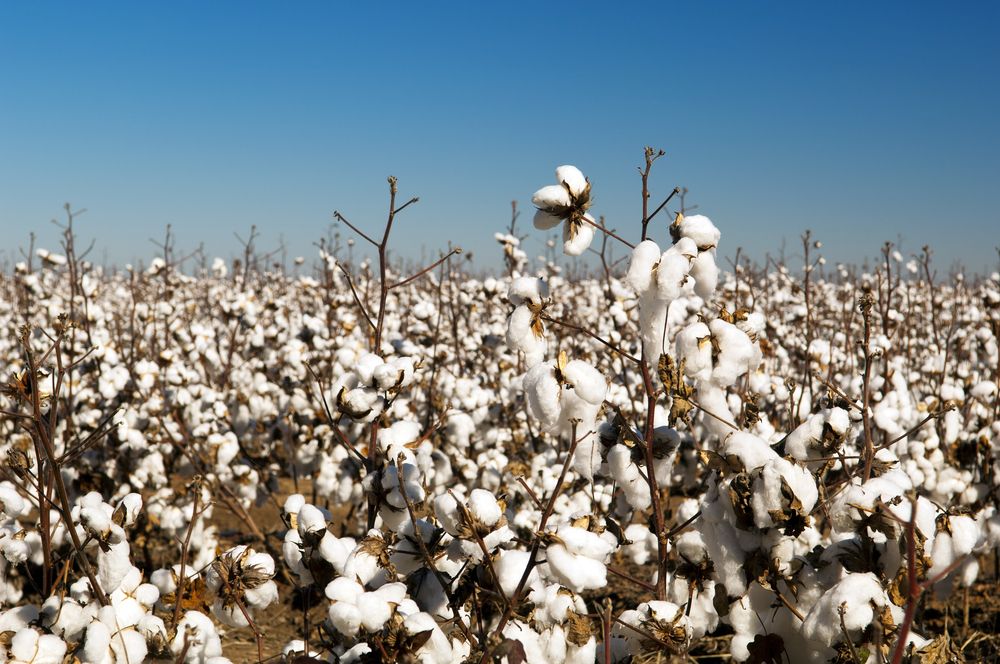
Once a key national export, Egypt’s internationally renowned long staple cotton industry continues to spiral, according to a report issued this month by the Foreign Agricultural Service of the US Department of Agriculture.
Entitled "Beyond All Expectations: Egypt’s 2016 Cotton Production Set to Plummet," the report reveals that the areas of agricultural land on which Egypt grows its cotton has shrunk by nearly 80 percent since the 1980s. This decline is attributed to recent state policies, farmers’ economic concerns, along with changing trends of manufacturing and consumption.
Largely based on figures issued over the years by the Egyptian Ministry of Agriculture, the report forecasts declining exports of Egypt’s long and extra-long staple cottons, along with increased imports of short and medium staple Asian cottons. The report does not, however, provide details on how this will impact Egypt’s textile industries.
According to the report, Egyptian “farmers are particularly wary of planting cotton without a strong government commitment to market the crop.”
While American lawmakers continue to press the US government to increase subsidies to its own cotton farmers, the Egyptian state has moved away from subsidizing the cotton industry over the past two years.
As a result, in 2016/2017 Egypt is expected to witness “a dramatic plunge,” amounting to a nearly 50 percent decrease in terms of land area in which cotton is grown, in comparison to 2015/2016, in which approximately 50,000 hectares of cotton were grown.
Thus, Egypt’s domestic cotton production has gone down from 395,000 bales to an all-time low of 160,000 bales, a drop of 53 percent from last year’s production of 320,000 bales.
The agricultural report also pointed out that Egypt’s cotton imports are expected to increase by 18 percent to 530,000 bales, at the same time that its cotton exports are forecast to decrease to 120,000 bales, a drop of 20 percent from last year.
In terms of domestic consumption, Egypt’s industries are relying less on the domestic crop of extra-long and long staple cotton varieties, while "users’ needs have shifted to medium and short staple varieties.”
Consumer preferences have “shifted heavily to garments such as denim, T-shirts, jeans, and others that require short and medium staple cotton, outpacing the demand for higher-end clothing and bed sheets that use extra-long and long staple cotton varieties,” the report states.
With the introduction of new textile technologies, manufacturers are able to efficiently produce the types of yarns from short and medium staple cotton, the report explains, which previously were only produced from longer staple cottons.
This report also cites recent findings issued by Egypt’s Ministry of Irrigation and Water Resources in May, which mention that farmers are moving away from cotton cultivation, and are instead choosing to grow rice due to the associated financial incentives of doing so.
The agricultural areas in which rice is grown in Egypt are expected to increase this year, from around 462,000 hectares to nearly 650,000 hectares in 2017.
Regarding international consumer trends, world consumption of extra-long and long staple cottons has reportedly decreased over the past few decades, and currently accounts for only around 2.5 percent of total global consumption.
However, neither Egypt’s government nor its cotton farmers have managed to adapt to these changing trends.
The vast majority of Egypt’s cotton production still consists of about 90 percent long and extra-long staples, while the remaining 10 percent of cotton production consists of short and medium staple varieties.
Citing Egypt’s Ministry of Agriculture, the report mentions that an estimated 80 percent of Egyptian cotton production will be exported, with around 20 percent consumed locally.
A vitally important factor in determining Egypt’s cotton exporting policies is based on the continually declining value of the Egyptian pound, the report adds.
“Exports have become attractive due to the expected increase in international cotton prices,” along with the devaluation of the Egyptian pound, the report states. In one year, Egypt's currency has gone from LE7.88 to LE8.88 per US dollar, with the dollar fetching upward of LE11 on the black market.

أخبار ذات صلة
Video | White gold
Seasoned Monufiya farmer Namaat Abdel Aziz Barin shares a traditional cotton harvest song.
Company accused of selling fake Egyptian cotton invited to open factory in Egypt
Tarek Qabil, minister of trade and industry, has invited textile company Welspun India to open a factory in Egypt. In August of…
Inconsistent policy changes are putting Egypt’s cotton industry in crisis
Egypt’s cotton industry has been subject to a dizzying series of policy shifts this year, leaving both farmers and manufacturers concerned about the future of the fabled crop. The year…
Egypt to increase cotton subsidies, support mills
The Cabinet decided on Monday to increase subsidies on local cotton. The government will now pay national factories LE350 for each quintal…
Your support is the only way to ensure independent, progressive journalism survives.
You have a right to access accurate information, be stimulated by innovative and nuanced reporting, and be moved by compelling storytelling. Subscribe now to become part of the growing community of members who help us maintain our editorial independence.
Join us