
Update: 29 killed in clashes on January 25 anniversary
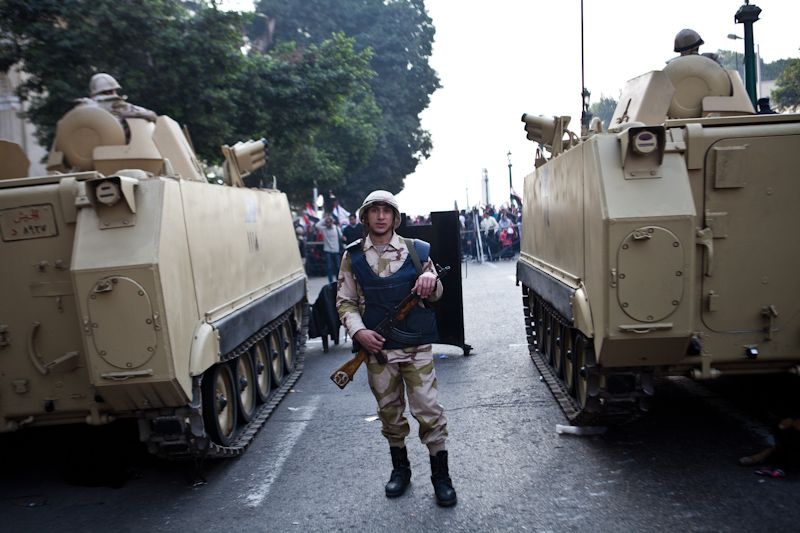
By Saturday evening at least 29 people were reported killed and 176 injured in clashes between protesters and security forces nationwide, according to a Health Ministry statement.
On the third anniversary of the January 25 revolution that ousted former President Hosni Mubarak in 2011, security was heightened around major squares and roads nationwide, but failed to prevent the violent clashes that broke out across the country.
The Interior Ministry had said it was prepared to fully protect citizens and secure January 25 "festivities." In downtown Cairo's Tahrir Square, the situation was calm as crowds rallied to celebrate in a festive atmosphere. Gunshots were heard earlier in the day, but this did not deter people from gathering in the square.
By evening, Tahrir Square had filled up with tens of thousands who lit fireworks and chanted, “Egypt will always be dear to me,” state-owned Middle East News Agency (MENA) reported. The crowds “affirmed their defiance of the Brotherhood’s armed militias,” maintaining that going to the square today was a clear message to terrorist forces seeking to kidnap Egypt.
Egypt's metro authority stated that it was running 30 metro cars to the keep up with the crowds expected to flood into Tahrir, MENA reported.
But clashes that erupted outside the square left four dead in Cairo, two in Minya and two in Giza, in addition to one fatality in Alexandria, the Ministry of Health stated. Several were also injured in clashes that broke out in Fayoum, Ismailia, Assiut and Beni Suef.
As altercations escalated into the afternoon, the Revolution Path Front called on its members to withdraw from protests in an official statement, denouncing what it described as the excessive use of violence by security forces.
The front is a coalition of several revolutionary forces, including the April 6 Youth Movement and the Revolutionary Socialists. Members of the coalition had been present at the Mostafa Mahmoud protest in Cairo's Mohandiseen neighborhood, which was quickly dispersed around 1 pm, and also joined a demonstration on the Journalists’ Syndicate steps at 2 pm in downtown.
Later, the group marched from the syndicate en route to Tahrir Square, but the march was violently dispersed when security forces fired tear gas and shots in the air.
"The conflict with the regime is ongoing, but protecting your souls and freedoms is the most important hope remaining for the revolution," the statement from the Revolution Path Front said.
In Tahrir, the mood was celebratory, with protesters holding up posters of Defense Minister Abdel Fattah al-Sisi and Interior Minister Mohamed Ibrahim, while dancing to pro-military song "Teslam al-Ayady."

But outside of the square, security forces had moved to quickly disperse protests and marches organized by groups of different political affiliations.
A march of 300 people in front of the High Court building on Ramses Street was dispersed using tear gas, the state-owned newspaper Al-Ahram reported. Protesters were chanting against the military, the police and the interim government's roadmap.
Meanwhile in Mohandiseen, violence continued following the dispersal of the march that had gathered at Mostafa Mahmoud Square intending to head to Tahrir. Protesters of a variety of political affiliations began gathering after noon prayers. Some were from the umbrella group that calls itself the Anti-Coup Alliance, made up of supporters of the Muslim Brotherhood and deposed President Mohamed Morsi.
They raised the yellow and black Rabea sign, which has come to symbolize the movement, as well as the violent August 14 dispersal of the Rabea al-Adaweya and Nahda Square sit-ins that demanded Morsi's reinstatement.
Some chanted “The people want to overthrow the regime,” and “Down with military rule.”
Other protesters were not affiliated with the Brotherhood and said they were there for the “original demands” of the January 25 revolution. They attempted to convince those holding the Rabea sign to stop, saying, “we have to stay focused. We're here for the demands of the revolution and we don't want to ruin the day with other demands."
Haytham Mohamedeen, a member of the Revolutionary Socialists, was among those leading the chants, saying: “Not for legitimacy, nor for a mandate, the revolution continues.”

Osama Ashraf, a student and member of the April 6 Youth Movement, stated that while he’s not against Rabea, he refuses to side with the Brotherhood.
Some of the protesters began singing anti-police chants from the Ultras Ahlawy group.
Mada Masr reporters on the scene said protesters quickly scattered and ducked for cover as security forces launched an unprovoked attack, firing in the air what sounded like birdshot, causing several injuries.
After entering the area with APCs and dispersing the protest, military and Central Security Forces personnel roamed the area on foot, checking to see where people were hiding.
Al-Ahram reported that security forces chased protesters in side streets around the neighborhood, located in the Giza governorate.
Tarek Shalaby, a member of the Revolutionary Socialists who was also present at the march, reported that the dispersal started just past 1 pm. He said he saw protesters being detained, and all who were left in the square were about 200 to 300 plainclothes and uniformed police.
Al-Ahram reported that 15 were arrested in the Mohandiseen clashes, and were allegedly in possession of Molotov cocktails. A security source told Al-Ahram that 10 members of the 6 April Youth Movement were among those arrested.
The area was then sealed off by security forces.
Sources from the Anti-Coup Alliance said that crowds then regrouped to continue their protest in Mohandiseen’s Sudan Street.
Residents of the area told Mada Masr that gunfire was heard as police and military forces were seen chasing protesters.
One resident overlooking Sudan Street said he saw young protesters arrive there after the main march in Mostafa Mahmoud was dispersed. The protesters reportedly set tires on fire and chanted "Down with military rule" and "Down with the regime."
Other residents in Dokki and Mohandiseen also reported hearing gunfire from the direction of Sudan Street.
Many of those who were scattered from the Mostafa Mahmoud march then headed to the Journalists’ Syndicate, where a protest was scheduled to start at 2 pm on the historic steps of the building.
Shalaby, who headed to the syndicate after the march, stated that “as numbers grew, we were eventually surrounded and at a dead end on both sides. The atmosphere was very hostile and I felt that I had to carry a poster of Sisi in order to have a safe exit."
Shalaby and a few others left the scene unharmed, but fear many may have been detained.
At the syndicate, the protest was mostly made up of revolutionary forces, as passersby honked and saluted them as they drove by, including passengers on buses. They chanted against “all those who betrayed [the revolution],” including the army, Interior Ministry and different political forces.

In response, one passerby, 33-year-old Ahmed Khaled, said, "The people and the army are one. They cannot destroy that."
Chants popular among the Ultras Ahlawy, including “We will not forget Tahrir, you sons of filth,” could also be heard.
Ahmed Aboul Magd from the Revolutionary Path Front said, “We are here today because we want the regime to fall. We said it three years ago and we still say it today."
“We say down to everyone who betrayed us for power: The feloul [remnants of Mubarak’s regime], the Brotherhood and the military. We still want a country without a pharaoh and where we can have dignity, freedom and rights.”
He added that revolutionary forces refuse to accept any kind of violence, whether from the state or from militant groups.
“We are here to show that we are here and always will be. The revolution continues," he said.
Others also called on people to remember those who were killed by security forces over the past three years. “Don't forget who killed Jika: the Brotherhood and the Interior Ministry,” they said, referring to Gaber Saleh, who was killed in 2012 during the second anniversary of the Mohamed Mahmoud clashes.
Meanwhile, security sources said that police quelled an attempt by members of the Muslim Brotherhood to storm the October 6 police station, according to Al-Ahram. Three were arrested, and were allegedly in possession of weapons and live ammunition.
According to activists, tens were arrested early on Saturday during a protest in the Cairo neighborhood of Maadi, including prominent activist Nazly Hussein.
Prime Minister Hazem al-Beblawi had visited Tahrir Square early on Saturday as army helicopters flew overhead, releasing gifts onto the crowds celebrating below in what was once the epicenter of the 2011 revolution.
Beblawi lauded the crowds’ “persistence to mobilize and celebrate the revolution,” and challenged the terrorist acts aimed at breaking the people’s resolve.
On Friday, four blasts rocked the capital, leaving at least six dead and dozens injured. That same day, clashes broke out between supporters of the Muslim Brotherhood and security forces, leaving at least 15 dead.
Beblawi said the large crowds will ensure the success of the celebrations of the third anniversary.

أخبار ذات صلة
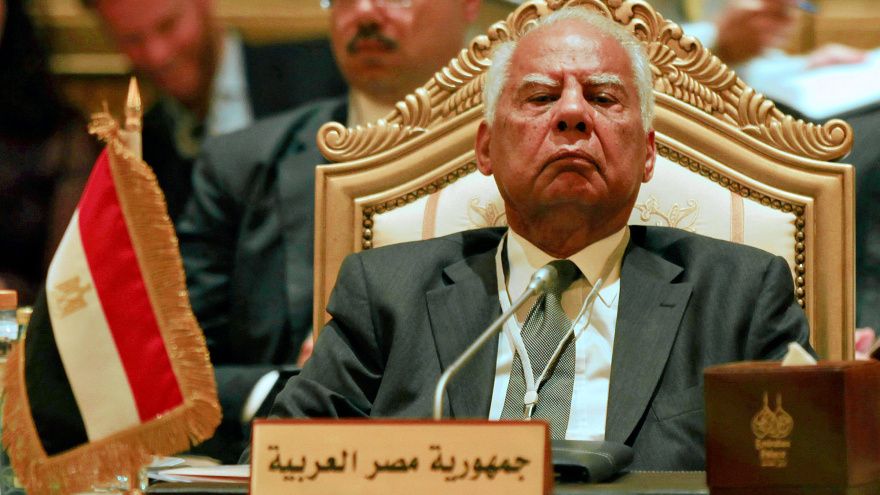
After US govt upholds immunity, federal judge drops former prisoner’s torture lawsuit against ex-PM Beblawi
Soltan called the move "devastating but expected” given the “Biden admin’s unnecessary intervention"
Biden administration declares Beblawi immune from federal lawsuit alleging torture
The US Justice Department filed a declaration on April 1 certifying Beblawi’s diplomatic status.

United Group slams NGO draft law
Leading civil society organization, The United Group (UG), slammed the draft law to organize the affairs of NGOs in Egypt, in a…
State officials, party leaders lambaste HRW report on Rabea dispersal
Several state officials and politicians spoke out against a report issued by the New York-based Human Rights Watch (HRW) that called the…
Your support is the only way to ensure independent, progressive journalism survives.
You have a right to access accurate information, be stimulated by innovative and nuanced reporting, and be moved by compelling storytelling. Subscribe now to become part of the growing community of members who help us maintain our editorial independence.
Join us