
Update: 22 people sentenced to 10 years in prison for an early 2013 anti-Morsi protest

The Cairo Criminal Court sentenced 22 people to 10 years in maximum security prison for their role in clashes that broke out during protests against former President Mohamed Morsi in February 2013, the state-owned newspaper Al-Ahram reported on Monday.
They were also fined LE20,000 and will be placed under surveillance for five years. Seven other defendants in the case, all of whom were minors, were sentenced to five years in prison. All of the defendants were sentenced in absentia.
The accused were convicted of protesting without the required permit on February 15, 2013, when they gathered at the Qubba Presidential Palace to denounce Morsi's rule. The demonstration resulted in a violent confrontation with security forces. Other charges included thuggery, threatening the use of violence, illegal show of force and vandalism.
However, the Protest Law stipulating that groups must acquire permits for protests was not ratified by former President Adly Mansour until November 2013, nine months after the events in question.
Mahmoud Belal, a lawyer with the Egyptian Center for Economic and Social Rights, told Mada Masr that he is not sure whether the defendants were convicted retroactively under the Protest Law, or if the ruling was based on the Illegal Assembly Law that has been in place since 1914, or Public Assembly Act No. 14 of 1923, which also regulates protests.
According to the hotly contested Protest Law, organizers of demonstrations are required to send a request to the nearest police station at least seven days ahead of the protest detailing its route, start and finish time, demands and names of its organizers. The law penalizes organizing a protest without acquiring this authorization with a fine of LE100,000.
The law also bans sit-ins, protest movements that may “hinder production” and the use of masks during protests, crimes which are punishable with fines ranging from LE50 up to LE100,000. The legislation continues to draw criticism from human rights defenders, who argue that it imposes too many limitations on the right to protest and allows police to commit acts of violence against demonstrators with impunity.
Paradoxically, though these defendants were sentenced to prison for protesting against Morsi, the Armed Forces — which played a key role in ousting Morsi and installing the interim government that drafted and approved the Protest Law — has at different moments explicitly condoned other such protest actions. The military supported the three-day sit-in that began on June 30, 2013 calling for Morsi's resignation, for example, calling it an "expression of the people's will" that they sought to execute by forcibly removing the president from office.
Furthermore, shortly thereafter, then-Defense Minister Abdel Fattah al-Sisi directly called for the people to take to the streets to give the military the mandate to combat terrorism.
This article has been edited for clarity and context.

أخبار ذات صلة
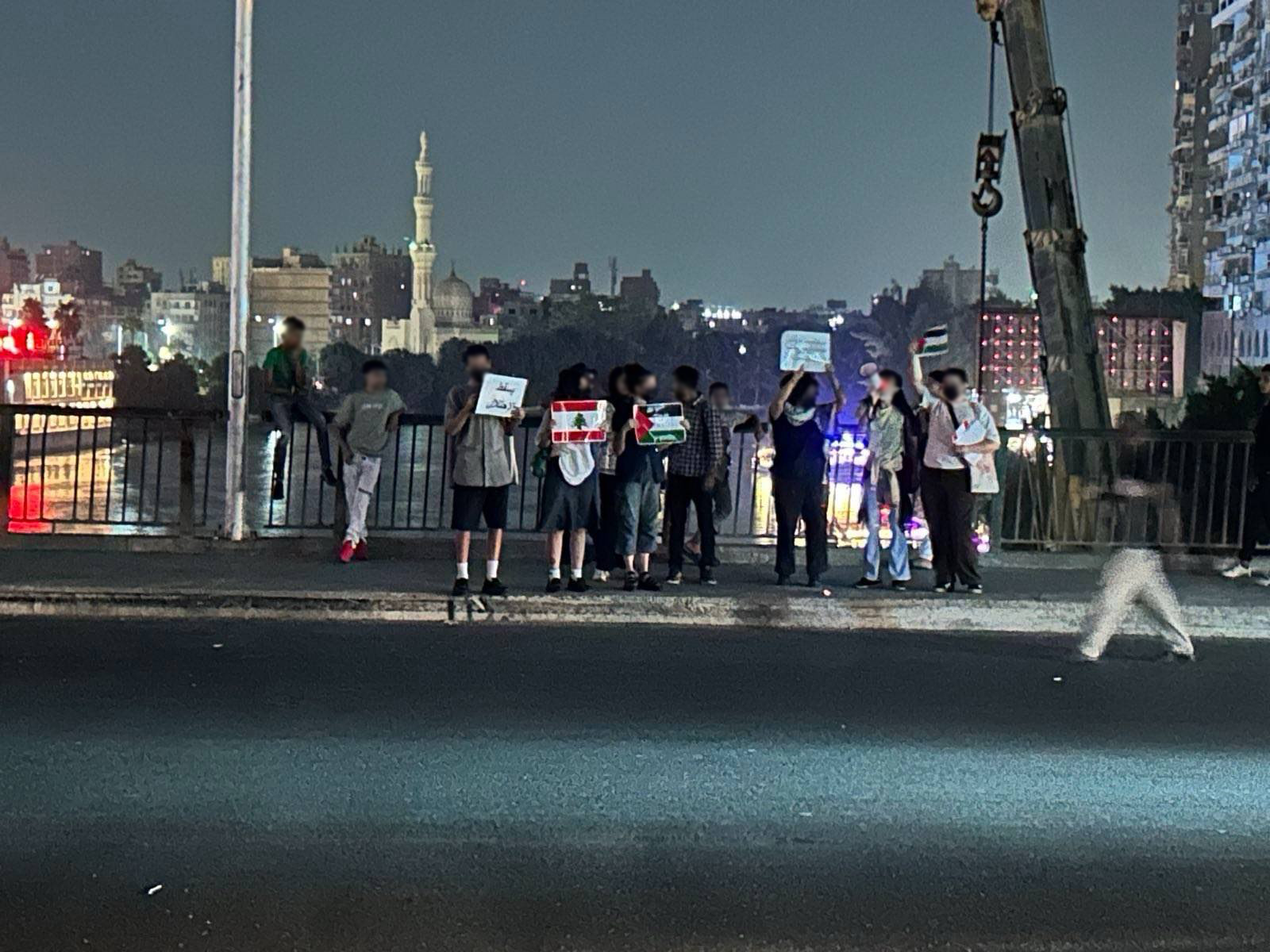
Four people arrested from Cairo demonstration for Palestine, Lebanon questioned on protest charges
Four people who were arrested earlier in the week from a demonstration are to spend another night in detention following questioning on…
Six arrested in Cairo after protesting Israel’s war on Palestine, Lebanon, whereabouts unknown
Six people were arrested by security forces on Monday night in Zamalek following a small demonstration they held in support of Palestine…
What will change as Egypt exits a 4-year state of emergency?
Under the state of emergency, the president and security services were granted wide-reaching powers
Lawyers: At least 70 arrested nationwide for alleged involvement in ‘protests’ sparked by train crash
At least 70 have been arrested for alleged involvement in protests of last week's train accident
Your support is the only way to ensure independent, progressive journalism survives.
You have a right to access accurate information, be stimulated by innovative and nuanced reporting, and be moved by compelling storytelling. Subscribe now to become part of the growing community of members who help us maintain our editorial independence.
Join us