
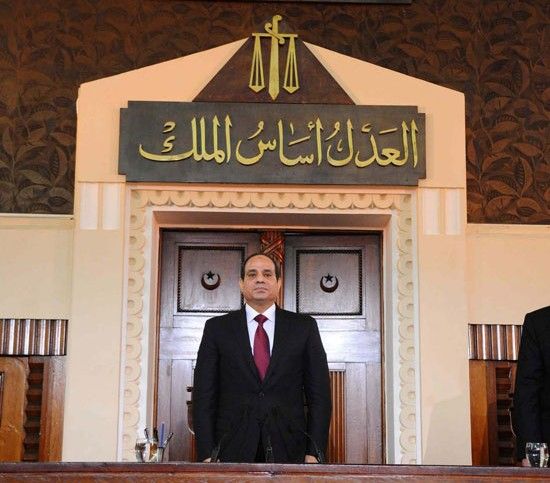
What will change as Egypt exits a 4-year state of emergency?
The state of emergency was dropped across Egypt on Monday evening by President Abdel Fattah al-Sisi after four years of emergency law, and seven years in the Sinai Peninsula.
“The country has finally achieved enough security and stability to do without it,” said Sisi in a statement." Egypt has become, thanks to its great people and loyal men, an oasis for security and stability in the region,” he said.
A three-month state of emergency was first enacted in April 2017, after two church bombings in Alexandria and Tanta on Palm Sunday, where at least 47 people were killed. It had been renewed continuously ever since until Monday. It was enacted in 2014 in parts of the Sinai after a deadly attack by militants killed at least 33 members of security forces.
Under the state of emergency, security services were granted wide-reaching powers to detain and interrogate suspects, monitor private communications, and censor media content before publication with almost no judicial oversight.
Authority over the emergency courts was centralized under the president. The president or a delegate was empowered to refer public law offenses to trial, with misdemeanors referred to Emergency State Security Misdemeanor Courts and felonies to Supreme Emergency State Security Courts.
Rulings in emergency courts cannot be appealed except by direct request to the president or a delegate, and are not final until they are ratified by either of the two parties.
The president also had the power to grant temporary release for suspects before they are referred to trial, and reduce, substitute or overturn sentences.
Several executive decrees issued under the emergency law also made a litany of specific offenses eligible for trial in the emergency courts —many which of were also made referable to military courts — including:
- Supply crimes
- Building violation,
- Infractions on agricultural land or on water channels
- Unlawful protesting and gathering
- Threatening state security from within or from outside the country
- Crimes under the terrorism law
- Bullying
- Fraud and cheating
- Possession of weapons or live ammunition
- Violating the sanctity of places of worship
- A number of offenses specific to Egyptian Railway Authority workers:
- Manslaughter
- Accidental injury
- Forgery of railway documents
- Damage to the property of the Egyptian Railway Authority
- Infracting upon the freedom of work and sabotaging facilities
With the state of emergency officially cancelled, what will change?
New offenses that would previously have been prosecuted by emergency state security courts will no longer go to the special tribunals, though the situation is slightly different for offenses that took place before the state of emergency expired on October 23.
What will happen to existing investigations into crimes that were referable to emergency courts?
The investigations will continue under Article 19 of the 1958 Emergency law, but if a decision is taken to refer them to trial, they will be sent to the ordinary courts.
What about people who were already referred to trial in Emergency State Security Courts?
These will still go to trial in emergency courts. Article 19 also states that upon the end of the state of emergency, the Emergency State Security Courts will still hear cases that have already been referred to them and continue to issue rulings on them. That means that security trials will continue for postgraduate researcher Patrick Zaki, former MP Zyad Elaleimy and Palestinian-Egyptian BDS activist Ramy Shaath, writer and activist Alaa Abd El Fattah, lawyer Mohamed al-Baqer, and blogger Mohamed “Oxygen” Ibrahim among others.
What about verdicts issued by emergency courts?
There will be no change in the procedures required for these verdicts to be final. That is, rulings issued by those courts — such as the four-year sentence handed to postgraduate researcher Ahmed Samir Santawy — still need to be ratified by the president, who still has the power to refuse ratification and order a retrial, as happened in the case of Mamdouh Hamza. The retrial will be held in an Emergency State Security Terrorism Court.
Does this equate to a breakthrough in Egypt's justice system?
While no new cases will be referred to Emergency State Security Courts, new laws introduced over recent years mean that security forces are granted exceptional powers over a wide range of offenses.
A similar situation to a state of emergency will continue for an unspecified amount of time in “some areas of the Sinai,” according to a presidential decree issued on October 4 to impose additional measures there based on the 2015 anti-terrorism law. The decree gives the defense minister the authority to determine areas subject to the exceptional measures, which allow for similar security actions like forced evacuations and curfews — which were also provided for under the emergency law.
Meanwhile, security forces are still able to operate at times without judicial oversight under the anti-terrorism law. For example, article 40 of the law allows for people to be arrested without a warrant even if they are not caught in the act of breaking the law, while Article 34 provides a legal framework for punishing defendants for preparing an act of terrorism even if this plan was never put into action. Article 8 gives security forces impunity from criminal responsibility for the use of force to perform their duties and in self-defense.
Under the law on terrorist entities and terrorism lists, individuals, businesses, media platforms, and any form of organization, legal or otherwise, can be added to state terrorist lists even if they have not been convicted of terrorist crimes. In the process, their assets can also be seized, whether or not they are related to the alleged offenses.
There are also new measures that can be taken against individuals placed on the terror list, including freezing their memberships in syndicates, company boards, associations and government institutions, in addition to barring them from running for local councils or “practicing any community or promotional activities.” Those placed on state terrorist lists can also legally be terminated from government jobs and contracts with public sector companies.
Additionally, the right to protest is inhibited by the protest law, which obliges protest organizers to inform the nearest police station of the place of the protest, its start and finish times and its purpose, in addition to the names and contact information of organizers. It also prohibits protests from exceeding the planned time, using fireworks, face masks or protesting in the vicinity of places of worship. The legislation was later amended to limit unauthorized protests to Fustat Garden and the car market in Nasr City and ban them from taking place near any government building.
The grounds to refer civilians to military trials have also expanded significantly in recent years. A 2014 presidential decree placed a number of “public and vital facilities” under the control of the Armed Forces and allowed civilians accused of “direct assault” to be referred to military trial, greatly increasing the jurisdiction of military courts. Constitutional amendments passed in 2019 removed the word “direct” and further expanded the range of facilities under the military’s purview.
A 2017 law gave the president greater power to choose and appoint the heads of key judicial bodies, including the Court of Cassation, the State Council, the Administrative Prosecution Authority, the Supreme Judicial Council and the State Lawsuits Authority. In 2019, a set of constitutional amendments further executive control over judicial appointments and established the Council of Judicial Bodies, also headed by the president.

تقارير ذات صلة

EIPR: 5-year prison sentence for contempt of religion represents continued abuse of 2018 cybercrime law
Lawyers say the vague charges used against Girgis have been used to suppress freedom of expression
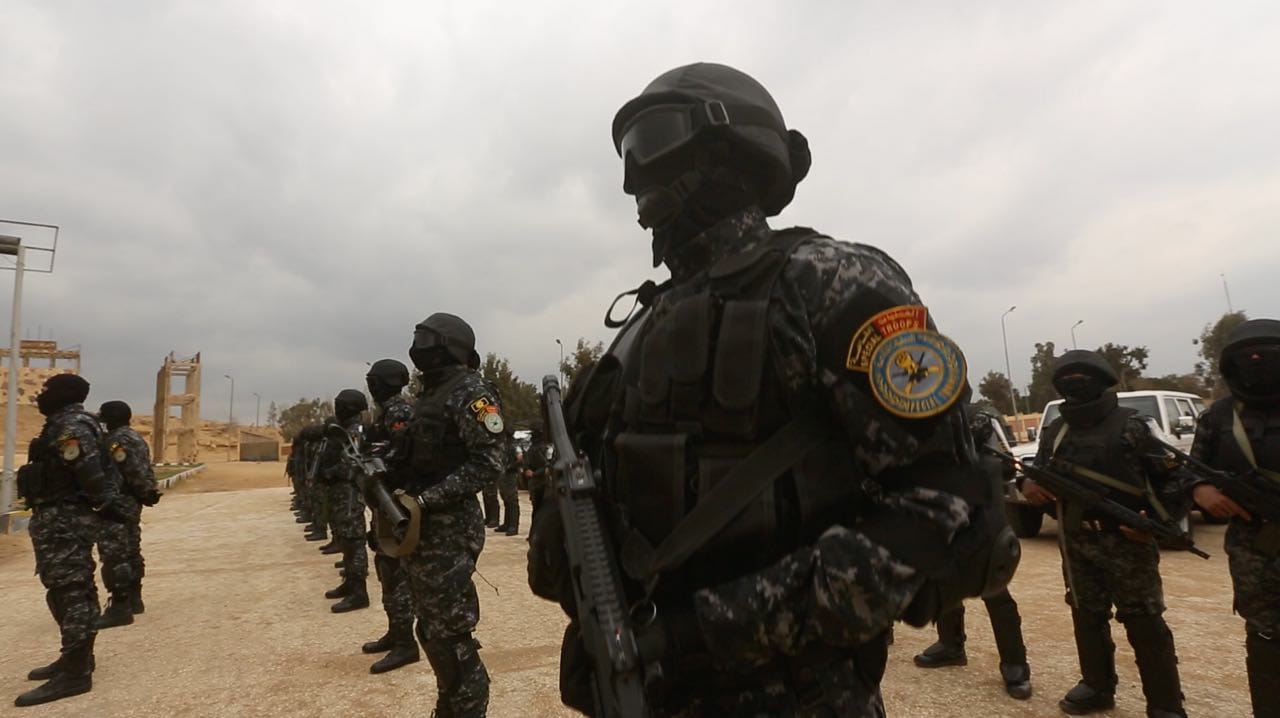
Keeping courts in a state of emergency
Why will Egypt have been under a state of emergency for nearly 18 months when the most recent extension ends in October? Emergency State Security Courts are a big reason.
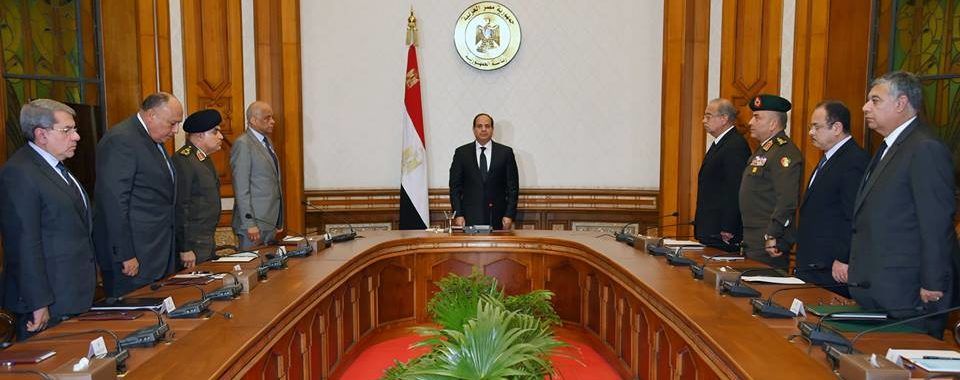
Parliament approves Emergency Law amendment, permitting indefinite detention
Parliament approves Emergency Law amendment to address void left by 2013 constitutional court ruling
Your support is the only way to ensure independent, progressive journalism survives.
You have a right to access accurate information, be stimulated by innovative and nuanced reporting, and be moved by compelling storytelling. Subscribe now to become part of the growing community of members who help us maintain our editorial independence.
Join us