
Trump’s 10% tariff still applies to Egyptian exports but US prepared to negotiate, govt official says

All of Egypt’s exports to the United States will be subject to the 10 percent baseline tariff announced last week by US President Donald Trump, Investment and Foreign Trade Ministry official Yahya al-Wathiq told Mada Masr.
Wathiq, head of the ministry’s Commercial Representation Authority, said the rate will be levied across the board, even on products manufactured under the Qualifying Industrial Zones (QIZ) protocol, which provided companies duty-free access to American markets on the condition their product contained a 10.5 percent component sourced from Israel.
After a week of stock market turmoil, Trump backed down on Wednesday night from the additional reciprocal tariff rates, which he had slapped on countries running a trade surplus with the US and announced a 90-day pause on their implementation.
The countries affected by the reciprocal tariffs, which is all countries taxed apart from China, now enjoy a three-month respite to cut deals with Trump and secure exemptions and amendments to the rates in negotiations that the administration is inviting for select nations.
But the 10 percent baseline rate he introduced for countries with which the US does not have a trade deficit, including Egypt, will remain in effect.
Egypt could have the chance to secure exemptions, however, Wathiq said. Speaking at a seminar hosted on Tuesday by the Egyptian Center for Economic Studies, Wathiq said the US administration offered Egypt the possibility of reducing the new tariffs provided Cairo agrees to remove a number of non-tariff barriers currently restricting trade.
These non-tariff barriers, which can include import quotas or off-book complex procedures required by the government, limit trade by creating barriers to entry for certain products or sectors. Wathiq cited the example of halal certification, required for beef imports, as one such barrier under discussion.
Wathiq stressed, however, that these trade restrictions were not the original reason for the newly imposed tariffs — even though the US government is now citing them as a justification. “The Egyptian government can remove some of these restrictions, but not all,” he said.
“Some are imposed on certain services, while others are tied to national security.”
An opportunity for Egypt?
In the wake of the global trade offensive Trump embarked on last week, manufacturers and exporters in Egypt were initially uncertain about whether the new rate would affect exports eligible for the QIZ protocol, a scheme devised by the US in the 1970s as it sought to integrate Israel into the regional economy.
Ready-made garments and textiles account for 45 percent of Egypt’s total exports to the US, and 53 percent of its non-oil exports — or the equivalent of US$1.02 billion out of a total of $1.9 billion worth of Egyptian exports — according to 2023 data from the American Chamber of Commerce in Egypt. Almost all Egypt’s garment exports to the US fall within the protocol, Egyptian Exporters Association Chair Mohamed Kassem told Mada Masr.
Some manufacturers and exporters warned that imposing tariffs on products manufactured under the protocol could effectively violate one of the deal’s terms, which they said could render it void.
Others were bullish about the prospect, arguing that Egypt’s businesses could withstand the 10 percent duties, particularly the ready-made garment and textiles sectors which represent a large proportion of Egypt’s exports to the US, and of which many are eligible for the QIZ exemptions.
The former head of the Ready-Made Garments Export Council, Magdy Tolba, said these industries even benefit from an opening in the sector as a result of Trump’s decision, which imposed higher reciprocal rates on major clothing exporters like Vietnam and Bangladesh, countries running a much larger trade surplus with the US than Egypt.
Wathiq echoed the view expressed by manufacturers: Egyptian products exported under the QIZ framework will likely retain their competitive edge in US markets after the new rates come into effect, given the much higher tariffs imposed on competitors.
Wathiq also pointed out that the steep taxes imposed by the US on a wide range of countries could present an opportunity for Egypt to pull foreign investment from companies in affected countries. These companies, he explained, may look to lower their export costs to the US market by shifting part of their production to Egypt, allowing their products to qualify as Egyptian-origin.
The new US tariffs could also open another door for Egyptian exports to access European markets as a potential alternative to some American products — especially if the European Union raises its own tariffs on US goods, according to Wathiq.
On Wednesday, the European Union announced that it approved a package of tariffs targeting American imports, in response to what it described as “unjustified and damaging” measures imposed by the Trump administration, “causing economic harm to both sides, as well as the global economy.” In a statement from the European Commission, the EU said it is prepared to suspend the retaliatory measures at any time if the US agreed to a “fair and balanced negotiated outcome.”
What next for QIZ?
Manufacturers speaking to Mada Masr last week had anticipated that the new conversation around trade could present an opportunity to revive a long-standing demand from Egypt to lower the Israeli production input required to be eligible for the scheme from 10.5 percent to eight percent.
Tarek Tawfiq, a board member of the Federation of Egyptian Industries, argued at Tuesday’s conference that the QIZ protocol is hard to expand in its present state, noting that Israel does not manufacture suitable production inputs for many industrial sectors.
Responding to Mada Masr’s question on whether the Egyptian government has sought to reduce the minimum Israeli input requirement, Wathiq said that three years of negotiations with Israel on the subject had been suspended after October 7, 2023.
He added that Egypt would seek to resume talks if Israel eased “pressures,” without clarifying the nature of these pressures.
Wathiq nevertheless suggested that Egypt should consider expanding production within its QIZ framework to include sectors beyond ready-made garments — such as leather products — especially given the US government’s reluctance to pursue the alternative option of expanding the zones where industries can operate under QIZ, currently restricted to specific geographical areas within the country.
أخبار ذات صلة
US designates Muslim Brotherhood in Egypt, Jordan, Lebanon as terrorist organizations, citing Hamas ties
The United States designated the Muslim Brotherhood’s branches in Egypt, Jordan and Lebanon as terrorist organizations on Tuesday, according to a statement…
Trump says US ‘working on’ resolving Grand Ethiopian Renaissance Dam dispute
President Abdel Fattah al-Sisi expressed appreciation for what he described as Trump’s keenness to r

Hamas releases Israeli American soldier Edan Alexander as negotiations to end war resume under Israeli fire
Alexander, a 21-year-old soldier in the Israeli army who was raised in New Jersey, is thought to be
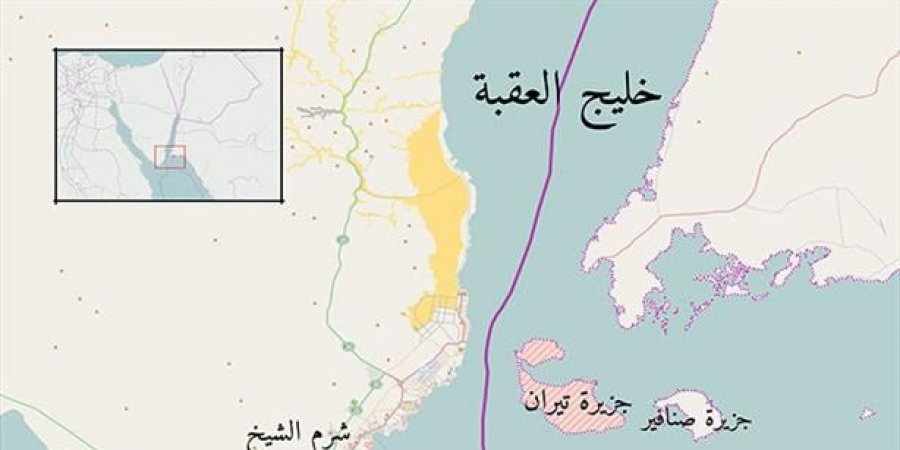
Lawyers reignite fight against govt’s transfer of Tiran, Sanafir islands to Saudi Arabia
The appeal calls for the annulment of the 2017 presidential decree and argues that the transfer viol
Your support is the only way to ensure independent, progressive journalism survives.
You have a right to access accurate information, be stimulated by innovative and nuanced reporting, and be moved by compelling storytelling. Subscribe now to become part of the growing community of members who help us maintain our editorial independence.
Join us