
Tahrir metro to re-open but only for transit
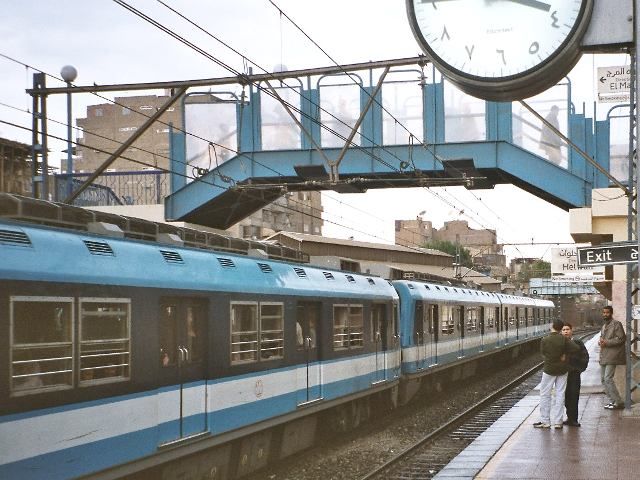
After nearly nine months of closure, officials from the metro’s operating company announced on Wednesday that the central Sadat station, located in Tahrir Square, would be reopened by the end of April, but only as a transit station.
Commuters will not be able to enter or exit the station from Tahrir Square, only from connecting underground metro stations.
Sadat station is one of only two points at which commuters may change direction on the metro’s three lines. The closure of Sadat has resulted in a chaotic congestion of commuters at the Shohadaa metro station in Ramses Square, which has been serving as the sole transit point for months.
Chief of the Egyptian Company for Metro Management and Operation, Ali Fadaly, released a statement saying that Sadat station would soon reopen to the public after authorities shut it down over eight months ago. Fadaly said that 85 percent of renovations and maintenance operations at the station were already complete as of Wednesday.
Police and army authorities have repeatedly cited “security concerns” as the reason for the metro station’s closure.
Both Sadat and Giza metro stations have been shut since August 14, following the violent dispersal of two pro-Morsi camps after former President Mohamed Morsi was ousted from power in July.
Riot police and military conscripts have been deployed in Tahrir Square since August 14. These forces have driven away a wide variety of protesters attempting to assemble in Tahrir, except for supporters of the former military strongman and presidential candidate Abdel Fattah al-Sisi.
While Tahrir station may partially re-open for service, there is no news regarding the re-opening of the Giza metro station, which remains shuttered up, with hundreds of security forces still deployed around the clock close by.
Giza metro station is in close proximity to Nahda Square outside Cairo University, which served as one of the two major pro-Morsi protest camps established from late June to August 14.
Regardless of the “security concerns” that ruling authorities continue to cite, several million commuters have been inconvenienced by the lengthy closure of both the Sadat and Giza metro stations.
In late March (independent NGO) the Nedal Center for Rights and Freedoms filed an appeal before the Cairo Court for Urgent Matters, calling on its judges to issue a verdict obliging the interim authorities to end the closure of these two stations.
However, on April 10, this hearing was dismissed as the court found that it did not have the jurisdiction to issue a verdict regarding this specific issue.
Fadaly also stated that the second phase of the metro’s third line (currently stretching from Attaba to Abbasiya) would be tested on further stations in the northern Cairo district of Heliopolis.
He mentioned that this second phase of the third metro line is scheduled to be completed by the end of April, while the new phase would be open to commuters by the first week of May.
According to figures provided by the National Authority for Tunnels, an estimated four million commuters use the metro system around Greater Cairo each day. The metro’s three lines facilitate transportation in several locations around the governorates of Cairo, Giza and Qalyubiya.
Ironically, the Cairo Metro Company website still refers to the Ramses Square station as the “Hosni Mubarak Station,” even though it was officially renamed “Al-Shohadaa” (Martyrs) station in 2011 following the January 25 uprising, which left over 800 protesters dead.

أخبار ذات صلة
New bill proposes financialization of public utilities providers
The bill raises questions about the cost for the public who will use the services.
Residents forcibly disappeared after protest against government demolitions
On Friday, around 30 residents gathered on Tersa Street in Talbiya to protest the Cabinet decision

As unemployment rises, government hikes metro prices and reduces bread subsidy
Up to 72 million Egyptians will receive less bread for their money after subsidized loaves shrink
Metro fare hike prompts protests and arrests, adds to the burdens of Egyptians
Commuters angrily respond to a recent hike in metro fares ranging between 250 and 300 percent
Your support is the only way to ensure independent, progressive journalism survives.
You have a right to access accurate information, be stimulated by innovative and nuanced reporting, and be moved by compelling storytelling. Subscribe now to become part of the growing community of members who help us maintain our editorial independence.
Join us