
Survey: Weak pound made April another rough month for businesses in Egypt
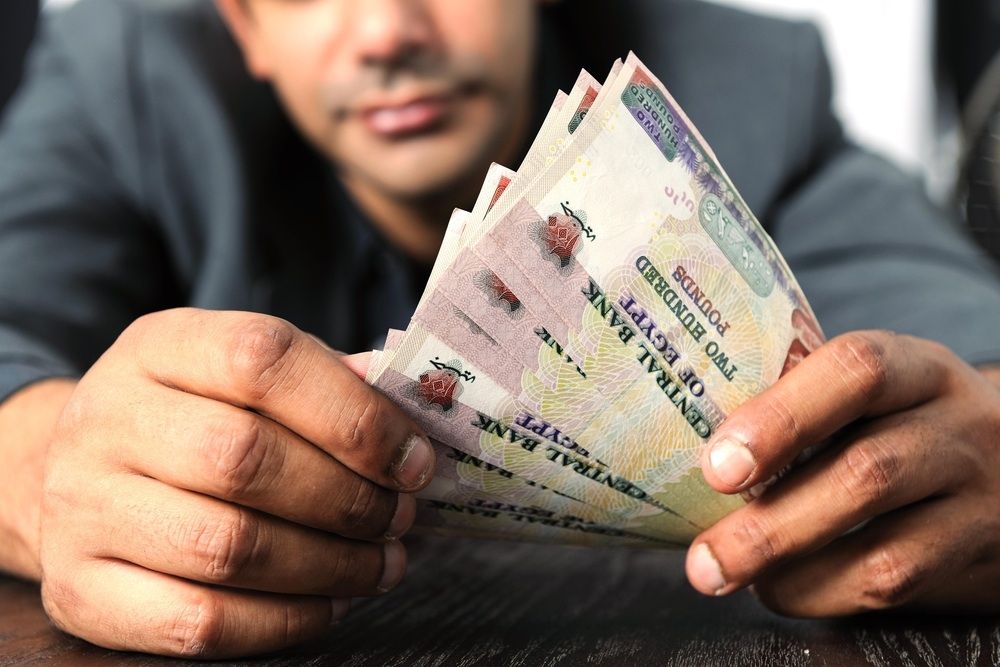
With Egypt’s pound sinking against the dollar, business conditions deteriorated for the seventh month in a row in April, according to representatives of the non-oil private sector interviewed for the Purchasing Managers’ Index.
Egypt’s overall index score for the month was 46.9, an improvement on the 44.5 recorded in April, but still indicating conditions got worse during the month — any score below 50 signals negative sentiment.
The depreciation of the Egyptian pound against the US dollar was a key factor in the decline, according to businesses. The weakness of the pound led to high input costs, contributing to the sharpest increase in charges reported since the Egypt survey was launched in 2012. Raw materials needed for production were “largely unaffordable,” survey respondents said. As a result, input purchases and pre-production inventories also fell to a series low.
Output and new work also fell, a trend businesses linked to reduced demand from clients. Meanwhile, many companies reported raising their prices in response to an increase in input costs: a trend that echoes anecdotal reports of price rises, but contradicts low official inflation numbers.
“Egypt’s private sector continues to struggle amidst the FX shortage. Although further EGP weakness will eventually help lay the foundations for economic recovery, in the short term, uncertainty over the exchange rate could see additional declines in output, and a further rise in inflationary pressures,” said Jean-Paul Pigat, senior economist at survey-sponsor Emirates NBD, in a press statement.
In an emailed statement responding to the survey, London-based Capital Economics predicted, “the impact of the devaluation will begin to show up in the official consumer price figures soon.” The firm also predicted Egypt’s Central Bank would “release its grip on the currency again soon.”

أخبار ذات صلة

Milking Juhayna for all it’s worth
Thabet may have been approached with a proposal to merge his factories with a state-led initiative.

The protection of competition: A suspended verdict
At times the Egyptian Competition Authority has played an active role in curbing monopolistic practices — but not always.
Have the IMF’s promises to Egyptians come true?
The IMF did not only promise growth, it also promised inclusive, job-rich growth.

Report: Political instability, poor access to finance hold back Egypt’s private sector
Political instability, poor access to finance and unreliable electricity are the top obstacles to Egyptian private sector companies.
Your support is the only way to ensure independent, progressive journalism survives.
You have a right to access accurate information, be stimulated by innovative and nuanced reporting, and be moved by compelling storytelling. Subscribe now to become part of the growing community of members who help us maintain our editorial independence.
Join us