
Student protests met with more gas
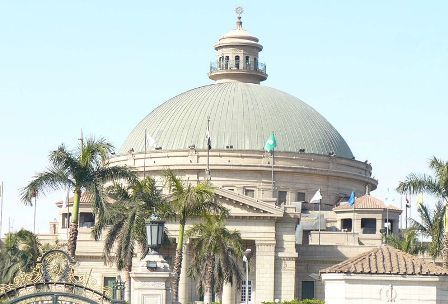
A stream of student clashes continued Tuesday within some of Egypt’s largest and oldest universities as security forces countered demonstrations on Cairo, Al-Azhar and Mansoura campuses, attacking students with tear gas and pellets.
The violence began when student supporters of ousted President Mohamed Morsi called for widespread demonstrations at Al-Azhar University at the beginning of the new school year, which were met with violence from security forces. The wave that started with Muslim Brotherhood-affiliated student groups later spread to non-politicized and civil-oriented student bodies.
Activist Amr Ezzat told Mada Masr that state and Interior Ministry actions backed student revolutionaries into a corner, pushing them to take action against violations of human rights and campus sanctity.
Ahmed Fahmy, head of Midan Students group — affiliated with the Dostour party — told Mada Masr that police violations continued today.
A demonstration was organized to protest violence against students on campus, which resulted in the death of first-year engineering student Mohamed Reda in late November.
On Tuesday, a student march attempting to exit Cairo University campus was met with tear gas and pellets, causing a number of injuries among students, including cases of suffocation and an eye injury.
According to Fahmy, a field hospital was established inside the faculty of engineering to attend to those injured, but it was also attacked with tear gas.
The faculty dean announced the suspension of the semester earlier Tuesday because of the threat to student safety.
“Our demands remain the same,” said Fahmy, “a student shouldn’t be attacked with tear gas or pellets, nor be killed on campus for having an opinion.”
“We will not stop until security forces stand back, and all parties responsible for humiliating and exercising violence against students are tried,” he added.
The Interior Ministry’s statements have remained consistent, blaming students for sparking violence. Interior Ministry spokesperson Hany Abdel Latif previously accused students of deliberately attempting to provoke a crisis by throwing rocks at police forces, blocking roads, and protesting without obtaining permission from the ministry, as mandated by the new protest law.
However, Abdel Latif was not available to comment on today’s events.
On Monday, 6 students from Dostour and Strong Egypt parties, as well as the April 6 movement, were arrested during a meeting held to coordinate their response to the death of Reda and the ongoing assault on Al-Azhar University students.
They were charged with organizing a public meeting without seeking permission from the Interior Ministry, according to Fahmy.
Security forces broke into Al-Azhar campus Monday and arrested a number of students from their lectures. Professor Muhammad Abdel Wahab was assaulted for objecting to the presence of police inside his classroom, said Ahmed Adel, spokesperson for the student union at Al-Azhar University.
Tuesday’s protests were met with a similar response. At 3 pm, the mosque on campus aired warnings that a police vehicle was trying to enter the campus, Adel said, adding, “but we responded with rocks and barricaded the gates to stop them from storming in.”
The only way to resolve the situation, in Adel’s opinion, is for security forces to step back and for the head of the University to resign over his failure to protect students and meet their demands.
Speaking about the current court case requesting the return of university guards to campuses, Fahmy said that such a move is "futile and idiotic, and will only aggravate the situation."

أخبار ذات صلة
After 3 years in prison, student searches desperately for her missing fiancé
Asmaa Hamdy’s fiancé was forcibly disappeared a week before her release
Al-Azhar University professor suspended on accusations of promoting atheism
Professor of religion and philosophy at Al-Azhar University suspended for three months for promoting atheism.

Head of Al-Azhar University says Arabic will outlive other world languages
Arabic is likely to survive after the death of other global languages, says the head of Al-Azhar.
Cairo University reinstates 52 suspended students
Cairo University President Gaber Nassar announced on Wednesday that the university has accepted the appeals of 52 students who had been expelled…
Your support is the only way to ensure independent, progressive journalism survives.
You have a right to access accurate information, be stimulated by innovative and nuanced reporting, and be moved by compelling storytelling. Subscribe now to become part of the growing community of members who help us maintain our editorial independence.
Join us