

President Abdel Fattah al-Sisi swore the constitutional oath on Tuesday, assuming the presidency of Egypt again for his third and what should be his final presidential term amid the echoes of cannon salutes outside the House of Representatives headquarters in the new administrative capital.
In his speech at Tuesday’s ceremony, the president, now set to lead the country until 2030, laid out an outlook for his remaining six years in office — one that, as an opposition politician remarked, looks set to retain some of the hallmarks of the last ten years.
Off the ceremonial script, meanwhile, talk continues to circulate about whether Sisi will use his renewed mandate to shuffle or reinvent certain ministerial portfolios and appoint a vice president.
The proceedings began early on Tuesday morning, when the Republican Guard were handed control of the House of Representatives headquarters in the new administrative capital, a source in the House general secretariat told Mada Masr.
Dignitaries, including ministers, deputies, diplomats, party leaders and politicians, were requested to arrive in the capital before 8:30 am, the source said.
Sisi arrived at the parliament headquarters at 11 am. Opening the oath-taking ceremony, House Speaker Hanafy Gebaly read out the National Elections Authority’s declaration of Sisi's victory in the December elections.
After taking the oath, Sisi delivered a speech, quoting a Quranic verse and emphasizing seven key objectives for his upcoming presidential tenure.
On the bill for his upcoming six-year term, is prioritizing safeguarding Egypt's national security within the current unstable regional context.
The National Dialogue, a state-led initiative launched in early 2022, would continue, he added, and its recommendations would be implemented.
Sisi laid out an ambition to foster economic growth through enhancing the role of the private sector, focusing on agriculture, industry, communications and information technology and tourism, and expanding agricultural lands and production to contribute to Egypt's food security. He pledged to position Egypt as a regional hub for transportation and transit trade, new and renewable energy, green hydrogen and its derivatives, as well as maximizing the economic role of the Suez Canal.
He also vowed to improve education quality, enhance public health initiatives, complete the comprehensive health insurance project, increase allocations for the cash support program Takaful wa Karama, complete the Hayah Karima initiative and continue developing new fourth-generation cities and major unplanned areas, along with the "Housing for All Egyptians" program.
Commenting to Mada Masr, Egyptian Social Democratic Party member Khaled Dawoud said the policies sound like more of the same.
“We heard a lot about the continuation of the National Dialogue and implementing its recommendations. We have been waiting for two years for the release of all prisoners of conscience, including those held in pretrial detention, for the state’s block on media outlets to be lifted, for an end to the targeting of citizens on the basis of their opinions, and for necessary reforms in electoral laws and laws on remand detention, among other demands. We have been repeatedly told that the demands will be implemented.”
Following the formalities at Parliament, Sisi proceeded to the People's Square facing the presidential palace in the new capital.
He was flanked by Defense Minister General Mohamed Zaki to his right and Chief of Staff of the Armed Forces Lieutenant General Osama Askar on his left, with a military retinue accompanying them.
Sisi laid a wreath at the Unknown Soldier Memorial and saluted the martyrs as the National Anthem played, followed by military music and aircraft flying overhead.
The future of the government is yet to be decided and can follow more than one trajectory. State-aligned media personality and MP Mostafa Bakry anticipated last week that ministerial changes could be on the horizon and, potentially, the reintroduction of one or more vice presidential appointments.
There is no constitutional obligation for the current Cabinet to resign its mandate with the conclusion of the second presidential term, said the parliamentary source. Customarily, however, previous governments have done so.
The president can then either renew confidence in the existing government, instruct the prime minister to change ministerial portfolios, or appoint a new prime minister to form a new government. Parliament's approval is required only to approve ministerial reshuffles or to confirm the formation of a new government and its program within 30 days of its appointment by the president.
Governors' terms expired with the end of Sisi’s second term in office, said the source. It is now up to the president to promptly assemble a new council of governors, with each governor taking the oath before the president before assuming their offices.
A vice president is also officially sanctioned under the constitution, the parliamentary source noted. The president can appoint one or more vice presidents, define their responsibilities, delegate some of his competencies to them, and dismiss them from their positions as well. Parliament has no role regarding the appointment.
Recent speculation among MPs and government circles is that there is an internal push within the presidential institution to appoint a vice president, given anticipation that, come 2030, a successor to Sisi will be needed, said the source. This move, the source said, is speculated to pave the way for the president to return to power and run for the presidential elections in 2036.
Various names are being talked about, including the current head of the General Intelligence Service and former presidential office director Abbas Kamel, along with other civilian figures like former Prime Minister Ibrahim Mahlab.
However, another group of parliamentarians is saying that the military is not in favor of a scenario in which a vice president would succeed Sisi in 2030, according to the parliamentary source. Regardless, all talk is speculative at this point, the source added.
Under the 2019 constitutional amendments, a new president will need to follow Sisi at the end of his tenure in 2030, but Sisi would still have the right to run for a fourth presidential term after that.
The National Elections Authority declared last year that Sisi had won the 2023 elections with 39,702,451 votes, or 89.6 percent of the total votes.
The victory, though still decisive, represented a slimmer margin than Sisi’s performance in the 2014 election, where he won with 96.9 percent, followed by the 2018 elections, where he secured a second term with 97.8 percent of the votes.
Constitutional amendments in 2019 allowed for Sisi to run for three consecutive terms instead of two and lengthened term durations from four to six years. When Sisi first won the presidency, eight years was the maximum possible tenure. Now, Egypt is set to be led by Sisi for a total of 16 years.

أخبار ذات صلة
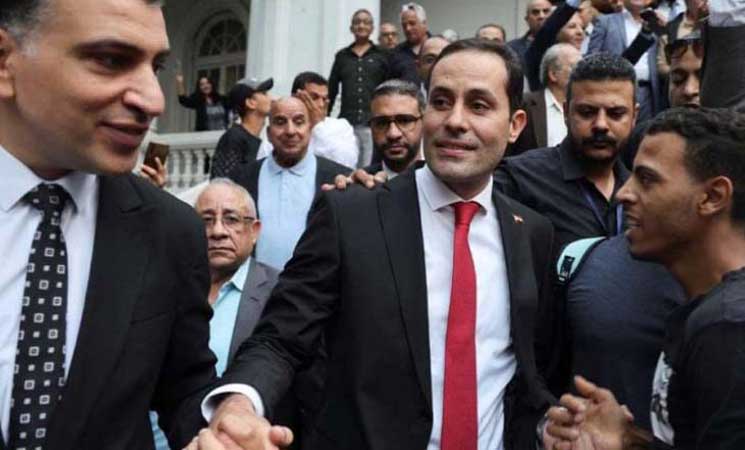
Authorities arrest Tantawi’s presidential campaign manager in court
The campaign manager of former presidential hopeful Ahmed Tantawi was arrested in court on Monday.
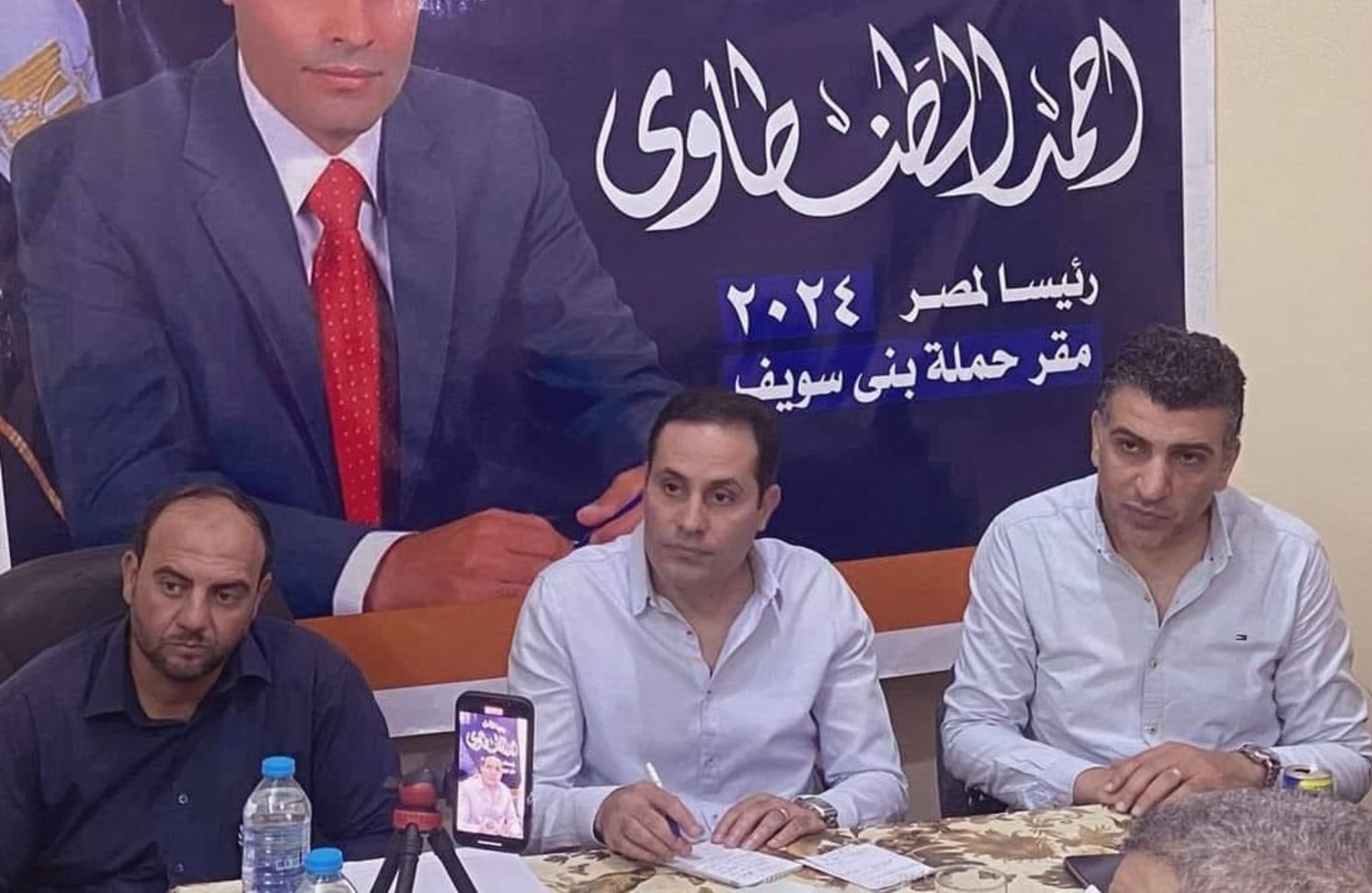
Tantawi at detention center, campaign manager released pending appeal after electoral fraud charges
After a court ruled opposition politician Ahmed Tantawi and the manager of his presidential election campaign guilty on charges of electoral fraud…
Opposition politician Ahmed Tantawi arrested after court upholds 1-year sentence
Opposition politician Ahmed Tantawi was arrested after a court upheld his 1-year sentence.
Court upholds 1-year prison sentence for opposition presidential contender Ahmed Tantawi’s campaign manager
A Cairo court upheld on Wednesday a one-year sentence for former presidential hopeful Ahmed Tantawi's campaign manager, Mohamed Aboul Diyar. Tantawi and…
Your support is the only way to ensure independent, progressive journalism survives.
You have a right to access accurate information, be stimulated by innovative and nuanced reporting, and be moved by compelling storytelling. Subscribe now to become part of the growing community of members who help us maintain our editorial independence.
Join us