
Sisi celebrates expansion of controversial petrochemical factory
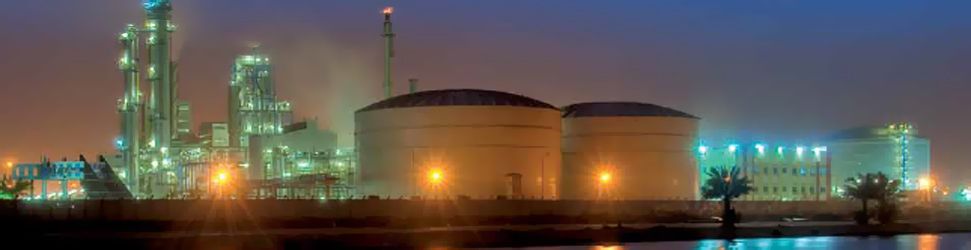
Sisi arrived in Damietta Sunday to launch the US$2 billion expansion of Misr Fertilizers Production Company (MOPCO), a petrochemical factory.
The project, celebrated as a victory on Sunday, has its roots in a deal with a Canadian fertilizer manufacturer that prompted one of the largest community mobilizations in Egypt’s modern history.
The controversy began in 2006, when Canada’s Agrium formed a joint venture with local companies including the state-owned EChem and EGAS to build a nitrogen fertlizer factory. In 2007, the company received permission to build a in Ras al-Bar, a resort city on the Mediterranean coast.
The project was relatively obscure until 2008, when plans became public knowledge. Almost immediately, the plant faced fierce opposition from a broad coalition of locals. Fishermen who feared that a chemical factory would damage the already fragile ecosystem were joined by investors who feared that shops and villas built in anticipation of a boom in tourism would lose value.
“It was amazing, because they could somehow build a front gathering everyone from the fishermen to the national party members to the gig real estate owners there,” explains Ragia al-Gerzawy, environmental expert and author of a 2014 report on the struggle against the MOPCO plant. “Rich people were defending their interests, not only the poor.”
Public pressure pushed the government of Prime Minister Ahmed Nazif to form two fact-finding commissions. One, chaired by prominent environment expert Mostafa Kamal Tolba, reinforced the claims of the protestors, publishing a June 2008 report finding that Ras al-Bar was an inappropriate location for such a factory. The same month, a separate parliamentary commission found no evidence of wrongdoing or environmental harm in the development of the factory.
From Agrium to MOPCO
Despite these conflicting reports, the parliament voted to block the Agrium factory. Even before the vote, the company, backed by Canadian authorities, threatened Egypt with international arbitration. The dispute was resolved in August 2008, with a share-swap deal in which Agrium handed its project over in exchange for a 26 percent stake in MOPCO. The deal was made with the expectation that MOPCO would construct two additional production facilities.
Approval for the expansion was duly granted in 2009, for a project that would see MOPCO expand production just west of the original Agrium site. Although the new project was virtually identical, opposition to it was much more muted.
“They were deceived, I think. The government gave them just somewhat shallow agreements,” Gerzawy says of the original protesters. “Yes, they moved the factory from Ras al-Bar, but less than one kilometer away.”
Post-revolution resistance
Protests against the project resumed in 2011, as a wave of post-revolutionary spirit re-energized popular struggles across Egypt.
This time, protests were smaller but much more aggressive, with protestors blocking roads and access to the sea port. By June 2011, the renewed opposition prompted the Ministry of Environment to form yet another fact-finding committee. That committee recommended a series of measures to reduce the factory's environmental impact, including prohibiting the dumping of wastewater. These recommendations were adopted by the Cabinet of Prime Minister Essam Sharaf.
Meanwhile, the protest movement kept heating up, prompting a November 13 security crackdown that left at least one protestor dead. In the aftermath of the violence, Sharaf ordered the closure of MOPCO’s Damietta plant and the suspension of the expansion project.
MOPCO took to local courts to appeal the decision. The Mansoura Administrative court ordered yet another report on the situation, this time by a committee of professors from Mansoura University. This study, issued in January 2012, found that the factory had no adverse environmental impacts. Following the publication of the report, the Mansoura Court on March 20 ordered the plant reopened, though noted it still had to comply with the earlier recommendations of the Environment Ministry’s report.
The project today
Concerns about the expansion of the petrochemical industry in Damietta have never been limited to environmental impact, says Gerzawy. Opponents of the project questioned policies that encourage heavy industrial development near residential and touristic areas, as well as questions over land allocation and resource use.
One of the problems Gerzawy cites is the fertilzer industry’s enormous demand for natural gas, which is used as an ingredient in fertilizer production as well as a power source for factories. Egypt already produces roughly twice as much fertilizer as it needs, she says, raising questions as to whether this is an efficient use of natural gas at a time when Egypt is struggling to import enough of the fuel to meet existing demand.
“I really think that this is very short sighted. There was hope that this fertilizer would be exported and bring in hard currency, but I think it does not have more added value than just exporting the natural gas,” Gerzawy says. The price for fertilizer might be higher than the price of gas, she explains, but that does not factor in costs like pollution and the potential value of the land.
This is particularly striking in light of recent reports that Egypt has trouble supplying natural gas to existing fertilizer factories, and the news that the country will borrow $25 billion to build a nuclear power plant.
“I don’t think that there is any proper strategy, and we really feel the consequences,” Gerzawy says.

أخبار ذات صلة
Young theater troupe Masl portray Egypt’s parking mafia in four cities
Four young men walk down the Manial Corniche in navy-blue overalls on a Monday afternoon. Young couples and middle-aged men on midday breaks sit around, while others pace up and…
Masked men claim Thursday’s attack on naval ship in YouTube video
A group of unidentified masked men claimed responsibility for an attack on a naval ship in the coastal city of Damietta yesterday in a…
Damietta teen stabbed to death after intervening in sexual harassment incident
A Damietta teenager was stabbed to death while trying to defend a woman from sexual harassment, the Catch a Harasser campaign reported…
Armed Forces kill 3, arrest 54 in raids targeting alleged terrorists
The Armed Forces killed three people and arrested 54 other suspected terrorists in raids conducted from August 13 to 16 in North…
Your support is the only way to ensure independent, progressive journalism survives.
You have a right to access accurate information, be stimulated by innovative and nuanced reporting, and be moved by compelling storytelling. Subscribe now to become part of the growing community of members who help us maintain our editorial independence.
Join us