
Senior Egyptian official says exchange of fire took place in Naqab desert, not on Egypt’s border

A senior Egyptian official denied on Monday Israeli media reports of a shooting incident taking place along the Egyptian-Israeli border.
Speaking to state-aligned Al-Qahera News, the anonymous official said that the exchange of fire took place between “Israeli border guards and a group of smugglers in the Naqab desert.”
Israeli media reported on Monday night that clashes involving smugglers took place along the border, and that a vehicle attempted to run over Israeli soldiers during the incident.
Yedioth Ahronoth reported that a speeding all-terrain vehicle later identified as belonging to smugglers headed toward Israeli forces who were conducting a nighttime operation near the border. The outlet said Israeli forces later pursued the group seeking to apprehend the driver.
The Israeli military released a statement late on Monday describing a “suspicious vehicle” approaching its forces, noting that they later pursued “terrorists” and conducted searches.
Citing the Israeli military, The Jerusalem Post reported that Israeli forces had been carrying out anti-smuggling operations in the border area when they were attacked and that, after the vehicle had fled, the soldiers conducted searches in the area. The precise location where the incident took place was not specified. The same outlet reported that an Israeli soldier was injured as the driver tried to run him over, though the claim was not confirmed by the Israeli military.
The incident is the fourth attempted drug smuggling operation to be reported since October 7 in the vicinity of Egypt’s border with Israel, which stretches from the Karam Abu Salem crossing in the north to Taba in the south.
The first took place in January south of the Awja crossing, according to the Egyptian military spokesperson who stated that one person was killed and six smugglers were arrested. Around 174 kilograms of various drugs were seized. The Israeli military, for its part, said that around 20 smugglers were involved in the exchange of fire with its forces.
That same month, Egypt’s military spokesperson announced that a second operation had been foiled by the northeastern border security forces, describing the operation as an attempt to smuggle around 300 kilograms of drugs and confirming that three smugglers were killed in the incident. The Israeli military did not comment at the time.
The third incident, occuring in May, was reported only by the Israeli military, which said that its forces opened fire on smugglers after surveillance cameras spotted suspects near the border fence in the Mount Harif area of the desert. The suspects attempted to damage the fence, the Israeli military said, while trying to smuggle drugs. No casualties were reported.
Smuggling operations to Israeli-held territories are generally concentrated in the area between the Karam Abu Salem and Awja crossings facing the Naqab desert. Other areas of the border between Egypt and occupied Palestine have been more heavily secured by Egyptian and Israeli forces.
The Israeli military has stated that hundreds of smuggling operations take place along the Egyptian-Israeli border each year, peaking in 2019 with 726 incidents. A former Israeli military colonel told the press earlier this year that smuggling operations have become more sophisticated, with smugglers taking into account the weaknesses of both militaries, soldiers’ routines and the best locations for smuggling drugs into the Israeli market.
Tensions have risen along the Egyptian-Israeli border since May, when Israeli forces occupied the Palestinian side of the Rafah border crossing and the Philadelphi Corridor which runs along Egypt’s border with the Gaza Strip.
Israel has also accused Egypt of failing to secure the corridor, claiming that Hamas uses it to obtain weapons.
Cairo has repeatedly denied these allegations. On Monday, Egyptian Foreign Minister Badr Abdel Atty stressed that “Egypt has completely destroyed several thousand tunnels, and relocated homes and some villages because they were being used as tunnel entrances.” Abdel Atty noted that the tunnels existed since Israel’s occupation of the Gaza Strip.
Refuting claims that Egypt is the source of weapons reaching Gaza, Abdel Atty also claimed that both Egypt and Israel “know where the weapons come from, but don’t want to talk about it.”

أخبار ذات صلة
Only 12 Palestinians permitted to return to Gaza Strip since Rafah crossing opened
Sabah al-Raqab is one of only 12 Palestinians who have been able to return to the Gaza Strip via the Rafah crossing…
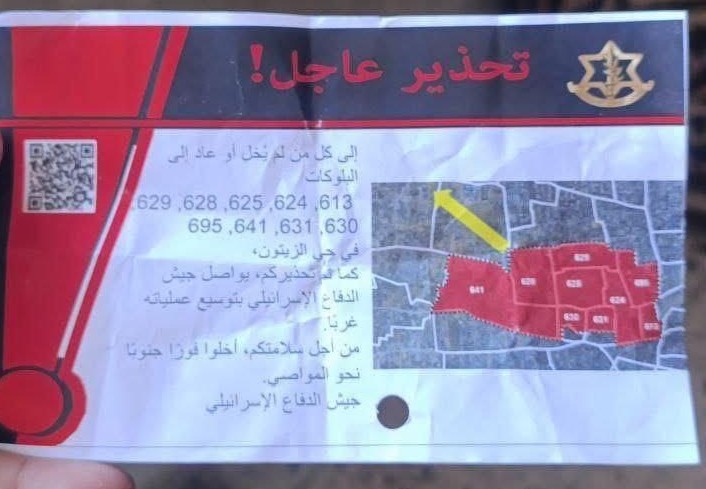
Israeli military to displace Gaza City’s population to new ‘humanitarian zone’ in strip’s south
Ahead of a military advance to fully occupy Gaza City, Israeli officials said they were finalizing steps on Sunday to evacuate the…
Thousands demonstrate in Rafah in support of Sisi’s position against forcibly displacing Palestinians
Thousands of people were transported across the country to Rafah on Friday to join organized demonstrations in opposition to the forced displacement…
80 Palestinians leave Gaza for Egypt in 1st medical evacuation since Israeli invasion of Rafah
Eighty people, including 21 children diagnosed with cancer and their guardians, left the Gaza Strip via the Karam Abu Salem border crossing…
Your support is the only way to ensure independent, progressive journalism survives.
You have a right to access accurate information, be stimulated by innovative and nuanced reporting, and be moved by compelling storytelling. Subscribe now to become part of the growing community of members who help us maintain our editorial independence.
Join us