
Sarcophagus of ancient priest discovered in Luxor
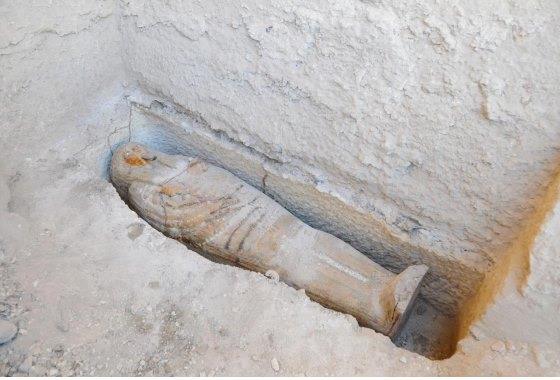
In the Assasif archaeological area of Luxor, the discovery of a well-preserved sarcophagus belonging to an ancient priest was announced on Thursday. The tomb’s owner has been identified as Ankh Efen Khunsu, a high priest in the cult of Amun-Ra.
The sarcophagus of Ankh Efen Khunsu is said to date back to the Third Intermediate Period (following the end of the New Kingdom of Ancient Egypt,) and specifically to the 22nd Dynasty (circa 943 BC to 720 BC).
The sarcophagus of this high priest was reportedly discovered buried within the much older tomb of Vizier Amenhotep Huy (Tomb No. 28), who served in office around the years 1360-1353 BC.
According to a statement posted on the official webpage of the Ministry of Antiquities, the intact sarcophagus of Ankh Efen Khunsu was discovered by a team of Spanish archaeologists from the Institute of Ancient Egyptian Studies. It was reportedly discovered in a compartment carved into the earthen rock, and had been covered with stone beams.
Photos and descriptions of this newly discovered sarcophagus reveal that it is constructed from wood, with an outer shell made of alabaster. This well-preserved ancient coffin bears the image of the priest donning a wig and a colorful flowery crown, while sporting a braided beard.
With his arms crossed over his chest, Ankh Efen Khunsu is depicted holding papyrus reeds in both his hands.
This sarcophagus is also decorated with hieroglyphic inscriptions, along with images of the high priest making offerings to Osiris (god of the afterlife), Anubis (protector of the dead and god of funerals), Nefertum (god of healing and beauty), and Hathor (goddess of the sky and fertility).
In-depth analysis of this sarcophagus and its contents is expected to shed further light on the life of this ancient high priest.

أخبار ذات صلة
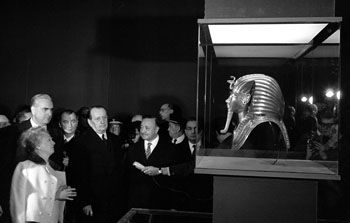
Looking back to see the present through the Grand Egyptian Museum
The coincidental nature behind the establishment of the Grand Egyptian Museum
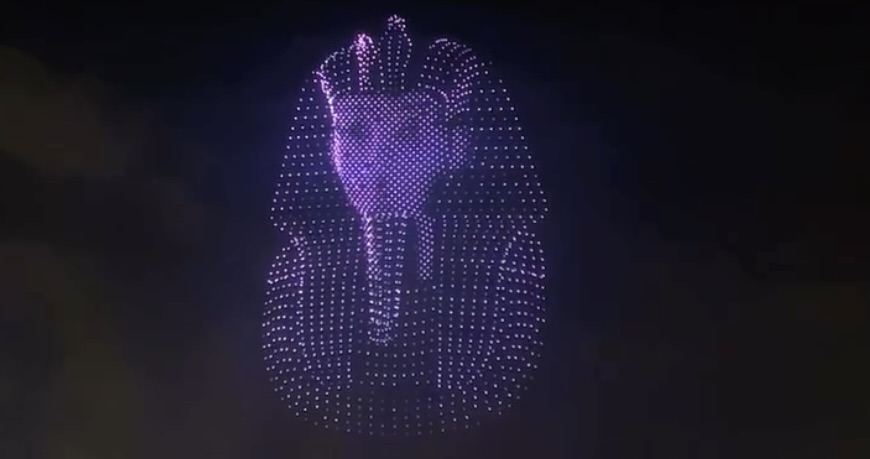
Staging a grand opening for the grand museum
In Cairo, sidewalks have been repainted, screens set-up and security measures tightened. People living nearby say fireworks have been test-run in Giza.…
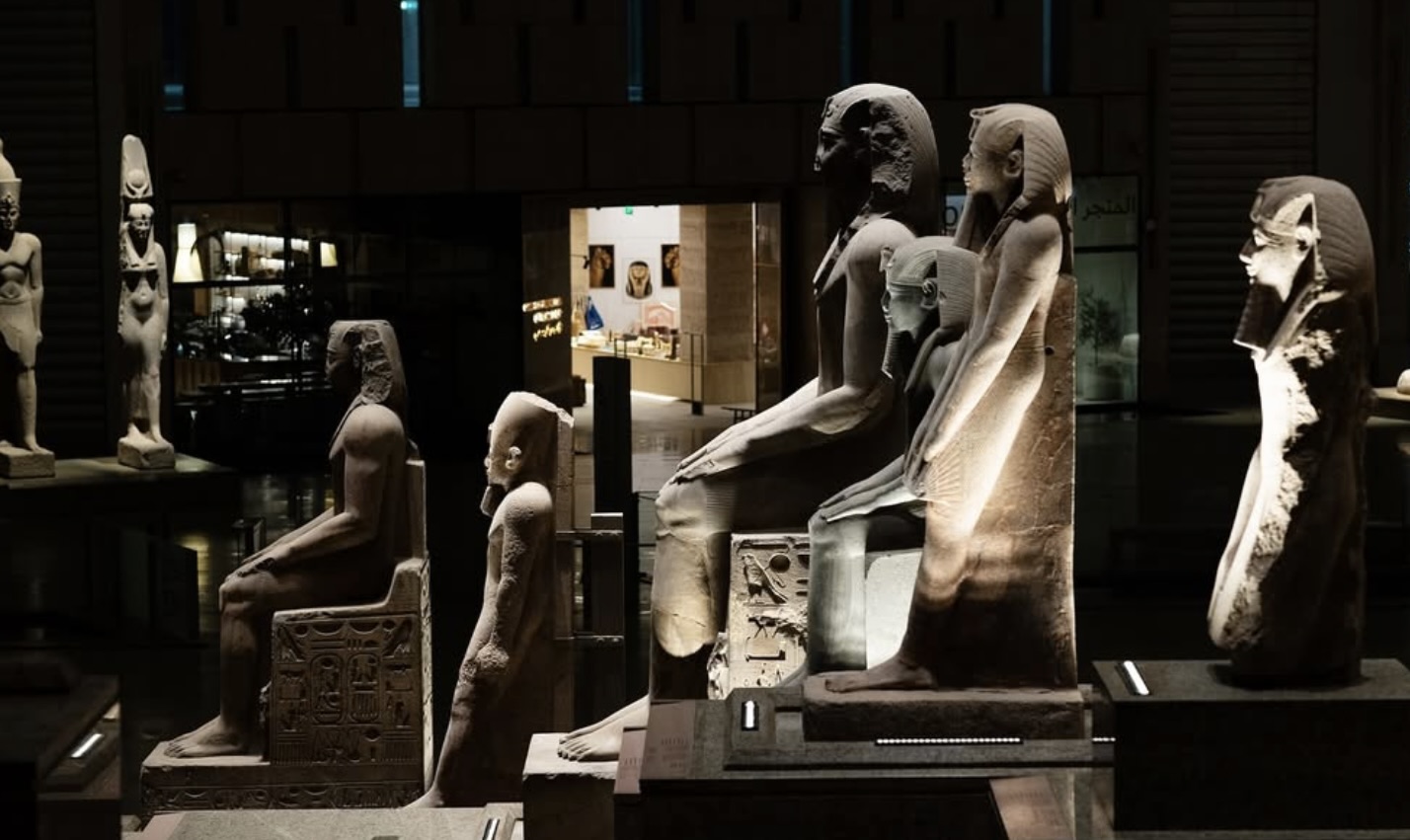
All around the Grand Egyptian Museum
The museum will not be open to visitors until after the three-day celebration
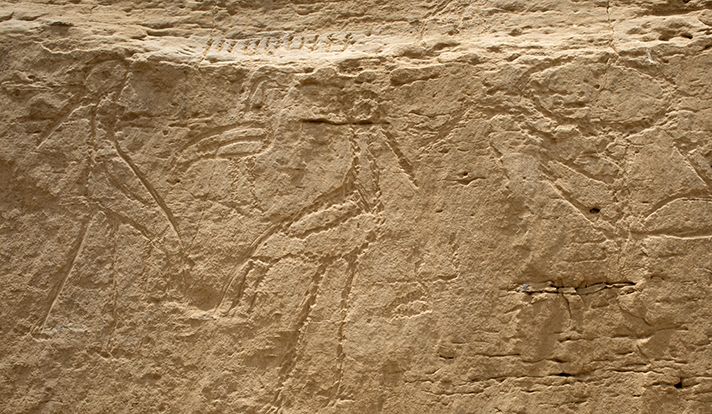
5,200-year-old rock inscriptions discovered in Luxor Governorate
A joint expedition of archaeologists from Yale University and the Royal Museums of Art and History was able to excavate several panels of rock…
Your support is the only way to ensure independent, progressive journalism survives.
You have a right to access accurate information, be stimulated by innovative and nuanced reporting, and be moved by compelling storytelling. Subscribe now to become part of the growing community of members who help us maintain our editorial independence.
Join us