
Ragai Sultan wins civil suit against police brutality
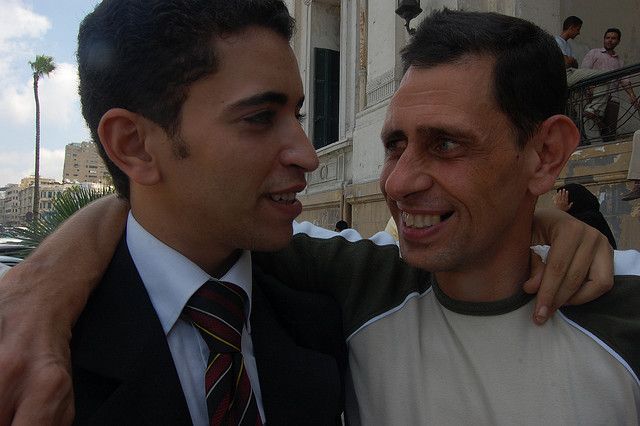
Ragai Sultan, a man in his 50s with special needs, won a civil suit on Thursday against the police officer who brutally assaulted him in 2008.
An Alexandria court granted Sultan LE70,000 in compensation.
The defendant, Colonel Akram Suleiman, was previously convicted of assaulting Sultan by the Alexandria Criminal Court in 2009, and was sentenced to five years in prison.
He served only three years of his sentence and has now returned to active service working for the Alexandria Security Directorate, according to lawyer Mohamed Abdel Aziz, who tweeted the details of the ruling.
"The case is an exemplary one against police torture because of the criminal court ruling and the compensation rewarded in the civil suit. The biggest negative is that the officer was allowed back on the force, an issue that needs legal reform to ensure that officers found guilty of charges like these are terminated from security service," Abdel Aziz told Mada Masr.
Sultan was brutally assaulted in police custody after being arrested while walking on Alexandria's Corniche in July 2008. Reports at the time said that Sultan was rounded up randomly by police along with a group of street children.
Mada Masr reporter Sarah Carr followed the story closely at the time, covering the details of the case for a local media outlet. She recalls Sultan’s story and his family’s ordeal facing Egypt’s legal labyrinth.
Sultan spent three days in intensive care after suffering a broken rib and shoulder, a fracture in the neck and bleeding in the brain — injuries that his family said Suleiman inflicted on Sultan while the victim was in custody.
In his defense, the police colonel had said Sultan's injuries were caused when he fell while running away from the police. In another version of the story, the defendant’s lawyers accused a low-ranking police officer of the assault, claiming Suleiman was only charged because he headed the police station.
However, at the time the victim’s brother Elhamy Sultan said the colonel had offered to pay for his brother’s medical expenses. This testimony was used against the officer along with Ragai’s version of events.
Sultan, who had led a normal life before his detainment, carries his ID at all times, on the back of which is an explanation of his condition, as well as his brother Elhamy’s contact details in case of emergency. However, this did not stop police from arresting and then assaulting him.
Investigations were launched by the public prosecutor in July 2008 but dragged on, causing rights groups at the time to accuse the authorities of intentionally delaying proceedings. Many were concerned there was a real risk that the investigations were being prolonged to ensure that the well-connected, high-ranking police officer would escape justice.
In November 2009, the Alexandria Criminal Court sentenced Suleiman to five years imprisonment after he was found guilty of misuse of force and causing permanent bodily harm to Sultan by attacking him with a truncheon. Sultan was initially awarded temporary compensation of LE10,001.

أخبار ذات صلة

The khot of Upper Egypt
Mohamed Mahsoub clashed with police, decrying injustice in Upper Egypt before being killed.
Lawyer: Witnesses testify 2 young men killed in authorities’ custody in Matrouh
Farag Rayyash al-Fazari was laid to rest in Sidi Barrani on Sunday, three days after he and Youssef Eid al-Sarhani were killed.…
Matrouh tribal council demands investigation after 2 young men killed in security campaign
Tribal leaders in Matrouh are demanding an investigation into the killing of two young men in the coastal western governorate on Friday,…
Rights group says highschooler Mostafa Montaser died in police custody due to torture, authorities deny
The prosecution's investigations attributed his death to natural causes.
Your support is the only way to ensure independent, progressive journalism survives.
You have a right to access accurate information, be stimulated by innovative and nuanced reporting, and be moved by compelling storytelling. Subscribe now to become part of the growing community of members who help us maintain our editorial independence.
Join us