
PM forms committee to amend governorate borders
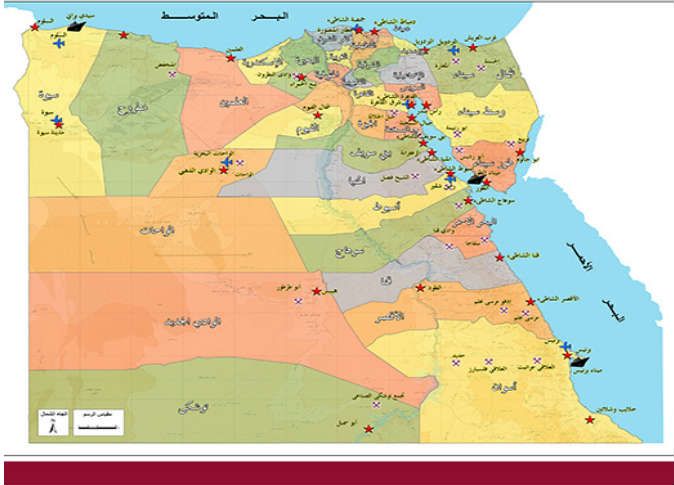
Prime Minister Ibrahim Mehleb formed a committee on Wednesday tasked with modifying the borders of Egypt’s governorates, as proposed by President Abdel Fattah al-Sisi during his presidential campaign.
The committee will be headed by Local Development Minister Adel Labib and will be tasked with developing the proposed presidential decree regarding the division of governorates and the process of launching a new governorate and moving areas from one governorate to another.
Sisi initially proposed the modification of governorate borders in his first television interview following the announcement of his presidential bid with TV hosts Ibrahim Eissa and Lamis al-Hadidy in May.
The proposal included a new division of governorates that would allow access to both desert and sea.
In the new map proposed by Sisi, the number of governorates would increase to 32 or 33. The new division would incorporate the addition of four million acres to Egypt’s agricultural lands, 26 new tourist centers, 22 new mining cities and eight new airports.
Among other major changes, Sisi plans to extend the capital from Cairo all the way to Ain Sokhna, overlooking the red sea. The new map would also add a third governorate in Sinai, to enable better administrative and security control.
As per the plan, the Western desert would be divided into three governorates: Toshky, the new valley, and the oasis, in the space that is now occupied by one governorate: the new valley.
The governorates of Upper Egypt would be stretched horizontally from the western desert to the red sea, considerably shrinking the red sea governorate.
The governorate of Matrouh would be divided into three in the new suggested map: Matrouh, Siwa and Alamein.
Sisi maintains that access to the western desert would give every governorate the opportunity to create housing, mining and agriculture to the west of the Nile, while access to the sea would improve agriculture, tourism and other industries.
The plan would apparently take tens of years to implement and require a trillion pounds, according to Sisi, who said it would be financed by Egyptians abroad, new investments and aid from other nations, which he referred to as “help form our friends and brothers.”
Samir Abdel Wahab, head of the center to support decentralization policies at Cairo University, said that demand to restructure the governorates has been present for decades, but that there are many challenges for the committee to work out in order for the proposal to facilitate local development. He added that the mapping of the governorates has always depended on security rather than development criteria.
He maintains the success of the current proposal depends on whether governorates are empowered and possess the necessary skills to make use of the additional spaces that are added to them.
Abdel Wahab says that it is also important to prepare people for the changes to avoid any local protesting. He adds that allowing access to the sea and the desert doesn’t necessary guarantee that the social and economic requisites for development would be present in every governorate.

أخبار ذات صلة
Manshiyet Nasser NGO facing eviction
A local NGO in the poor area of Manshiyet Nasser is facing possible eviction by authorities in Cairo Governorate, which gave the…
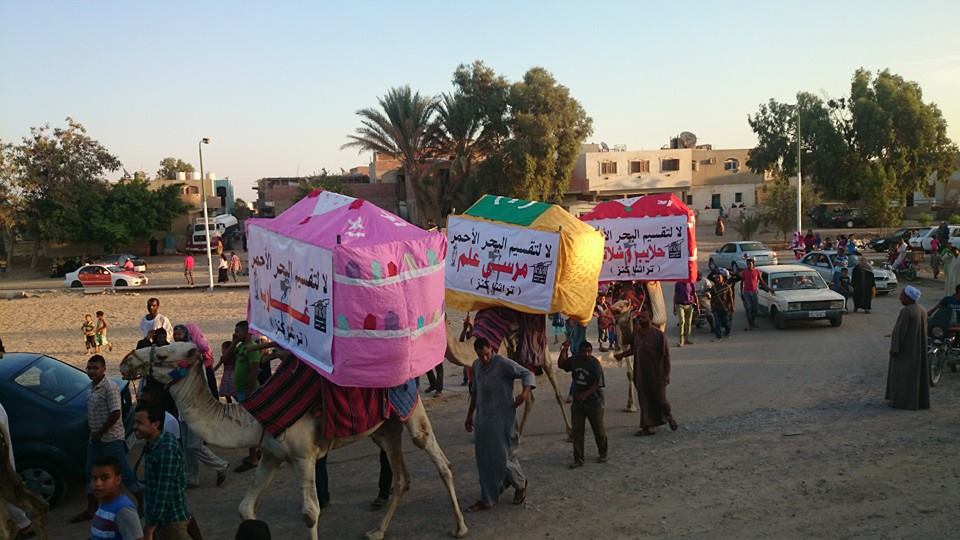
Plans to repartition governorates stir seaside distress
A small coffee shop in the coastal Red Sea city of Quseir has become the central office for a growing local campaign against the government’s proposal to repartition Egypt’s governorates.…
3 new provinces, southern borders redrawn
Egypt’s Cabinet officially approved the creation of three new governorates on Wednesday, raising the total number from 27 to 30. The new…

Sisi attempts to reassure Warraq island residents
Sisi speaks with Warraq residents on speakerphone during meeting with head of military engineering authority
Your support is the only way to ensure independent, progressive journalism survives.
You have a right to access accurate information, be stimulated by innovative and nuanced reporting, and be moved by compelling storytelling. Subscribe now to become part of the growing community of members who help us maintain our editorial independence.
Join us