
Plague victims unearthed at ancient Egyptian temple
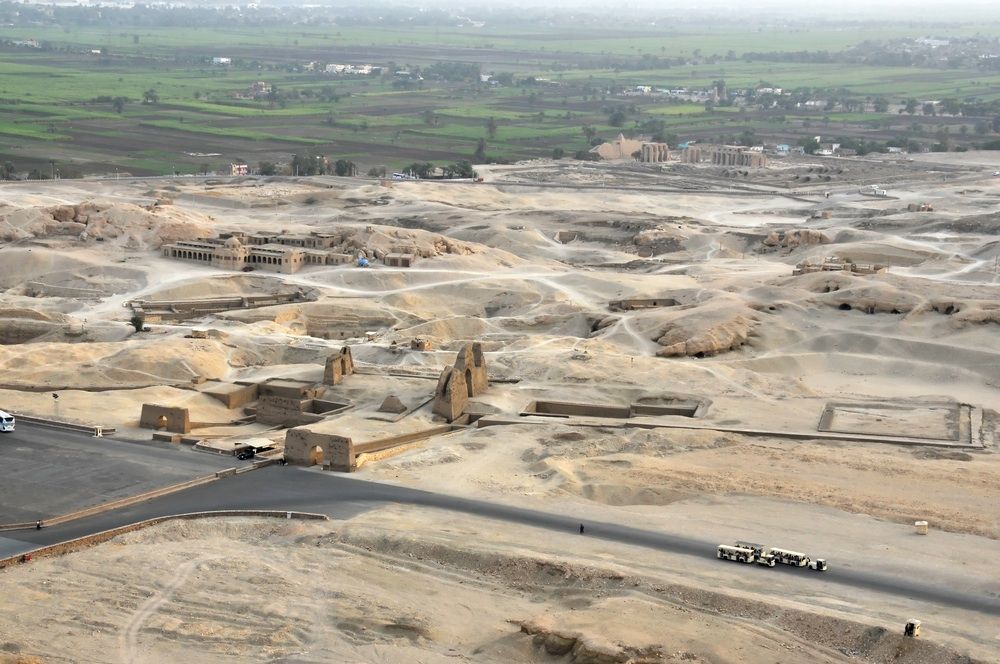
A team of Italian archaeologists announced the discovery of several buried bodies and bodily remains in Luxor Governorate reported to have died of the “Cyprian Plague,” also known as the “end of the world” plague due to its apocalyptic impact.
This pandemic claimed the lives of hundreds of thousands across towns and cities in Europe and North Africa from around 250 to 270 AD. At its height, an estimated 5,000 people died each day in the Roman Empire from the Cyprian Plague.
The devastating plague led to the deaths of two Roman emperors, along with an untold number of others, and is believed to have led to the empire’s demise.
While conducting excavations at the Ancient Egyptian tomb of Harwa and Akhimenru (a funerary complex constructed in the seventh century BC) on Monday, the Italian Archaeological Mission to Luxor (MAIL) unearthed bodies which had been burnt in kilns, or buried under layers of powdered lime — a chemical substance used as a disinfectant, and in burials.
In their findings, published on the Live Science website, the MAIL team reported that the Harwa and Akhimenru Tomb, located on the west bank of the ancient town of Thebes/modern-day Luxor, had been used as a burial site for fatalities associated with the Cyprian Plague.
This plague’s name is attributed to St. Cyprian, a bishop from Carthage, who had documented in detail the deadly effects of this contagious disease.
It is thought to be directly linked to smallpox, which claimed millions of lives worldwide, until 1979, when it was eradicated, according to the World Health Organization.
The MAIL team is still conducting excavations and investigations into the disposal of bodies at the funerary complex of Harwa and Akhimenru. This team has been digging around this site since 1997.
Francesco Tiradritti, the director of the MAIL team told Live Science that he does not expect to find much in terms of ancient DNA samples with which to shed more light on the Plague of Cyprian because, “in a climate like Egypt, the DNA is completely destroyed.”

أخبار ذات صلة
Staging a grand opening for the grand museum
In Cairo, sidewalks have been repainted, screens set-up and security measures tightened. People living nearby say fireworks have been test-run in Giza.…
All around the Grand Egyptian Museum
The museum will not be open to visitors until after the three-day celebration
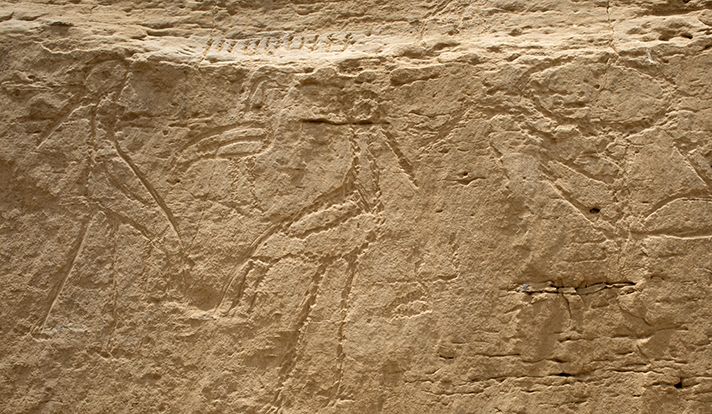
5,200-year-old rock inscriptions discovered in Luxor Governorate
A joint expedition of archaeologists from Yale University and the Royal Museums of Art and History was able to excavate several panels of rock…
Ancient Egyptian gold workers’ tomb excavated on island in Sudan
An ancient tomb reported to contain the mummified remains of at least 12 Egyptian gold workers has been excavated in Sudan
Your support is the only way to ensure independent, progressive journalism survives.
You have a right to access accurate information, be stimulated by innovative and nuanced reporting, and be moved by compelling storytelling. Subscribe now to become part of the growing community of members who help us maintain our editorial independence.
Join us