
Over 30 killed after Israel opens fire on aid seekers at Zikim crossing

Israeli forces opened fire on Saturday night on hundreds of people who were crowded near the Zikim border crossing in northern Gaza to await expected aid deliveries, eyewitnesses told Mada Masr.
Dozens of bodies were transferred to the Shifa Medical Complex, where mass funerals were held on Sunday morning.
The attack was the latest in a series of similar massacres perpetrated by Israel’s military against Palestinian aid seekers during a months-long blockade.
Ezz Eddin al-Sultan was among those who went north to the crossing area on Saturday night, hoping to secure some aid to feed his family.
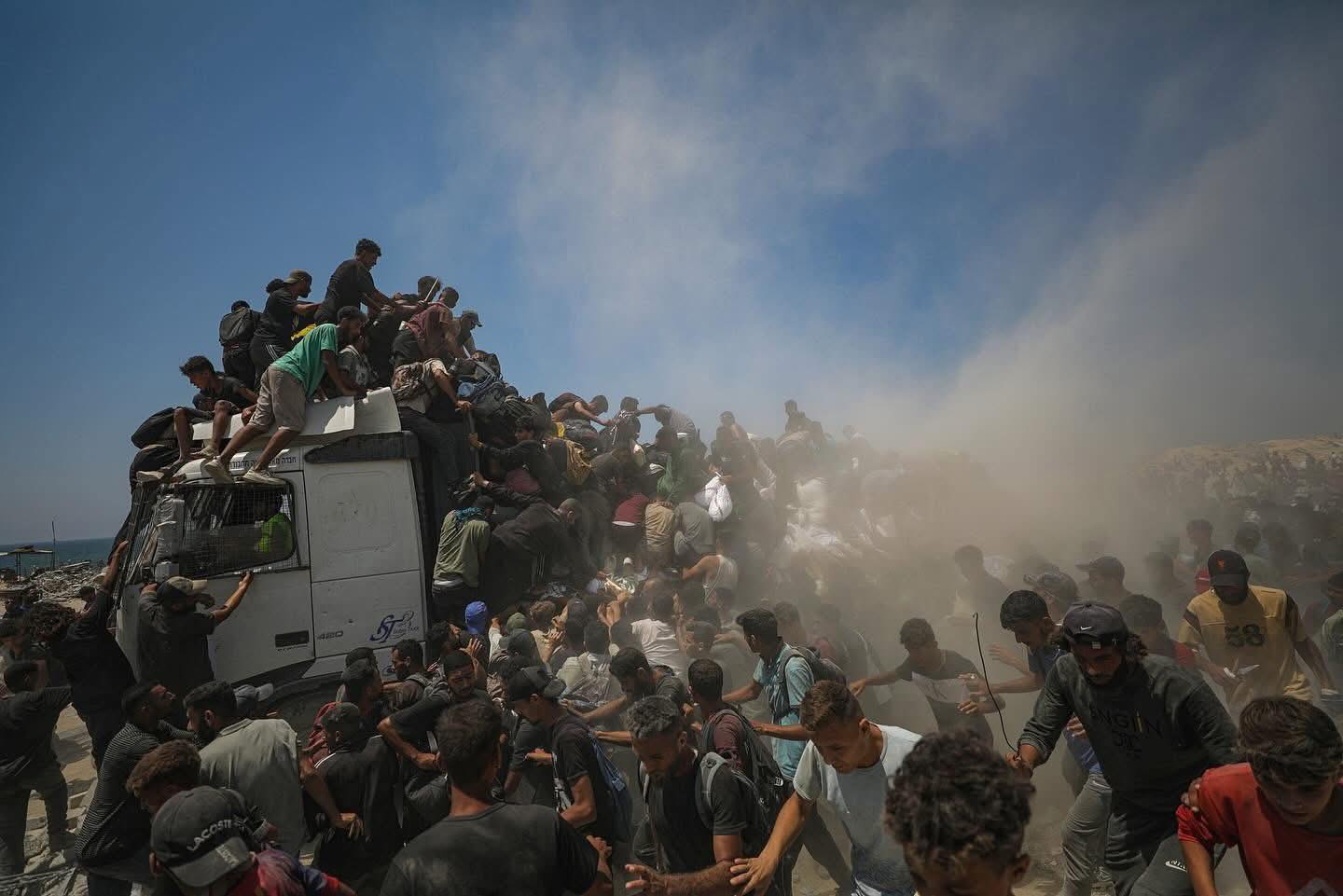
Forty trucks loaded with aid had come through the Zikim crossing and stopped in the Khaldy area in the north.
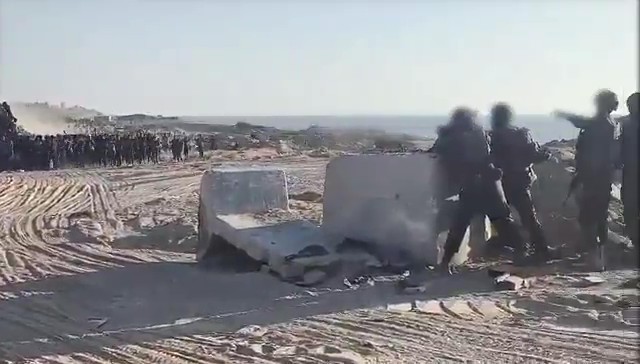
Sultan told Mada Masr that the number of soldiers and tanks near the crossing and the surrounding area was shocking. The soldiers did not fire immediately, he said, but “waited until young men neared the site and got very close to the convoy.”
Some began to grab flour sacks, “but the bullets chased them down, and they were killed holding on to the sacks.”
“The scene was very tough,” Sultan said. “Dozens of young men were falling before our eyes under heavy fire.”
He threw himself on the ground and watched what was unfolding, as did others, but the bullets reached even those lying flat, he said.
The gunfire lasted several minutes, after which hundreds were either killed or wounded, he said.
A member of Gaza’s Civil Defense Agency told Mada Masr that their crews were able to transfer some of the bodies to the Shifa Medical Complex, and many bodies and wounded were brought in by members of the community.
The civil defense worker described witnessing many injuries to the upper body, which they said show deliberate targeting “with the intention to kill.”
Severe crowding blocked corridors at Shifa hospital on Saturday night as hundreds of the injured and their families sought medical care after the massacre, with many receiving treatment on the ground in corridors or outside the hospital wards.
Attacks by the Israeli military on aid seekers have become regular over recent months as soldiers target crowds gathering to seek limited aid supplies at various sites following the blockade Israel imposed on the strip in March.
Food security experts have announced that famine conditions have been established in northern Gaza, where the Zikim crossing is located.
Amid the scarcity, aid seekers gather at delivery sites like Zikim to await anticipated shipments. Israeli forces have repeatedly targeted people seeking flour at the sites and opened fire on community-led groups seeking to secure the convoys against theft.
At least 86 Palestinians were killed in July at Zikim when the Israeli military fired at thousands in what has become known as the ‘flour massacre.’
Another eyewitness who was present in the Khaldy area on Saturday night said they saw a large number of bodies piled behind a sand mound near the area, suggesting that Israeli bulldozers had moved them there in recent days. Many of the bodies were badly decomposed.
Israel agreed at the end of July to increase the flow of aid, designating daily, 10-hour “tactical pauses” for the safe passage of humanitarian convoys in Gaza City and two other areas.
It rolled back the measure in Gaza City last week, however, declaring the entirety of the strip’s most populous metropole a dangerous combat zone.
Mass funerals were held at the Shifa Medical Complex on Sunday morning for over 30 people killed in the Zikim massacre.

Funerals were held simultaneously for nine people killed in a Saturday night bombing that targeted the Foraby School in Wahda Street where displaced people were sheltering.
أخبار ذات صلة
No aid reaching Gaza’s warehouses as Israel derails truck routes, kills convoy security despite humanitarian ‘tactical pauses’
None of the aid trucks entering the Gaza Strip during the “tactical pause” the Israeli military announced on Sunday are reaching distribution…
‘Either you get the flour or you get shot’: Survivors recount Israel’s ‘flour massacre’ near Zikim crossing
Hamdy Abu Sidu and his two brothers were among the thousands of aid seekers who walked toward the Zikim crossing in northern…
More than just a Squid Game: Gaza’s aid trap
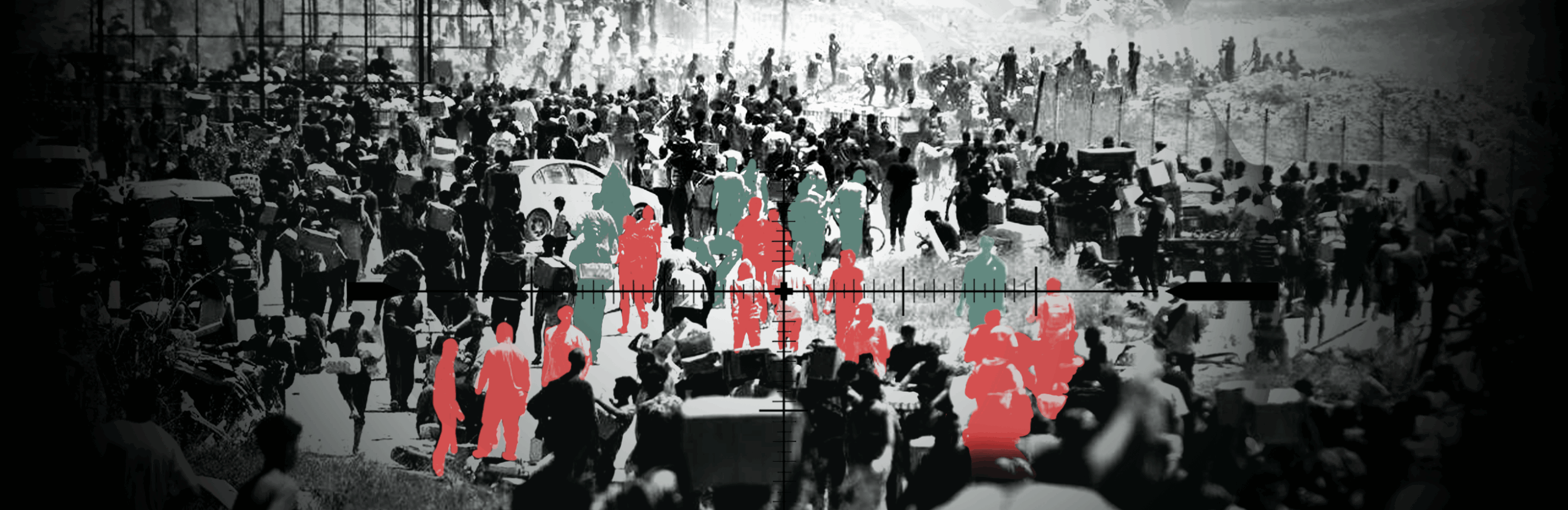
Amid this arrangement, Israeli soldiers have turned indiscriminate killing into something of a sport
‘Aid trap’: Civilians come under Israeli fire while waiting for roadside flour distribution in north Gaza, conflicting announcements sow deadly chaos in south
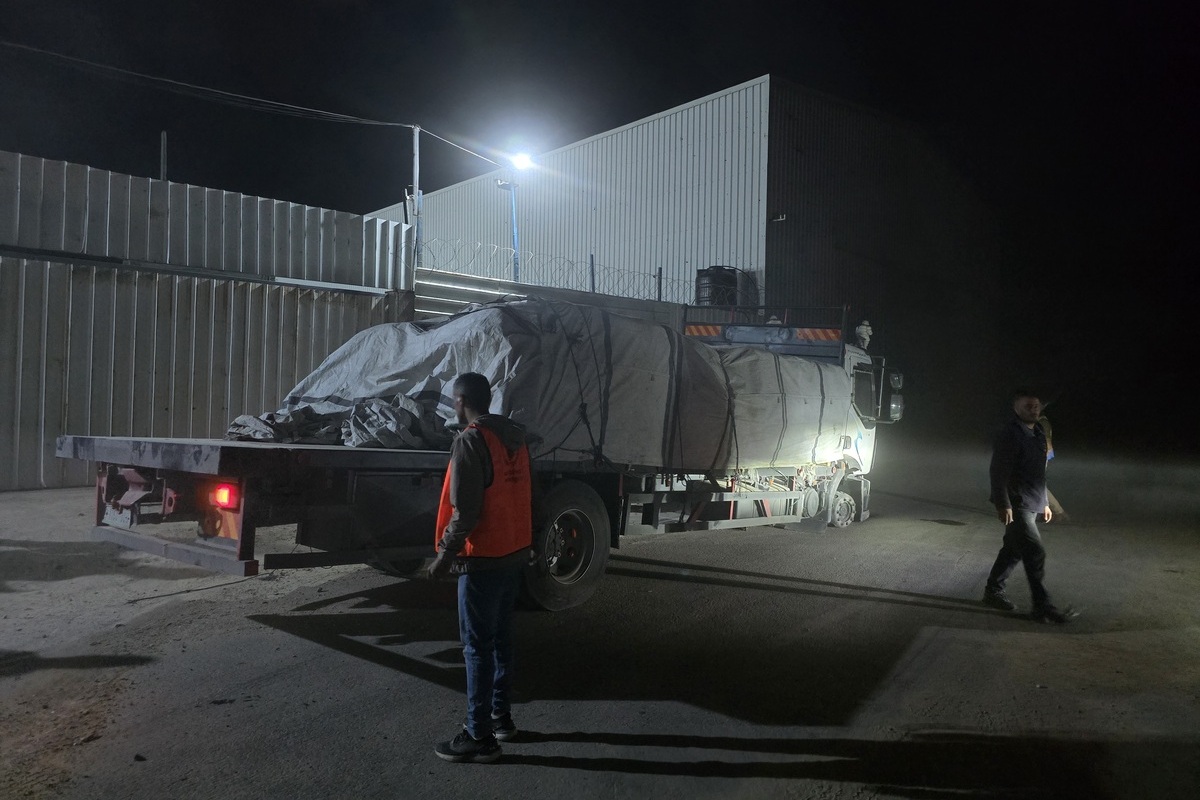
Dozens of flour trucks entered northern Gaza late Saturday night without any announced distribution mechanism, while in the south, conflicting Israeli announcements…
Your support is the only way to ensure independent, progressive journalism survives.
You have a right to access accurate information, be stimulated by innovative and nuanced reporting, and be moved by compelling storytelling. Subscribe now to become part of the growing community of members who help us maintain our editorial independence.
Join us