
Obstacles mark day 1 of Sharm el-Sheikh ceasefire talks
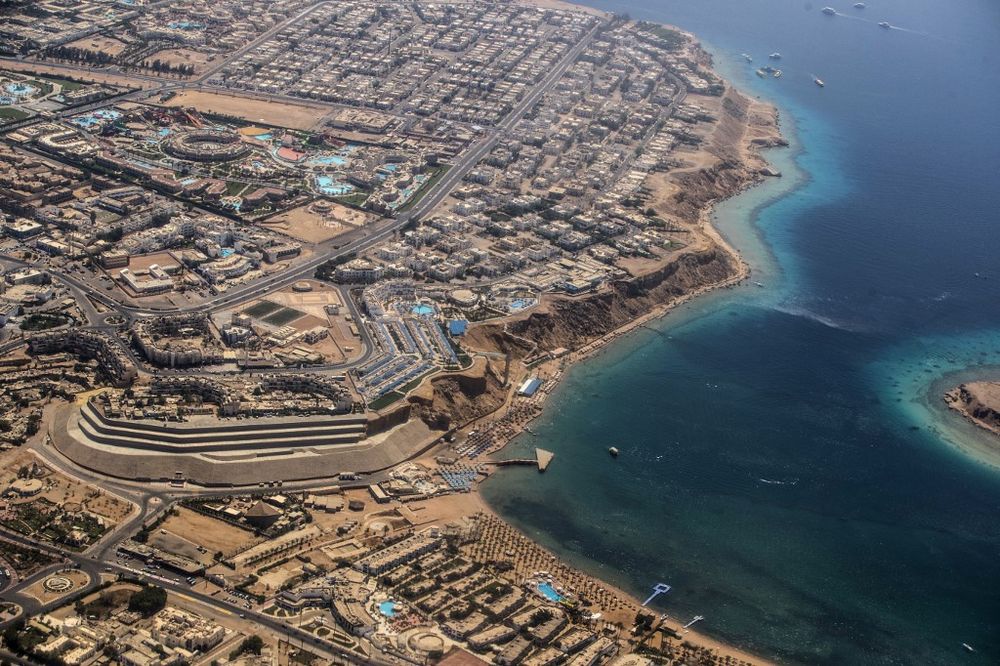
Following the United States-led intervention to end the war in Gaza and usher in a new postwar governance and security framework, delegations from Hamas and Israel began talks on Monday evening in Sharm el-Sheikh, under the mediation of Egypt, the US and Qatar.
The sides resumed talks in “the city of peace” on Tuesday, the day marking two years since Hamas launched the Al-Aqsa Flood operation and Israel unleashed its genocidal war.
But the talks immediately ran into many of the entrenched problems that have sidelined past rounds of negotiations, according to informed Egyptian and Palestinian sources, who pointed to the lack of guarantees for an end to Israel’s aggressions on the strip and the challenge of locating and handing over the prisoners still inside the strip as fundamental obstacles to an agreement.
At the site of the indirect negotiations, a resort in the South Sinai city, tight security procedures were in place to prevent tension or potential security breaches as senior security, according to an Egyptian official who spoke to Mada Masr. Delegations from Qatar, Turkey, the US, the UAE, Saudi Arabia, Jordan, the United Kingdom and France, are all present in the hotels to monitor the negotiations, the Egyptian official said.
The first round of indirect talks on Monday began with separate meetings between mediators from Egypt and Qatar with the Hamas and Israeli delegations.
The Palestinian delegation includes senior Hamas officials Khalil al-Hayya and Zaher Jabarin, while the Israeli comprises officials from the Mossad, Shin Bet, Prime Minister Benjamin Netanayhu’s foreign policy advisor Ophir Falk, Coordinator for the Hostages and the Missing Gal Hirsch and Ron Dermer at the delegation’s head.
The Egyptian official said that the talks focused on the field conditions and logistical and security arrangements necessary to secure the release of living prisoners and the handover of the bodies of prisoners who died in Gaza, as well as the release of Palestinian prisoners from Israeli detention and the expansion of humanitarian aid deliveries into the strip to meet the urgent needs of civilians and ease the famine conditions imposed on them.
All three issues are among the first principles laid out in the 20-point proposal published by the White House on September 29, which stated that all prisoners still in Gaza, both living and dead, should be released simultaneously in exchange for the release of 250 Palestinian prisoners facing life sentences from Israel and 1,500 Palestinians who were arrested after October 7, 2023.
While Hamas pledged over the weekend to hand over all prisoners in the interests of ending the war, the initial round of negotiations shows that the two sides are still far apart in making that pledge a reality.
In talks on Monday, Hamas insisted on the implementation of a ceasefire before any prisoner exchange could take place, while Israel demanded that prisoners be freed before a ceasefire, a senior source in Hamas told Mada Masr.
According to the source, the group also requested guarantees that Israel would not resume fighting once the prisoners were released — a point to which Israel has yet to respond.
“We told the mediators: ‘We want guarantees this is an absolute end to the war and to not have fighting resume once the first phase ends with the prisoner handover.’”
Speaking to Mada Masr before the first round of talks, a second Egyptian official anticipated that a full ceasefire would be unlikely to materialize. “We can’t expect Israel to reduce operations entirely,” the official said, “as it could always say that they were thwarting a terrorist attack.”
US President Donald Trump has issued repeated statements on social media pressing for haste in finalizing a prisoner exchange and ceasefire since Hamas indicated its willingness to discuss releasing all its prisoners at once at the weekend. He has also announced Israel’s consent to halt fire — despite the Occupation’s continued attacks on the besieged Gaza City.
Even beyond a prospective ceasefire, a third Egyptian official described some of the “deliverables” Israel is expecting under Trump’s plan as “unrealistic.” Foremost among them is the demand that Hamas hand over all hostages within 72 hours.
“We know that this is simply undoable,” the official said. “If you want to gather 20 people across Gaza with the current state of affairs, assuming that some are in the north, south and middle, how would you get them together to any point in 72 hours?” the official asked.
The second official, too, estimated that the process of negotiation, handover and transfer of hostages to Israel could take two to three weeks.
The Palestinian Authority would also need to be involved in the screening of the list of Palestinian prisoners to be released in the exchange, an Egyptian political source told Mada Masr.
With all these moving parts, mediators have broken the talks down into stages, according to the first Egyptian official.
The first was launched Monday. The second will address the security arrangements in the strip, and the third will cover the postwar phase and the roles of regional powers in Gaza.
The question of Hamas’s disarmament, a feature of the latter stages of talks, is also among the key aspects of the US-led framework that is expected to present itself as an obstacle to an agreement, according to the third official.
“First of all, what is the definition of disarming? Who will verify it? And how can we ensure that Israel will accept that Hamas has been effectively disarmed?” they said.
The official added that Israel’s withdrawal — a key demand of Hamas — also remains uncertain. The map that was published by the White House lacks coordinates, distances between cities and names of places. Significant work would be required to develop a map adequate for military use, the official concluded.
Two sources from the Fatah movement and the Egyptian political source said that later phases of discussions could gather the Palestinian factions, including the Palestinian Authority, in Cairo to discuss the formation of an administrative committee, its powers and its governance, as raised in the 20-point plan spearheaded by the US. However, one of the Fath sources added, “all Palestinians agree that this is an internal matter in which the PA participates.” The plan put forward by Trump suggests a structure that would place Palestinian governance under an international Board of Peace that would have sole executive authority over economic, political and security matters.
The Sharm el-Sheikh talks came in parallel with meetings Foreign Minister Badr Abdel Atty held in Cairo with his German, Dutch and Slovenian counterparts.
Speaking at a joint press conference, Abdel Atty said that the atmosphere during the first day of the Sharm talks was positive. Ongoing talks, Abdel Atty told reporters, are focused on establishing a security mechanism that guarantees a full Israeli withdrawal from Gaza. He noted that the current plan differs from earlier proposals, which envisioned a three-phase ceasefire, whereas Trump’s plan calls for a ceasefire in the first phase.
According to Abdel Atty, the talks are also addressing the opening of crossings into Gaza, which are currently all controlled by Israel, to allow humanitarian aid to enter through United Nations channels.
The foreign minister said he expects an initial agreement could be reached to halt Israeli military operations, paving the way for continued negotiations that would extend over several days, contingent on the implementation of the prisoner exchange and the entry of large quantities of humanitarian aid.
Abdel Atty urged his European counterparts to play an active role in efforts to end the war in Gaza and to pressure Israeli against obstructing the entry of aid, given the catastrophic humanitarian conditions and famine in the strip.
He also voiced his hope for active European engagement in the upcoming International Conference on Early Recovery and Reconstruction in Gaza, which Egypt plans to host in coordination with the United Nations and several donor countries if a ceasefire takes effect.
Abdel Atty urged the need to build on the current momentum to launch a political process that would pave the way toward implementing the two-state solution and establishing an independent Palestinian state along the June 4, 1967 borders, with East Jerusalem as its capital.
All of this, however, stands in stark contrast to the postwar plan laid out by Trump last week centered on a three-part governance model which an Arab Leagues described to Mada Masr as placing Gaza “under foreign guardianship.”
In Doha, Qatari Foreign Ministry spokesperson Majed al-Ansari said that four hours of meticulous negotiations took place in Sharm el-Sheikh on Monday, given the many details of Trump’s proposal which he said require consensus and commitment from all sides to ensure it becomes a permanent plan. This, he said, requires removing obstacles that could impede implementation.
US envoy Steve Witkoff and Jared Kushner, Trump’s son-in-law, are expected to arrive in Cairo at a later time to meet with President Abdel Fattah al-Sisi and senior officials before traveling to Sharm el-Sheikh to monitor the negotiations and mediation efforts between the Palestinian and Israeli delegations, the second Egyptian official said.
Witkoff and Kushner are not going to meet the Palestinian delegation until they are reassured that a plan to release the prisoners in Gaza and to handover bodies to the International Committee of the Red Cross has begun, according to the source.
أخبار ذات صلة

Hundreds of Gaza students demonstrate for right to study abroad
Hundreds of university students trapped in the besieged Gaza Strip gathered on Monday outside the Journalists Syndicate’s headquarters in western Gaza City…

In meeting with Board of Peace director-general, Hamas refuses UN disarmament plans until Israel commits to withdrawal
Hamas has refused to commit to the plans proposed by the United Nations for its disarmament, citing lack of advancement in Israel’s…

Israel agrees to limited reopening of Rafah border crossing — details pending
Israeli Prime Minister Benjamin Netanyahu’s office announced on Monday that it has agreed to a “limited reopening” of the Rafah border crossing…

Sisi touts ‘stabilization’ agenda at first Davos appearance in over 10 years
President Abdel Fattah al-Sisi advertised Egypt’s “stabilization” agenda in Davos on Wednesday, saying the country’s focus on steering away from regional conflicts…
Your support is the only way to ensure independent, progressive journalism survives.
You have a right to access accurate information, be stimulated by innovative and nuanced reporting, and be moved by compelling storytelling. Subscribe now to become part of the growing community of members who help us maintain our editorial independence.
Join us