
New witnesses: Egyptian authorities planned to misdirect inquiry into Regeni murder before body was found
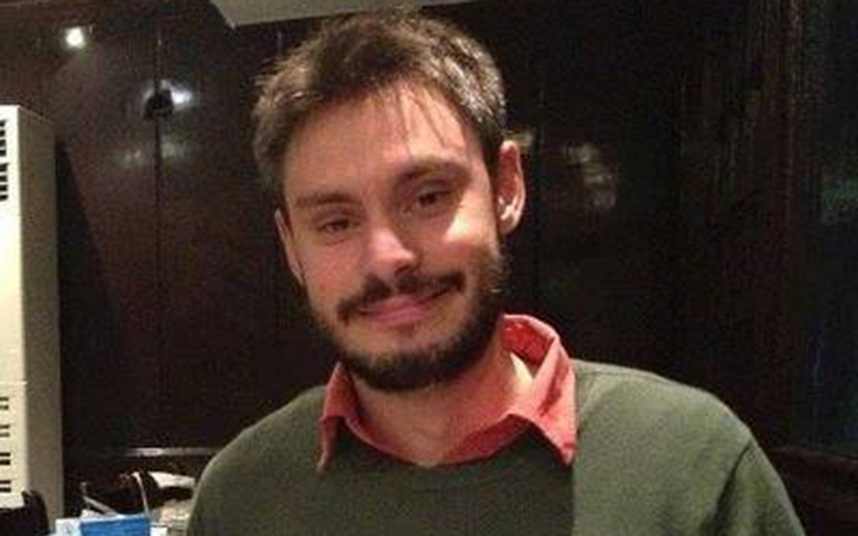
New witness testimonies provided to Italian prosecutors have laid out Egyptian security officers’ plans to misdirect the investigation into the murder of Italian researcher Giulio Regeni as early as February 2, 2016, a day before his body was found abandoned beside a road on the outskirts of Cairo, several Italian press outlets reported since Wednesday.
The three fresh witness testimonies emerged from documents filed before an upcoming hearing in Rome’s ongoing investigation into four Egyptian security officials accused of the 2016 murder of Regeni, a 26-year-old doctoral student who was researching labor organizations in Egypt at the time.
The Rome prosecutor’s office has reportedly received testimony indicating that Egyptian security services planned to misdirect investigations into the murder, staging a robbery and framing the five Egyptian nationals who were pursued and killed by security forces at the time.
Cairo and Rome officially cooperated in a joint investigation into Regeni’s murder for nearly five years, which saw Italian prosecutors repeatedly accuse Egyptian officials of deliberately trying to mislead the investigation, until Egypt announced on November 30 that it would suspend its side of the proceedings.
Though the new information appears to implicate Egypt’s security services still further, an Italian government source told Mada Masr following the November decision that Italy would move forward with charges that would not implicate any Egyptian security agency in having instructed the accused officials, while an Egyptian government said that there is a mutual understanding between Rome and Cairo that “Italy is doing what they want to do and Cairo is doing what we want to do.”
The accused, who did not respond to indictment orders, will be tried in absentia on charges of kidnapping and complicity in aggravated murder and aggravated assault, are Major General Tarek Saber, a senior official at the National Security Agency at the time of Regeni’s death who retired in 2017; Major Sherif Magdy, who also served at the NSA where he was in charge of the team that placed Regini under surveillance; Colonel Hesham Helmy, who served at a security center in charge of policing the Cairo district where Regeni lived; and Colonel Asser Kamal, who was the head of a police department in charge of street works and discipline.
According to the Italian prosecution, around ten people decided to collaborate with the investigators, but only three testimonies were deemed reliable as they provided new elements that corroborated what they already knew.
Chief among the new details reported on Wednesday is the testimony of an Egyptian national connected to the trade union leader, Mohamed Abdallah, who passed information to Egypt’s security agencies concerning Regeni. Footage of Abdallah aired on Italian state TV in December showed him wearing a wire and en route to record an interaction with Regeni, who met him as part of his PhD research into independent trade unions. The Egpytian witness said Abdallah told him of his contact with Regeni and informed him that Regeni was with the National Security Agency on January 25.
According to the new testimonies published on Wednesday, on February 2, one day before the student’s body was found on the Cairo-Alexandria road, a seemingly frightened Abdallah told the witness that Regeni was dead, explaining that he learned the news from an officer he identified as Hesham, with whom he met on the same morning at a state security office. The witness said that, after learning of the officers who had been indicted, he assumed the officer to have been Hesham Helmy.
Abdallah allegedly told the witness that he heard the officer speaking on the phone with another officer about how to frame previously convicted individuals for Regeni’s death. Thursday’s edition of the Italian daily La Repubblica quotes the witness as saying, “during the phone call the two officers talked about how to pin the responsibility for the boy’s death on a robbery. The official in front of [Abdallah] said it was necessary to deform the body to suggest he had been robbed, and then to accuse some previous offender of having done it, ensuring that some of the young Italian’s personal effects should be found.”
In March 2016, Egypt’s Interior Ministry announced that police forces in New Cairo had tracked and killed five members of a criminal gang “specializing in the theft of foreigners,” which the ministry claimed was responsible for Regeni’s murder.
The new witness claims to have known that the people initially accused of killing Regeni were people “already held in prisons Egyptians,” describing this as part of the phone call Abdallah told the witness he had overheard.
The ministry later issued a detailed statement linking these five men to Regeni’s murder and posted a photo of items in their possession said to belong to Regeni. This account was dismissed at the time by Regeni’s family, Italian investigators and even by Egyptian prosecutors, who denied that there was a link between the gang and Regeni’s death.
Italian investigators highlighted a number of inconsistencies in Egypt’s explanation of what happened to Regeni, querying how likely it is that kidnappers would torture a victim and then hold onto his ID documents for months after his death. They also lamented the deaths of the suspects, who were shot dead by police forces and cannot be questioned in relation to Regeni’s murder.
The Italian prosecution pressed charges of kidnapping and killing Regeni against the four security officials in December, while charges against a fifth suspect from the police force were dropped. In the absence of a response to the defendants’ indictment, the investigation has proceeded in absentia.
Information published last year alleged that by January 28 and 29, according to the testimony of “witness Y,” an employee for 15 years in the NSA’s Lazoghly headquarters where Regeni is said to have been killed, Regeni was detained on the first floor of a four-level villa which was used to interrogate detainees, with two police officers and other security personnel. Witness Y told Rome’s prosecutors that they saw “Regeni lying on the ground shirtless, his body showed signs of torture, and he was uttering words in his language.”
Of the four officials on trial, Major Magdy Sharif is directly accused of torturing Regeni and causing “injuries that would have prevented him from attending ordinary occupations for over 40 days and involving the permanent weakening and loss of several organs.”
Sharif also stands accused of the murder “through a violent blunt action, exerted on various cranial-cervical-dorsal parts … that caused massive traumatic injuries to Giulio Regeni which resulted in acute respiratory failure of a central type which led to his death.”

أخبار ذات صلة
Italian court unblocks trial of Egyptian security personnel charged with Regeni murder
The trial had been suspended since July 2022

Greek migrant boat tragedy: What do we know so far?
Many of the passengers went through a hostage-like situation in Libya, their families told Mada Masr

Parliament bites back after EU deplores ‘continued lack of basic political rights and freedoms in Egypt’
Egypt's parliament said the resolution violates the independence of its prosecution and judiciary.
Trial of Egyptian security officials for 2016 murder of Giulio Regeni will not go ahead
The decision brings over six years of investigations conducted by Italy to an inconclusive end
Your support is the only way to ensure independent, progressive journalism survives.
You have a right to access accurate information, be stimulated by innovative and nuanced reporting, and be moved by compelling storytelling. Subscribe now to become part of the growing community of members who help us maintain our editorial independence.
Join us