
Mubarak-era figures with history of corruption banked with Credit Suisse, says new investigation

A new Organized Crime and Corruption Reporting Project investigation based on a data leak reveals that Credit Suisse held millions of dollars in accounts owned by international figures associated with corruption and human rights abuses, among them several individuals associated with the regime of the late ousted President Hosni Mubarak.
A total of nearly US$500 million was held in several accounts at the Swiss bank belonging to Mubarak's sons Alaa and Gamal, Mubarak-era intelligence chief Omar Suleiman, former Information Minister Anas Ahmed Nabih al-Fiqqi, real estate mogul and member of Mubarak’s party Hesham Talaat Mostafa and Mubarak-affiliated businessman Hussein Salem.
Compliance experts who reviewed OCCRP’s findings said many of these people should not have been allowed to bank at Credit Suisse.
Several Credit Suisse accounts belonging to Alaa and Gamal Mubarak, who had nearly decade-long asset freezes on their holdings in the European Union lifted in 2021, held over $300 million at their fullest. Both the Mubarak sons were convicted of embezzling LE125 million (around $21 million at the time) in state funds in 2015, and faced separate charges of insider trading during the sale of Al-Watany Bank, though convictions never stuck in the latter case.
The CEO of the Egyptian investment bank EFG Hermes, Yasser al-Mallawany — whose name also appeared on multiple Credit Suisse accounts — was also charged and acquitted in the insider trading investigation. A lawyer for Mallawany told OCCRP that information regarding the accounts was “not correct.”
A Swiss government freeze on the Mubarak family’s assets was dropped separately in December 2017 after coordination between Cairo and Geneva to retrieve the assets came to nothing. Switzerland confirmed at the time that the funds would continue to be held for an investigation into their legality, but procedural difficulties make it unlikely that the funds will ever be returned to the Egyptian state.
In response to a request from The New York Times for comment on the Credit Suisse findings, lawyers for the Mubaraks declined to comment on specific accounts and said that the implication that any of their funds were “tainted by any illegality or a result of any favoritism or use of influence” would be “both unfounded and defamatory.”
Any assets they held, said the lawyers, were from their “successful professional business activities.”
Former General Intelligence Service head Omar Suleiman also held two accounts with Credit Suisse, totaling up to $70 million.
There are several known cases where the use of torture by Suleiman's General Intelligence Service played a central role in the US rendition program used to circumvent normal extradition processes during the “war on terror,” using torture on behalf of the CIA in a well-documented incident against a suspected Al-Qaeda member in pursuit of information that was ultimately used to justify the 2003 invasion of Iraq.
Over $114 million were held in Credit Suisse accounts by businessman Hussein Salem, despite his implication in corruption cases dating back to the 1980s.
Several accounts were also reportedly held under the name of Hesham Talaat Mostafa, a real estate businessman and member of the National Democratic Party. One of the accounts reportedly remained open beyond 2009, when Mostafa was convicted for arranging the murder of Lebanese singer Suzanne Tamim in a Dubai hotel. Mostafa escaped a death sentence by retrial and was ultimately released from prison on a presidential pardon in 2017, after serving just half of a 15-year sentence.
Former Information Minister Anas Ahmed Nabih al-Fiqqi, meanwhile, held over $3 million at Credit Suisse, despite facing foreign asset freezes over corruption charges.
Former Credit Suisse employees who spoke to OCCRP on condition of anonymity described a toxic corporate culture that incentivized dropping due-diligence checks on the sources of funds owned by the ultra-wealthy, and that, under the guise of banking secrecy laws, encouraged senior executives to take on high-risk clients while colleagues looked the other way.
In response to the investigation, Credit Suisse said that most of the accounts mentioned in the investigation are “historical” and that an “overwhelming majority” of problem accounts identified by journalists “are today closed or were in the process of closure prior to the receipt of the press inquiries.”
Other accounts were held by Jordan’s King Abdullah II — who held a single account worth $223 million at its peak, even as his country received billions in foreign aid — an official in the government of deposed Libyan leader Muammar Qadhafi and cousin of Libya’s current prime minister, among other elites from Europe to South America.

أخبار ذات صلة
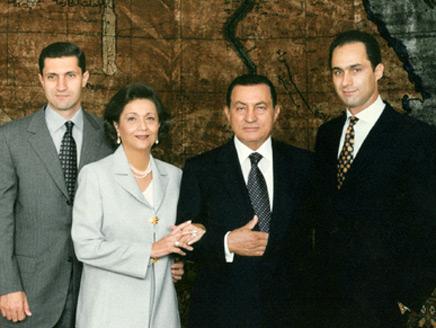
Lawsuit to prevent Mubarak’s family from running for office postponed to November 25
The seeks to reopen investigations into the family’s funds and re-suspend their political rights
Mubarak family vows to sue after court reverses EU sanctions on assets
Sanctions were also lifted for Mubarak-era ministers Habib al-Adly and Zoheir Garana
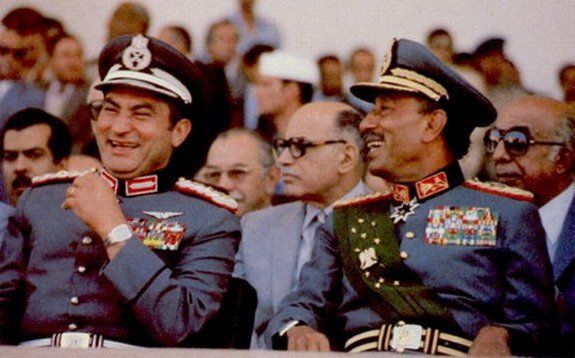
Hosni Mubarak (1928–2020): The rise and fall of Egypt’s longest-ruling president
Mubarak used fear of Islamists to justify a repressive police state.
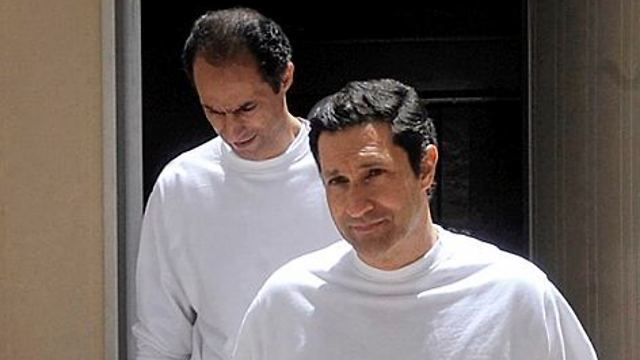
The Mubaraks’ quick turn through the jailhouse turnstile
Alaa and Gamal’s brief stint in detention points to government dissatisfaction with their political standing
Your support is the only way to ensure independent, progressive journalism survives.
You have a right to access accurate information, be stimulated by innovative and nuanced reporting, and be moved by compelling storytelling. Subscribe now to become part of the growing community of members who help us maintain our editorial independence.
Join us