
Minister’s remarks about depreciation stoke tension with Central Bank

Investment Minister Ashraf Salman’s widely reported comments about the need to devalue the Egyptian pound appear to have kicked off a public spat between some cabinet ministers and the Central Bank of Egypt.
The dispute has pushed the prime minister to reaffirm the independence of the Central Bank in an official statement. “Only the Central Bank can determine monetary and fiscal policy, and it enjoys complete independence,” the statement reads. “The government does not interfere at all in currency or monetary policy.”
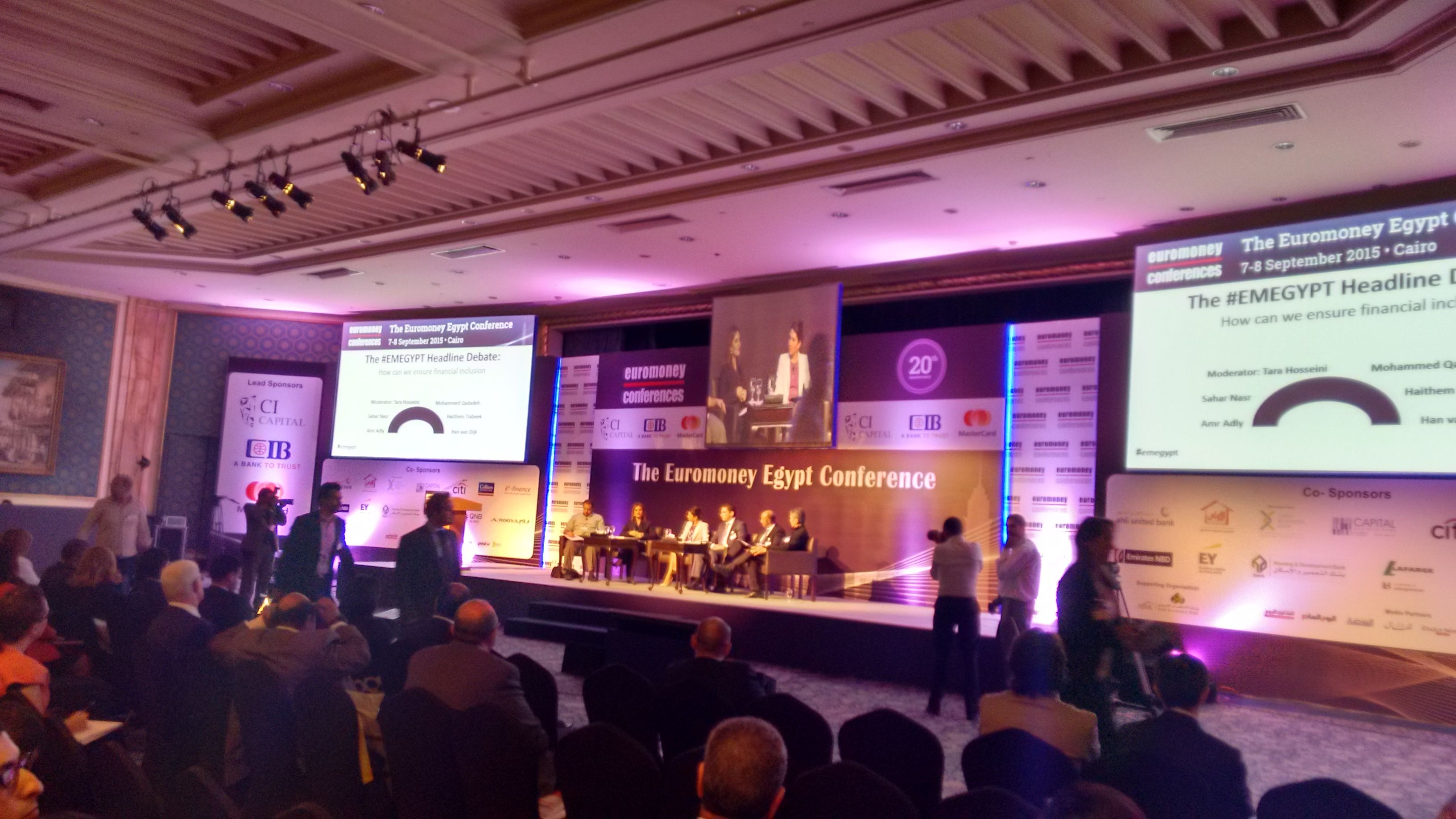
At issue is a remark from Ashraf Salman during the Euromoney conference this week.
“Is it better to deplete the reserves or depreciate?” Salman said during a keynote interview. “The answer … in this global crisis is to take care and to increase your foreign reserves. Depreciation here is not a choice.”
A certain amount of tension is inevitable between cabinet ministers and the Central Bank. In the absence of a parliament, the Cabinet controls fiscal policy, setting revenue goals and allocating spending. The size of the fiscal deficit, and therefore the government’s borrowing needs and overall macroeconomic stability, are in the hands of the Cabinet.
The Central Bank, meanwhile, controls monetary policy, guiding interest and exchange rates and controlling the monetary supply in an attempt to keep prices stable for consumers.
Both institutions have to deal with each others' policies, and aren’t always happy about it.
At times, their policy aims can conflict. Devaluing the Egyptian pound, for example, would raise prices for consumers (against the mandate of the Central Bank), but could also make Egypt more attractive to investors (good for the Ministry of Investment).
Salman’s comments at Euromoney put those tensions in the public eye, ruffling feathers inside and outside of the government.
His remarks, which suggested that devaluing the pound was inevitable in the face of declining reserves, was in line with conventional wisdom in economics, and echoed statements made by analysts for months. Expressing this sentiment so publicly, though, unnerved investors.
On Monday, the day of Salman’s remarks, Egypt’s stock market performed well in the morning but took a downturn in the afternoon, with the benchmark EGX30 index closing down 1.5 percent. The market fell further on Tuesday. Even as global markets rallied, the EGX30 shed 3.4 percent to drop below 7,000 for the second time this year.
Analysts attribute Tuesday’s downturn to both currency fears and concerns that companies might be implicated in corruption cases after the arrest of the agriculture minister Monday night .
The EGX recovered slightly on Wednesday.
Central Bank governor Hisham Ramez was also reportedly upset by Salman’s statements, describing them as “interference in fiscal policy” and calling Salman for “clarification” according to Al-Masry Al-Youm’s sources.
The Prime Minister’s statement appears to be an attempt to mollify Ramez, and to reassure investors that Salman’s comments do not signal an eminent change in monetary policy.

أخبار ذات صلة

Zohr gas field steals the show at Euromoney
The newly discovered Zohr gas field dominated the conversation at this week's Euromoney Egypt conference and captured the audience's attention, so much…

Ministers talk privatizing education, health at Euromoney
Privatizing non-traditional sectors like healthcare and education could help kick Egypt's economy back into gear, the ministers of investment and finance suggested…
At Euromoney, ministers seek opportunity in global economic tumult
At this year’s edition of the annual Euromoney Egypt Conference, ministers maintained a note of decided optimism despite the many admitted challenges facing the economy, both as a result of…
Egypt schedules major economic summit in March
A date has now been set for the economic development summit that Egyptian officials have been talking about for the past several…
Your support is the only way to ensure independent, progressive journalism survives.
You have a right to access accurate information, be stimulated by innovative and nuanced reporting, and be moved by compelling storytelling. Subscribe now to become part of the growing community of members who help us maintain our editorial independence.
Join us