
Military ruler annuls ruling against Mamdouh Hamza setting ‘historical precedent’
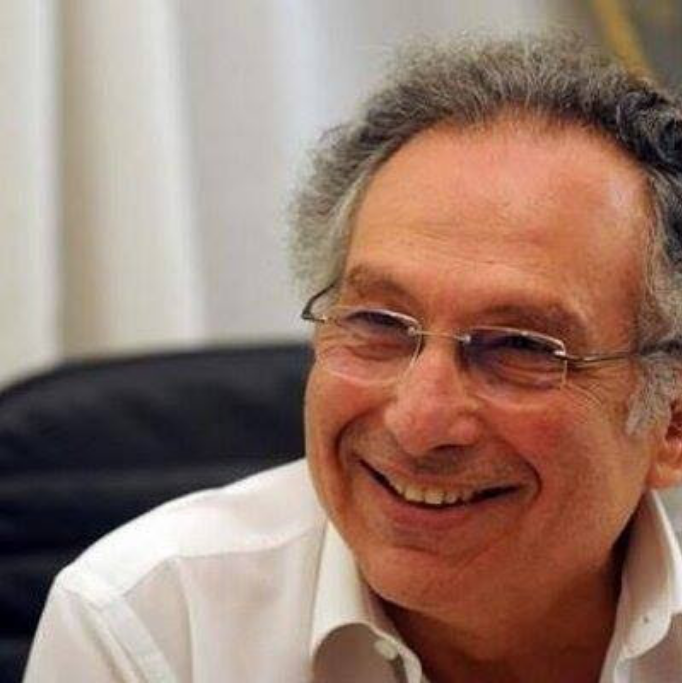
A six-month sentence issued in absentia against politically outspoken engineer Mamdouh Hamza in an emergency court trial has been walked back, in what Hamza’s lawyer, Khaled Ali, said on Sunday is a historically unprecedented move.
Ali said he was notified on Sunday that the ruling sentencing Hamza to six months in prison and adding him to the state terrorism list, which was ratified last December, has been overturned, and that Hamza will now face retrial before another emergency court.
Emergency trials, to which authorities have had recourse under a legal state of emergency that has operated in Egypt since April 2017, are not subject to the standard appeals process and can be used to prosecute any individuals deemed to have threatened national security.
Recent cases include the trial of graduate researcher Ahmed Samir Santawy, who was sentenced by an emergency court to four years in prison, and the ongoing trial of graduate researcher Patrick George Zaki.
The Public Prosecution accused him of inciting a terrorist crime, namely the use of force, violence and threats for a tweet he posted on July 16, 2017, in support of the residents of Warraq island who protested demolition decisions for their homes on the island.
“To the people of Warraq: Hold on to your rights and do not submit to those who sell the land. We defended Qursaya Island in 2009 against the occupation attack. Union is strength," Hamza had tweeted.
On October 26, 2020, an Emergency State Security Court found Hamza guilty of inciting violence through his tweets and sentenced him to six months in prison and added his name to the state terrorist list.
In its ruling, the court linked Hamza’s tweet to the clashes on the island, which left one resident dead and 19 others injured, according to the Health Ministry, while 37 police personnel were reported injured by the Interior Ministry.
Khaled Ali told Mada Masr that under emergency law, which has been renewed every three months since April 2017, the military ruler is the president of the republic, and his deputy is the prime minister.
Rulings issued by emergency courts are not subject to a normal appeals process, as they are referred to the military ruler — “the President of the Republic or whoever he commissions — to be ratified.” Once ratified, a ruling becomes final and may not be appealed. The only recourse is to submit a grievance to the military ruler.
In September, the deputy of the military ruler approved Hamza's grievance against the ruling issued by the Emergency State Security Court against him last October, imprisoning him for six months and adding him to the state terrorism list —which was ratified on December 26 of the same year, Ali explained in an article for the legal publication, Manshurat.
Ali at first attempted to argue to the Public Prosecution that they have the right to file and appeal to the Court of Cassation because the state of emergency under which the verdict was issued had since expired, but the prosecutor turned the appeal down, prompting him to file a grievance with the military ruler as a final resort.
And in a historic precedent, Ali's grievance was accepted and Hamza's sentence was redacted.
The decision of the deputy of the military ruler to abolish the imprisonment sentence issued against Hamza entails a re-trial before an Emergency State Security Terrorism Court, in accordance with Articles 16 and 17 of the Emergency Law.
Other recent politically inflected emergency trials include that of the Central European University master student Ahmed Samir Santawy who was sentenced to four years in prison and fined LE500 on charges of “publishing false news from outside the country about internal affairs,” in an emergency trial in June. Santawy’s brother told Mada Masr that he is filing a grievance with the military ruler to rescind the ruling issued against his brother.
Other activists, meanwhile, are still standing trial before Emergency State Security Courts, including Patrick Zaki, a researcher with the Egyptian Initiative for Personal Rights, who is being tried on charges of “spreading false news at home and abroad” for an article he wrote two years ago, following 19 months in pre-trial detention.

أخبار ذات صلة
Researcher Patrick Zaki’s trial postponed amid legal challenges to constitutionality of ongoing emergency trials
Zaki was referred to an emergency court weeks before the years-long state of emergency ended
Prison sentence against Alaa Abd El Fattah, lawyer Mohamed Baqer, blogger Mohamed Ibrahim ratified
The two years for which they were held before trial will not be deducted from their sentences

EIPR: 5-year prison sentence for contempt of religion represents continued abuse of 2018 cybercrime law
Lawyers say the vague charges used against Girgis have been used to suppress freedom of expression
Alaa Abd El Fattah sentenced to 5 years, lawyer Mohamed Baqer and blogger Mohamed Oxygen 4 years each
Writer and activist Alaa Abd El Fattah was sentenced on Monday to five years in prison, while lawyer Mohamed al-Baqer and blogger…
Your support is the only way to ensure independent, progressive journalism survives.
You have a right to access accurate information, be stimulated by innovative and nuanced reporting, and be moved by compelling storytelling. Subscribe now to become part of the growing community of members who help us maintain our editorial independence.
Join us