
Letter from scientists prompts Suez Canal conspiracy theories
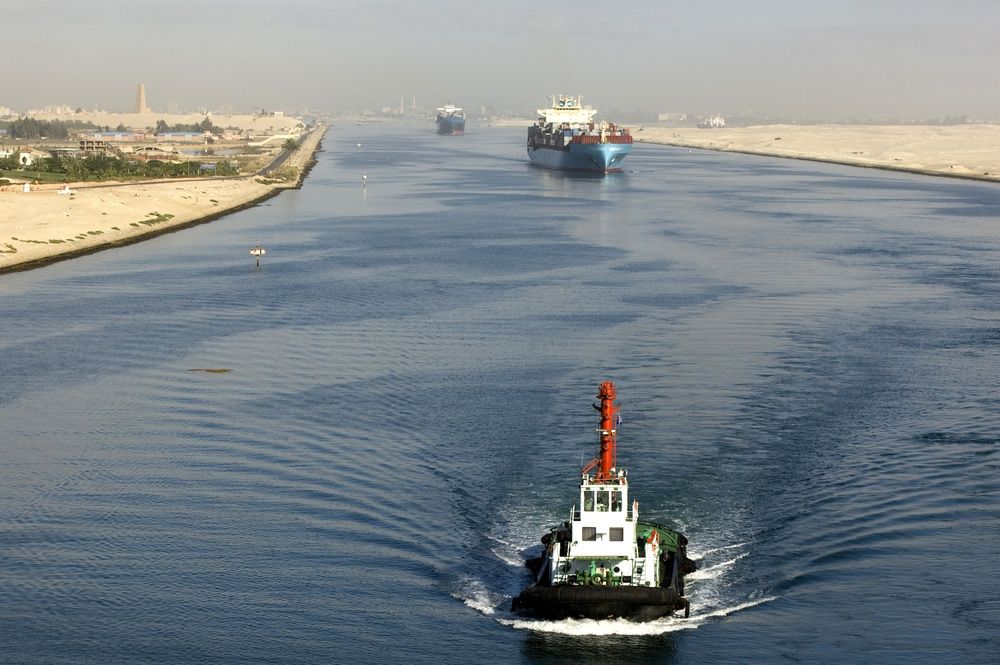
A letter published in an international scientific journal about the ecological risks of expanding the Suez Canal has raised cries of conspiracy theories in local media.
The letter to the editor was signed by 18 scientists from around the world, including lead author Bella Galil of Israel’s National Institute of Oceanography. It was published in Biological Invasions, a peer-reviewed scientific journal which is ranked among the top 25 percent of scholarly publications in the fields of plant and animal sciences.
In keeping with the theme of the journal, the letter raises concerns that Egypt’s plans to widen the Suez Canal will speed the invasion of non-native species into the Mediterranean Sea.
It points out that half of the 700 multicellular non-native species found in the Mediterranean Sea were introduced via the Suez Canal, which it describes as “one of the most potent mechanisms and corridors for invasions by marine species known in the world.” Thus, the authors say, plans to expand the canal come as “ominous news.”
The migration of non-native sea creatures, many of whom have few natural predators in the Mediterranean, has led to “profound environmental, economic and human-health issues,” the authors say.
Among the examples cited are the annual swarms of jellyfish that harm tourism, fisheries and coastal installations such as desalination and power plants, the spread of poisonous pufferfish throughout the Levant and to Italy and Tunisia, and the invasion of several species of fish and prawns and oysters that have displaced local species that have traditionally been harvested by local fisherman.
The letter concludes with a reminder about international conventions that require signatories, including Egypt, to “prevent the introduction of, control or eradicate those alien species which threaten ecosystems, habitats or species,” and a call for a regionally-supervised environmental impact assessment to mitigate a new wave of invasive species that could migrate through a wider and deeper canal.
Ordinarily, a fairly technical letter-to-the-editor of a scientific journal would draw little notice outside of academia. In this case, however, it hit headlines because the lead signatory is a scientist from Israel’s National Institute of Oceanography, and because it involves the Suez Canal expansion, which is widely regarded as a patriotic national project that will underpin Egypt’s future economic success.
The story was picked up by Haaretz newspaper on October 6, and in turn by Egyptian publications. Although the letter was published September 28 in a journal based in the Netherlands, privately owned Youm7 ran a story on it under the headline: “A Zionist attempt to divert attention from October 6 commemoration. Israel starts war of rumors on new Suez Canal project. Tel Aviv publishes fabricated research claiming that widening the canal will pose environmental threat.”

أخبار ذات صلة
Welcome to Sharm el-Sheikh: President’s City, City of Peace, City of COP27
Beneath the mask the city’s donned for COP27 are the marks of years of uncalculated redevelopment

Creaturely empathy with desert animals: A Kuwaiti environmentalist’s social media experiment
Much of the appeal of hunting in the region is in the way that it invokes an idealized past.

Israel finally approves Egypt’s gas deal after nail-biting battle
In an unexpected move, Israeli Prime Minister Benjamin Netanyahu announced on Wednesday Israel’s final approval of a controversial gas export deal with Egypt, months after Israeli hesitation following the initial…
Egypt doubles down on Israeli natural gas imports in US$35 bn deal with 14% price increase
A US$35 billion gas deal announced on Thursday will see Egypt redouble its energy dependence on Israeli fields as an expansion of…
Your support is the only way to ensure independent, progressive journalism survives.
You have a right to access accurate information, be stimulated by innovative and nuanced reporting, and be moved by compelling storytelling. Subscribe now to become part of the growing community of members who help us maintain our editorial independence.
Join us