
Judicial sources: Recent appointees to judicial roles dismissed after Military Academy’s fitness, mental health tests

Dozens of graduates who applied in hiring rounds for the role of assistants to the Public Prosecution and assistant delegates at the State Council failed to pass qualifying tests run by the Military Academy that were required before they could begin work, according to several judicial sources who spoke to Mada Masr.
The appointees were ultimately disqualified from hiring on the grounds that they were overweight and lacking in physical fitness and medical health, the sources said.
Judges from the Court of Cassation and the State Council told Mada Masr that the Military Academy offered the unsuccessful appointees another chance to retake the test, before recommending to President Abdel Fattah al-Sisi that their appointments, which had already been issued by a presidential decree, be revoked.
Judges and lawyers who spoke to Mada Masr described the situation as a "judicial catastrophe” and an “irreparable tarnish" on the Egyptian judiciary, as it represents a definite compromise to the principle of judicial independence.
Yet Judge Ahmed Abdelrahman, former first deputy president of the Court of Cassation, deemed it necessary for the public interest to appoint judges who are physically and psychologically fit.
The Military Academy celebrated on June 13 the graduation of the new hires, marking the first time that a hiring round for judges included the requirement for candidates to undergo training at the Military Academy. The new requirement sees the judiciary join several other civil service roles requiring training from the academy , including teachers, imams working with the Endowments Ministry, diplomats and other government appointees.
In April of last year, the Cabinet’s Secretary-General sent a circular to ministers that included a presidential directive requiring state institutions to ensure applicants to government jobs complete a six-month qualifying course at the Military Academy as a prerequisite for their appointment to a role. Certificates from the academy training are to be included among the appointment documents.
"Many judges, since the middle of 2023, put up significant opposition to the step requiring new judges to undergo military academy tests, but the matter was resolved at the beginning of this year in favor of the academy," a deputy president of the Court of Cassation told Mada Masr on condition of anonymity.
The Egyptian Judges Club was among those objecting. In a letter sent to the Supreme Judicial Council in May 2023, of which Mada Masr obtained a copy, club president Judge Mohamed Abdel Mohsen stated that the decision is “inconceivable for candidates for judicial positions, as the Supreme Judicial Council alone, according to the law, is responsible for setting the necessary criteria for these positions, being the most qualified to select those entrusted with this duty, without participation or interference from others in this mandate that pertains to judiciary independence."
Abdel Mohsen noted that new assistant prosecutors already undergo training at the Public Prosecution’s training center before starting their work, urging the Supreme Judicial Council to take appropriate action regarding the matter.
But the Justice Ministry, along with security and sovereign bodies overseeing judicial appointments, insisted on the step as a presidential directive that must be applied universally.
In early 2024, judicial bodies agreed to present their nominees to the Military Academy for medical, psychological, and fitness tests before submitting the final list of appointees to the president for approval.
The Court of Cassation deputy president said that the agreement was initially articulated such that candidates applying for judicial roles would undergo military academy tests prior to the president issuing the decree listing the names of chosen candidates. But, he said, an exception was made for the latest cohort of applicants — graduates from 2020 and 2021. Although a decree had already been issued appointing successful applicants from the 2021 and 2020 cohorts, an agreement between judicial bodies, the Justice Ministry, and the Military Academy stipulated that these appointees would be tested afterward. Those who passed would attend the qualifying course before assuming their judicial roles.
Under this agreement, over 500 newly appointed assistant public prosecutors selected from the graduate cohort of 2021, as well as the latest appointees to the State Council, the Administrative Prosecution Authority, and the State Lawsuits Authority, took medical, fitness and psychological tests at the Military Academy, akin to military academy students, in preparation for the qualifying course.
A State Council deputy president told Mada Masr on condition of anonymity that assistant representatives from the 2020 cohort appointed by the president in October also underwent these tests in recent months to qualify for the six-month course.
However, dozens of the appointed candidates failed the tests, some of them on the grounds that they were overweight, among other reasons, the State Council deputy president said. The Military Academy allowed those who failed due to weight and fitness issues to retake the tests. Should they fail again, the academy was to recommend that the president revoke their appointments, according to the source.
Abdelrahman said that around 50 assistant public prosecutors from the 2021 batch failed the military academy tests primarily due to weight-related issues. They were referred to the Justice Ministry’s Center for Judicial Studies for a preparatory program led by Military Academy trainers, followed by a second chance to retake the tests. The same applied to other unsuccessful appointees in judicial roles. Abdelrahman likewise said that those who failed a second time would have their appointment revoked. He added that judicial appointees are liable for dismissal without compensation if they are found to be unsuitable, as they are still under evaluation.
From now on, Abdel Rahman said, there will be no second chance for judicial candidates failing the Military Academy tests before presidential appointments are issued, and the judicial sources said that Military Academy qualification testing will now be conducted prior to the president’s issuance of the decree selecting new staff for judicial positions.
Nasser Amin, head of the Justice Support Foundation, criticized the decision, arguing that applying military selection criteria to judicial appointments undermines judicial independence. Amin told Mada Masr that subjecting judges to such criteria, typically applied to armed forces personnel, is an “irreparable tarnish.” Only legal competence should determine judicial appointments, he said, and retesting judicial appointees at the Military Academy is invalid and should be nullified, along with its consequences.
Amin said that it is constitutionally and legally inconceivable to disregard a judge’s legal competence for their role and dismiss them on the grounds that they are overweight or unable to perform a "trust jump" on command off a diving board, or any other physical capabilities that are more suited to fighters or athletes.
Training newly appointed judges at the Military Academy for six months, Amin said, violates the principle of separation of powers, and, according to the United Nations principles on judicial independence, even the Justice Ministry should not interfere in judicial affairs, including appointments, qualifications, training, work, transfers, and delegations. He continued, saying that judges should regulate these matters themselves, either through their general assemblies for each court or through the Supreme Judicial Council.
Abdelrahman’s view was different. Training at the Military Academy is in the public interest, he said, stressing that judges must adhere to the same selection criteria as military and police officers because "the better the medical and physical fitness of judges, the more it benefits judicial work."
Abdelrahman also pointed out that it is not the first time for judicial appointees to be required to take training programs. Judges were trained at the National Training Academy in years prior, and before that, they were qualified before their appointment at the National Center for Social and Criminological Research. However, he noted that, currently, “political leadership is interested in health and fitness.”
The civil service law does not prohibit individuals with serious heart conditions or other illnesses from being appointed to judicial positions, said Abdel Rahman. However, in practice, this has resulted in several judges continuing in their roles at various judicial bodies until they reach the retirement age of 70, or request to be excused from their duties due to health reasons, in which case they receive a pension amounting to 80 percent of their salary.
Commenting on concerns about judicial independence and the military academy’s involvement alongside the supreme councils of judicial bodies in the selection of judicial appointees, Abdelrahman only said that every new experiment has its drawbacks, and this one is under evaluation.
In July 2017, the presidency introduced a new mechanism for appointment in judicial bodies. Under it, the General Intelligence Service retests those who passed the standard security investigation phase to measure "loyalty to the country,” as well as the political, religious and sexual preferences of applicants. Candidates were also subject to intelligence tests and emotional stability assessments.
The Administrative Control Authority then selects the accepted candidates and prepares a report for the presidency, justifying its selection. The accepted candidates must also pass entrance tests at the National Academy for Youth Training and study there for a year. Finally, a presidential decree is issued to approve the new appointees in judicial bodies — the Public Prosecution, the Administrative Prosecution Authority, the State Council and the State Lawsuits Authority. Although judicial bodies initially objected to these procedures, all eventually complied several months later.

أخبار ذات صلة
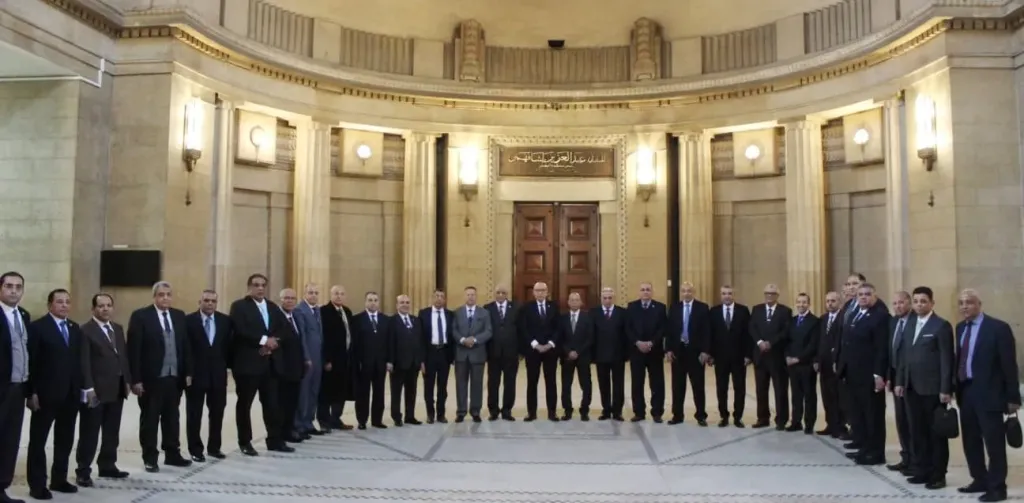
Supreme Judicial Council calls off assembly on ‘grave matter’ affecting judicial independence
The Judges Club has backed down from holding an extraordinary general assembly to discuss what it described in an internal statement as…
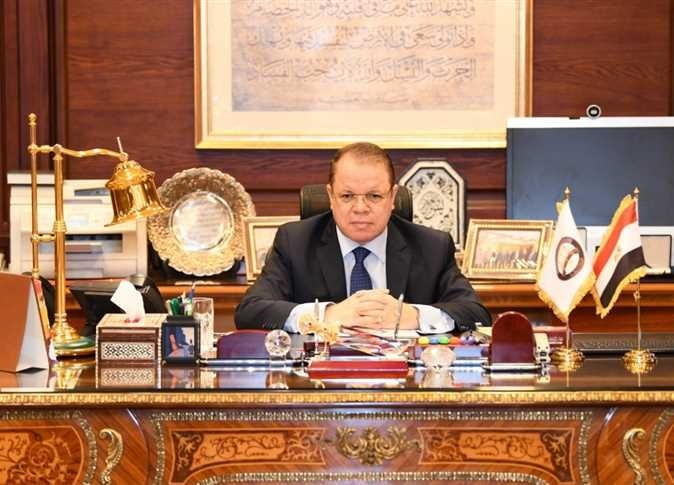
Senior judicial official denies Mada Masr report on resignation of former public prosecutor, son
Hours after Mada Masr reported that the head of the second terrorism circuit court and former Public Prosecutor Hamada al-Sawy, as well…
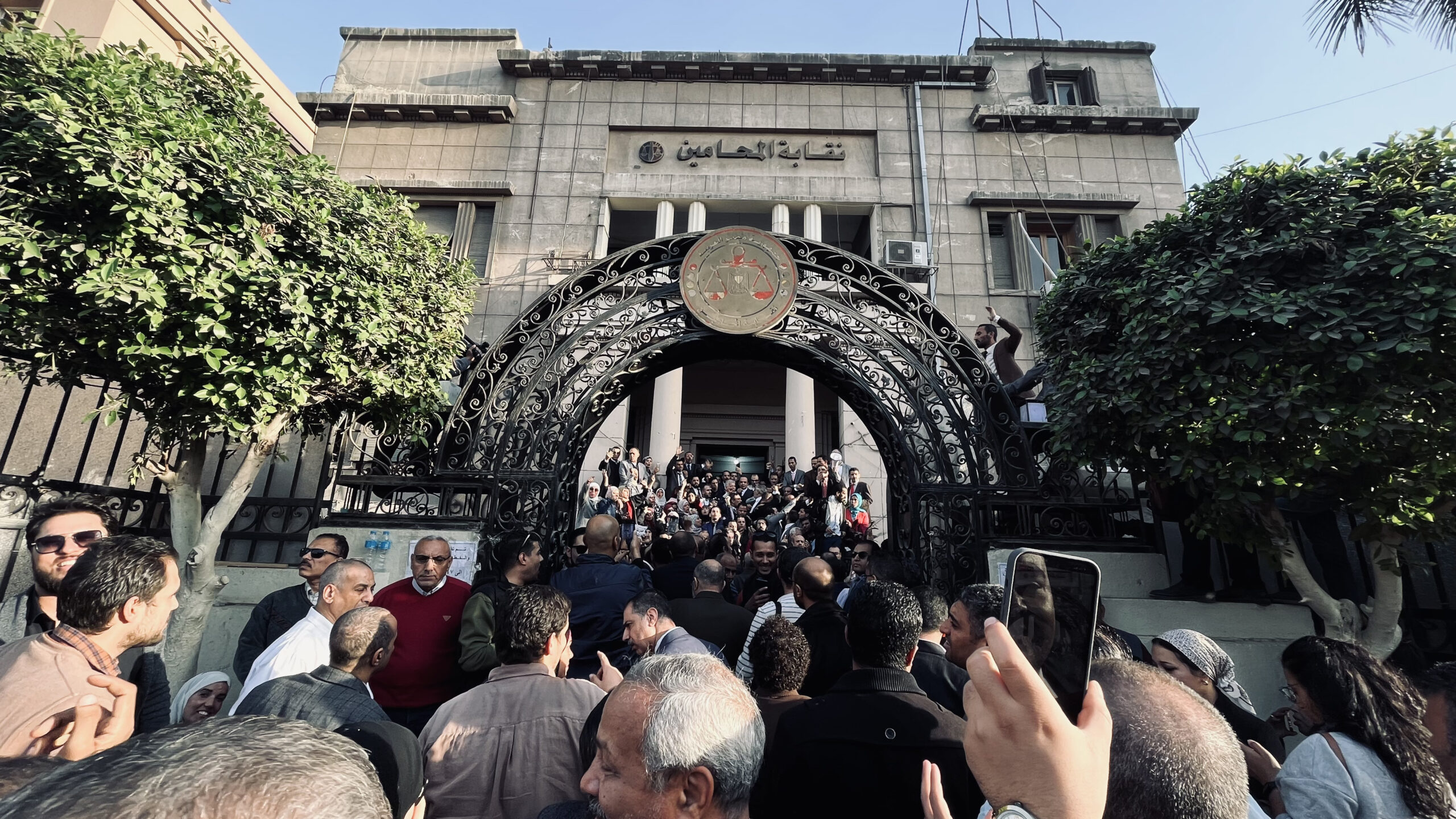
Lawyers strike to protest imprisonment of colleagues after quarrel at court
The prison sentences will be appealed in a session on Sunday

Door of justice slammed shut in high-profile sectarian case, Thabet now faces civil suit from men who assaulted her
The state habitually resorts to customary reconciliation when dealing with sectarian violence
Your support is the only way to ensure independent, progressive journalism survives.
You have a right to access accurate information, be stimulated by innovative and nuanced reporting, and be moved by compelling storytelling. Subscribe now to become part of the growing community of members who help us maintain our editorial independence.
Join us