
Journalists protest at syndicate demanding protection

On Thursday night a new stencil was spray painted on the wall of the Journalists Syndicate in downtown Cairo, commemorating the latest of the 12 journalists killed while covering street violence in Egypt over the last three years.
Following the death of 23-year-old Mayada Ashraf while covering protests in Ain Shams last week after being shot in the head, field journalists and photojournalists staged a strike and a sit-in at the Journalists Syndicate on Friday, to last from 1 pm to 6 pm, demanding protection for field reporters.
Dozens of journalists gathered on the syndicate stairs on Friday afternoon chanting against the killing of journalists, then entered into the syndicate to start the sit-in.
The participants included journalists from the privately owned newspapers Al-Shorouk, Al-Watan, Al-Dostour, Al-Tahrir and Al-Fajr.
Following Sherif’s death, the syndicate announced that it would provide bullet-proof jackets to field reporters and force newspapers to provide life insurance.
The minister of interior also offered a solution, suggesting that journalists covering conflict zones stand behind police forces for protection.
However, the striking journalists saw these measures as insufficient.
While the field reporters started the strike on their own initiative, the head of the syndicate’s photojournalists department, Hossam Diab, issued a statement on Thursday calling on photojournalists to join the one-day strike, and requesting media institutions not to pressure them to cover Friday’s events.
“International news agencies have ordered their reporters to stop covering clashes, insurance companies refuse to insure journalists, the security apparatus stops journalists and photographers from doing their job, fails to protect them and sometimes assaults them, while media institutions puts hundreds of young journalists in extremely violent streets every day and sends them to street wars that are even more dangerous than regular war zones, turning every member of this profession to a live target,” the statement read.
Most journalists working in Egypt are not members of the syndicate, which only admits a limited number of journalists every year, who apply with a letter from a media institution. Many complain that this procedure defies the purpose of the syndicate, which should protect journalists from their employers if their rights are violated.
Additionally, the majority of field reporters do not have contracts with media institutions, which often hire them has freelancers for years with no official contract, depriving them of their most basic rights.
The striking journalists demanded the prosecution of those responsible for the deaths of the 12 journalists, the release of all detained journalists, obligatory contracts for reporters after working for a given media institution after a maximum of six months, that media outlets be required to provide their reporters with protective gear and that journalists be adequately compensated for any physical or material harm endured on the job.
Over the past few months, several journalists have been arrested while doing their job, and many face criminal charges.
Abeer Saady — a syndicate board member who froze her membership in February in protest against the syndicate’s weak response to violations committed against journalists — attended Friday’s sit-in, and told Mada Masr that she predicted more deaths among her colleagues unless serious measures were taken.
“What we need are real guarantees from the state with all its arms, including the police and the prosecution, to protect journalists. The [bulletproof] vest will only make journalists a target,” Saady argued.
Suspecting that journalists are being targeted by different parties in every street fight as “the silent witness” to their crimes, Saady told Mada that wearing a protective vest would only increase their visibility as targets.
The state needs to activate the laws that regulate the journalistic practice, which state that any “insult or assault” on a journalist because of their work should be considered as “assault on a state employee” and punished as such, she said.
No one has been prosecuted for the death of any of the 12 victims of the last three years. Saady asserted that if those responsible faced criminal charges, there would be fewer attacks on reporters.
She said, “I can’t look in my colleagues’ eyes, because I looked in Mayada [Ashraf’s] eyes before, but I wasn’t able to protect her. Now I wonder whose next.”

أخبار ذات صلة
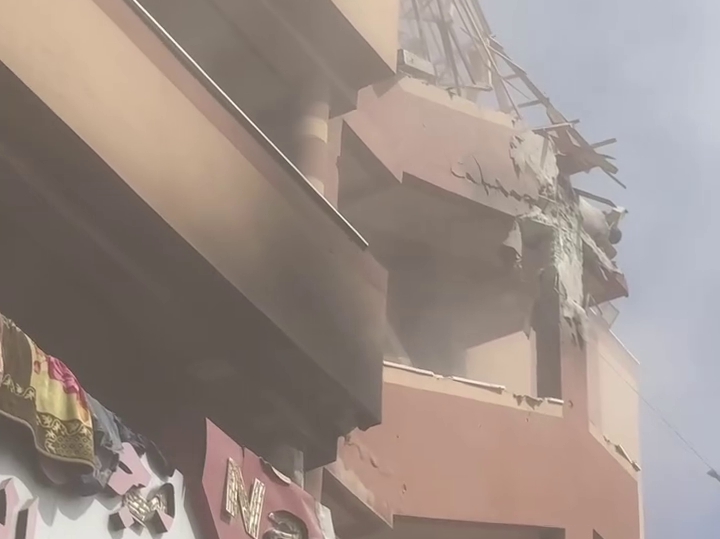
Update: Israel kills 5 more journalists in double tap drone strike on Nasser hospital
The number of people Israel killed in its double tap drone strike on the Nasser Medical Complex on Monday has risen to…
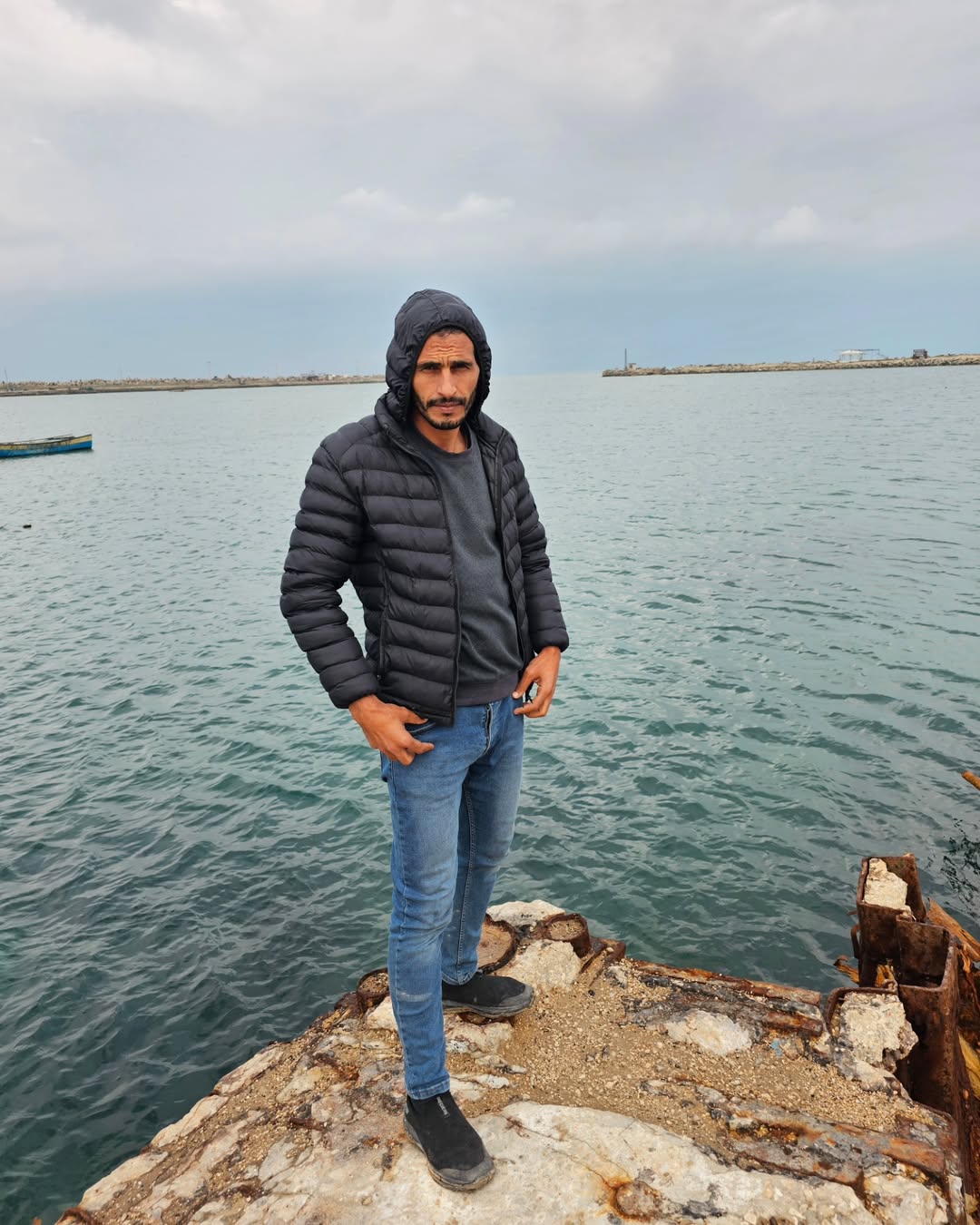
Israel aimed to kill photojournalist Hassan Eslaih in airstrike on press workers’ tent
Israel’s military said on Monday that it was aiming to kill journalist Hassan Esleih,
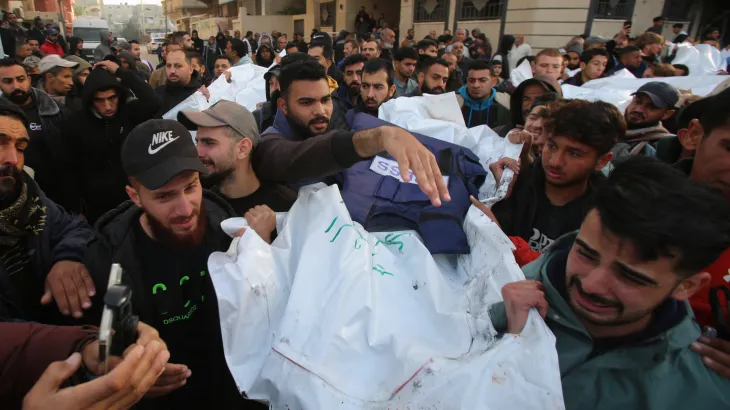
Israel kills 5 journalists in airstrike on news van near central Gaza hospital
In yet another attack on press crews in the Gaza Strip, an Israeli airstrike targeted a group of journalists on Wednesday night…
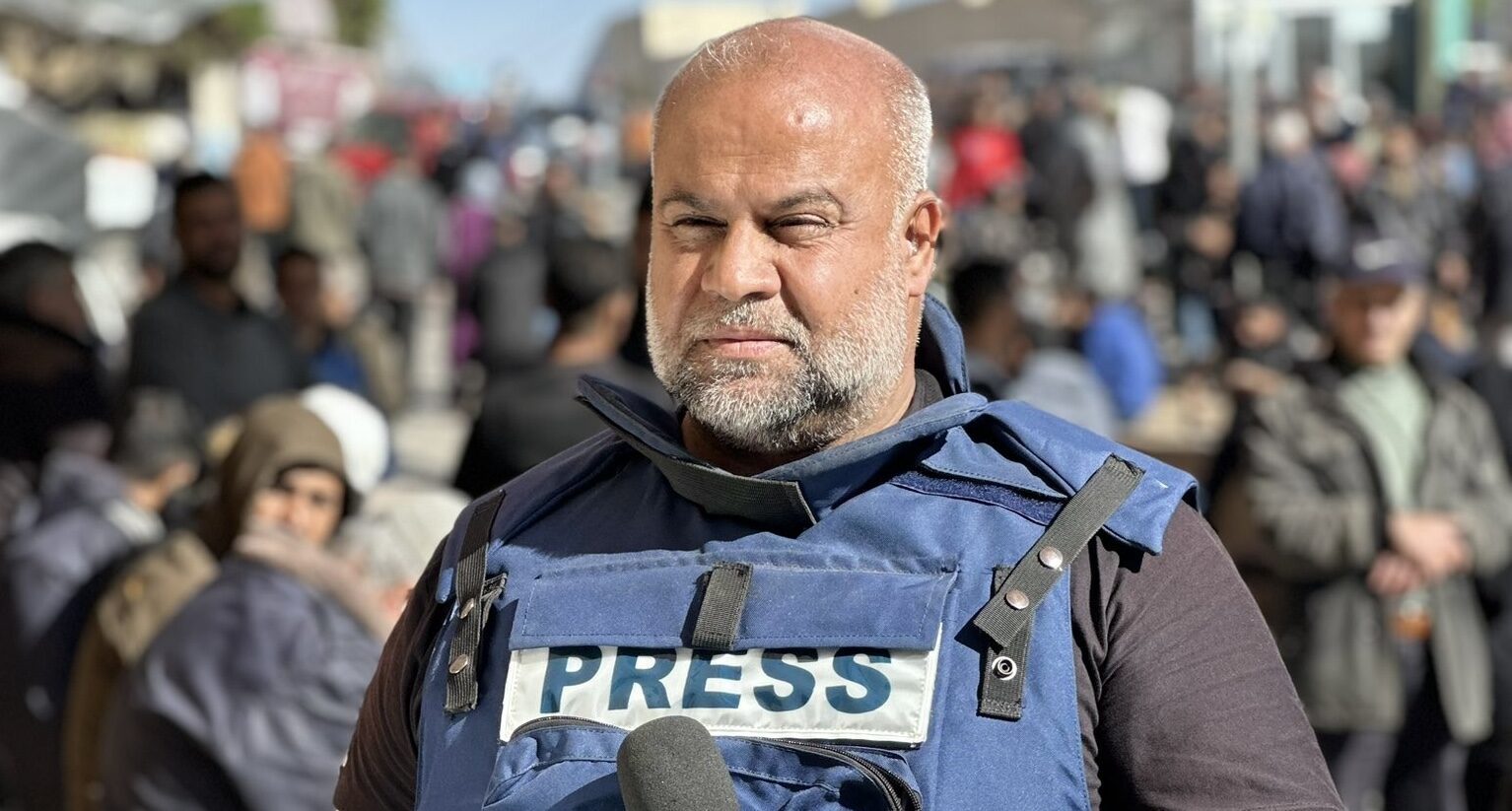
Journalist Wael al-Dahdouh, voice for Gaza, exits strip for medical treatment
Dahdouh traveled onward to Doha from Arish International Airport.
Your support is the only way to ensure independent, progressive journalism survives.
You have a right to access accurate information, be stimulated by innovative and nuanced reporting, and be moved by compelling storytelling. Subscribe now to become part of the growing community of members who help us maintain our editorial independence.
Join us