
Gate of ancient Egyptian fortress unearthed in Sinai
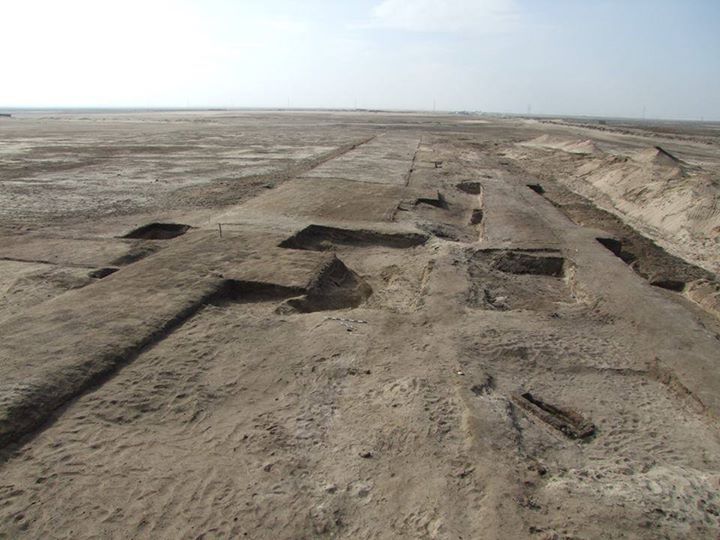
The recent discovery of its eastern gate has revealed more about the Ancient Egyptian fortress and barracks of Tharu, the headquarters for the Armed Forces during Ancient Egypt’s New Kingdom.
On Sunday, the Ministry of State for Antiquities announced that several artifacts, along with three large limestone blocks bearing hieroglyphic inscriptions were unearthed at Tharu’s eastern gate in the Sinai Penninsula.
The hieroglyphs have been attributed to Pharaoh Ramses II (1279–1213 BC), although this does not determine the exact date of Tharu’s construction, as Ramses II had his name inscribed over the names of others who ruled before him.
The limestone blocks are said to be around the same dimensions as the fortress walls, measuring three meters long and one meter wide.

Tharu itself was discovered in 2008 at the site of Tal Habwa (around three kilometers east of the Suez Canal), but further excavation efforts continued east of what is today Suez City.
According to a statement on the ministry’s official webpage, a team of archaeologists also discovered a mortuary complex dating back to the 26th Dynasty (Circa 664 – 525 BC) by the fortress grounds.
The skeletal remains found in these burial sites reportedly indicate, by their injuries, that they belong to soldiers and warriors who died in combat.
The location of Tharu Fortress marked the beginning of Ancient Egypt’s military corridor, known as “The Great Horus Route,” from which pharaohs ordered raids and conquests of eastern territories.
The archaeologists working at the site also excavated several royal warehouses built of mud brick, associated with the reign of Thutmose III (1479–1425 BC) and Ramses II. Several official seals have also been discovered, bearing the name of Pharaoh Thutmose III.
The Ministry of Antiquities announced plans to include these latest discoveries in a military museum east of the Suez Canal, which has not yet officially been planned, but may be an open-air museum.

أخبار ذات صلة
Looking back to see the present through the Grand Egyptian Museum
The coincidental nature behind the establishment of the Grand Egyptian Museum
Staging a grand opening for the grand museum
In Cairo, sidewalks have been repainted, screens set-up and security measures tightened. People living nearby say fireworks have been test-run in Giza.…
All around the Grand Egyptian Museum
The museum will not be open to visitors until after the three-day celebration
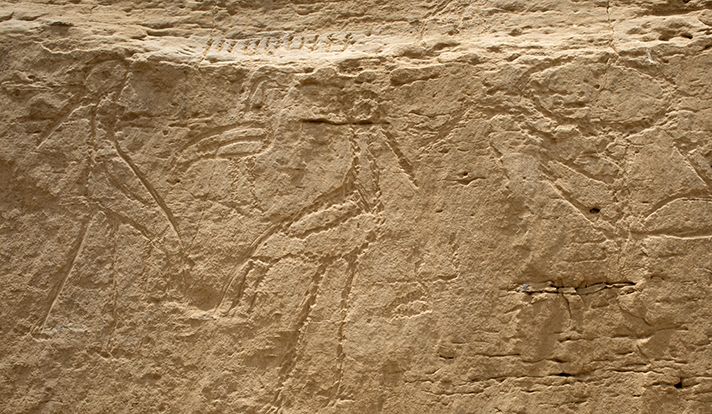
5,200-year-old rock inscriptions discovered in Luxor Governorate
A joint expedition of archaeologists from Yale University and the Royal Museums of Art and History was able to excavate several panels of rock…
Your support is the only way to ensure independent, progressive journalism survives.
You have a right to access accurate information, be stimulated by innovative and nuanced reporting, and be moved by compelling storytelling. Subscribe now to become part of the growing community of members who help us maintain our editorial independence.
Join us