
Fuel price hike expected to clear way for 3rd IMF loan installment
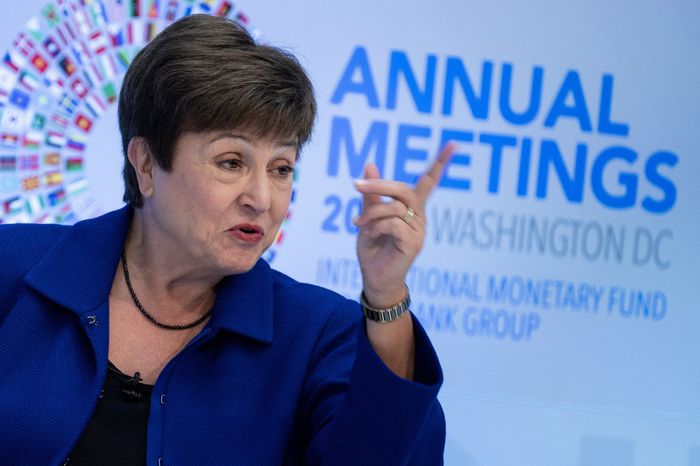
The International Monetary Fund is set to conduct its third review of Egypt’s 2022 loan on Monday, which, if approved, will provide the government with the third installment, US$820 million, of the recently agreed-upon increase to the loan.
Egypt and the fund formally agreed to augment the value of the loan from $3 billion to $8 billion on March 30, after the government fulfilled one of the chief requirements of the stalled program: the adoption of a flexible exchange rate. To account for the lack of progress on other loan prescriptions, Egypt later submitted a waiver of non-compliance to the lending authority, pledging to move forward with other structural benchmarks required by the IMF.
The international lender has held back two loan installments that were originally scheduled for 2023 due to the Egyptian government’s slow pace in moving forward with the fund’s recommended macroeconomic adjustments, namely exchange rate liberalization.
The third review was postponed from the beginning of the month to July 29.
When the postponement was announced in early July, sources from the petroleum and financial sectors and from Parliament told Mada Masr on condition of anonymity that the delay was due to the government postponing increases to fuel prices and electricity tariffs — both prescriptions under the loan agreement.
Cutting energy subsidies is a crucial requirement among the structural adjustments required by the lending institution for the continued disbursal of the loan to the Egyptian government, as outlined in the fund’s report on Egypt’s progress on the program's policy prescriptions.
A few days ahead of the rescheduled review meeting, the government increased fuel prices, raising the price per liter of gasoline, diesel, kerosene and other petroleum products by at least 10 percent.
According to a previous agreement between the Egyptian government and the IMF in 2019, the Fuel Automatic Pricing Committee was established by the Petroleum Ministry to monitor, recommend and set automatic national pricing mechanisms.
However, this round of fuel price hikes did not go through the committee.
Several sources from government and private entities previously told Mada Masr that the Fuel Automatic Pricing Committee had convened in June to approve a 10 percent increase in gasoline and diesel prices, but that the government delayed implementing it at the time due to public backlash over the worsening electricity outages.
However, the price hikes ranged from 10 to 15 percent depending on fuel type, which is above the 10 percent maximum increase the fuel pricing committee is allowed to implement within the span of three months. In an interview last week with TV anchor Sherif Amer, Petroleum Ministry spokesperson Hamdy Abdel Aziz said the petroleum and finance ministries and their “experts” were the decision-makers in this round of price hikes, “which is why they did not need to abide by the 10 percent rule.”
Another unmet prerequisite for the disbursal of the next loan installment is the publication of public procurement contracts that exceed LE20 million on the government procurement portal website. This is an IMF-recommended policy aimed at increasing the government's transparency to the public by granting citizens access to such information.
Other recommended policies to grant transparency to the public were met, such as the publication of a comprehensive annual tax expenditure report, including details regarding tax exemptions for companies in free economic zones and for state-owned entities, including the Armed Forces.
While the augmented loan gives Egypt a fresh start in its relationship with the IMF, the funding organization said at the time that “risks are elevated and capacity to repay the fund is subject to high risks and contingent on full program implementation and the materialization of all projected financing.”
However, for economist Wael Gamal, the IMF’s austerity measures will not lessen risk but further exacerbate it, saying that the state’s plan to increase the budget’s primary surplus by decreasing spending and increasing taxes, as per the fund’s recommendations, always hinders economic activity.
“So they are saying they want to do something, but the policies they require do the exact opposite,” Gamal said.
He added that price increases, interest rate hikes and reduced public spending — all phenomena Egypt is currently facing — could lead to economic depression or at least restrict purchasing power, both of which directly affect the public.
Newly-appointed Finance Minister Ahmed Kouchouk told the press on Saturday that he looks forward to the IMF approving the third installment of the loan and hopes that upcoming reviews with the lending organization will pass smoothly to set the track for Egypt to obtain the IMF’s Resilience and Sustainability Fund (RST).
Egypt previously announced its intent to pursue an additional fund from the IMF’s RST, which “helps low-income and vulnerable middle-income countries build resilience to external shocks and ensure sustainable growth.”
According to Egypt’s repayment schedule to the IMF, an additional $1.3 billion installment is yet to be disbursed to the country. However, the government is expected to repay $3.147 billion in loan installments, interest rates and fees starting in August and until the end of the year.
The country’s public debt reached 96 percent of GDP in 2024, and accordingly, the government has announced that it is planning to reduce its debt-to-GDP ratio to less than 80 percent in 2026, even as it takes on ever more debt.
أخبار ذات صلة
Egypt passes 5th, 6th IMF loan reviews, with fund easing tone of govt criticism
In a Tuesday statement, the International Monetary Fund announced that Egypt passed the fifth and sixth reviews as part of its ongoing…
IMF in Cairo to discuss privatization, over-reliance on short-term borrowing
A delegation from the International Monetary Fund touched down in Cairo on Monday to begin its final review of the US$8 billion…
Former employees sue to block sale of Eastern Company workers’ shares to Fidelity
Two hundred former workers at Eastern Company have filed a lawsuit to halt the payout of proceeds from the sale of the…
Unnamed investor buys out workers’ stake in tobacco giant Eastern Company after monthslong conflict
Share-holding workers at partially state-owned tobacco firm Eastern Company were bought out on Thursday following months of conflict over the sale. The…
Your support is the only way to ensure independent, progressive journalism survives.
You have a right to access accurate information, be stimulated by innovative and nuanced reporting, and be moved by compelling storytelling. Subscribe now to become part of the growing community of members who help us maintain our editorial independence.
Join us