
Finance minister clarifies real estate tax
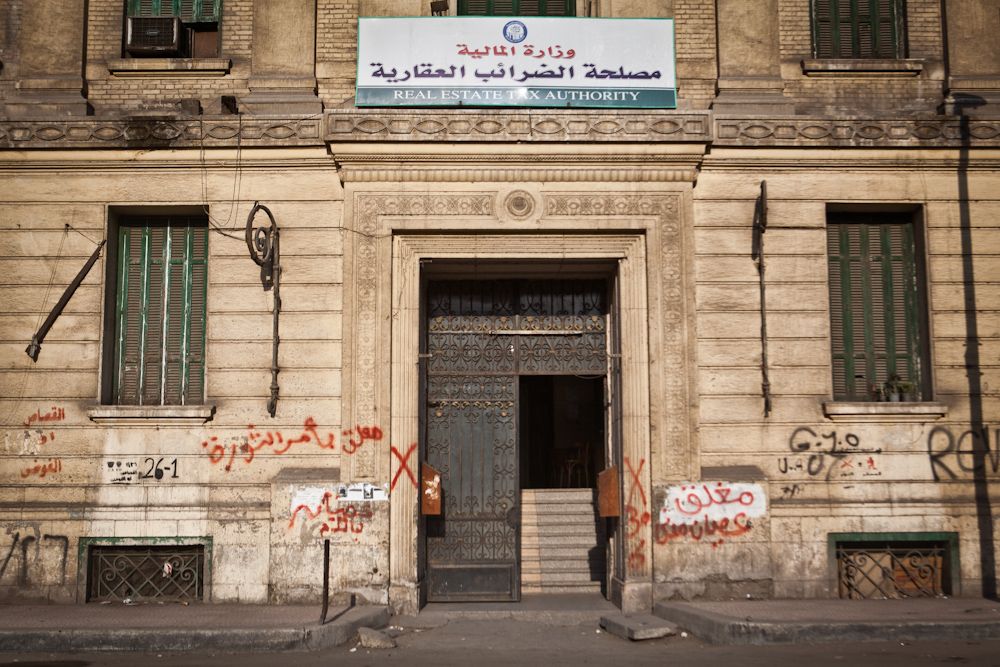
Egypt’s Real Estate Tax Authority has begun enforcing a real estate tax law, introduced in July, serving 2.7 million notifications to property owners, according to a statement from Finance Minister Hany Kadry Demian.
The minister confirmed that many of these notifications may have been sent to homeowners whose properties should be tax-free under a provision of the law that exempts primary residences with a value of up to LE2 million.
Those who receive notices for their primary residences should appeal to the local office of the Real Estate Tax Authority to get an exemption.
The tax, Demian said, will not be imposed on low or middle class Egyptians, due to the LE2 million threshold for residences and an exemption for commercial properties worth up to LE100,000. He estimates that 75 to 80 percent of Egypt’s housing units will be exempt.
In cases where a family owns more than one residential property, the Tax Authority will consider urban properties to be the primary residence, and therefore eligible for the LE2 million exemption. Rural or coastal properties will be treated as second homes, and taxed at regular rates.
Landlords who own properties rented under Egypt’s 1977 and 1981 rental laws, which froze rent at below-market rates, will also not be subject to the new tax scheme. In many cases, monthly rents are as low as LE20 per month for properties in areas like Zamalek or Garden City that are now worth millions of pounds. Such properties will be exempted or assessed according to old tax codes, which charge a few pounds a year.
The law also exempts military owned properties, including hotels and clubs, as well as public buildings such as schools, hospitals, charities and property owned by political parties.
All other properties will be subject to the new scheme. According to a table provided by the ministry, residential property tax ranges from LE120 per year for LE2 million homes, and up to LE10,200 per year for LE10 million homes.
Commercial property taxes start at LE126 per year for a premise valued at LE100,000, rising to LE3150 per year for a LE2.5 million property.
According to the new tax law, each governorate is to have a committee charged with determining property tax values based on the condition, location and amenities of each unit, although low levels of property registration and the lack of a centralized database for real estate sale prices will make valuations complex.
The law also calls for 25 percent of tax receipts to be directed to redeveloping urban slums, and 25 percent to go to rural and other marginalized areas.

أخبار ذات صلة

Housing minister sentenced for failing to uphold judicial verdict
Housing Minister Mostafa Madbuly is the latest to be sentenced for failing to uphold a previous court ruling. But will his verdict be carried out?
Hesham Ramez resigns as CBE governor, replaced by Tarek Amer
President Abdel Fattah al-Sisi accepted the resignation of Central Bank of Egypt (CBE) Governor Hesham Ramez on Wednesday, appointing Tarek Amer to replace him. Amer…

New sukuk regulations aim to grow Islamic finance in Egypt
"Egypt's history with Islamic finance dates back decades before Morsi and the Brotherhood, and plans to expand its scope locally are long overdue."

Zohr gas field steals the show at Euromoney
The newly discovered Zohr gas field dominated the conversation at this week's Euromoney Egypt conference and captured the audience's attention, so much…
Your support is the only way to ensure independent, progressive journalism survives.
You have a right to access accurate information, be stimulated by innovative and nuanced reporting, and be moved by compelling storytelling. Subscribe now to become part of the growing community of members who help us maintain our editorial independence.
Join us