
Fact-finding committee exhorts Islamists to give their testimonies

Amr Marwan, the spokesperson for the June 30 fact-finding committee, urged members of Islamist movements to come forward with their accounts of the violent events that followed former President Mohamed Morsi’s removal from office, the state-owned news site EgyNews reported on Monday.
Any such testimonies would remain confidential, Marwan said, assuring that all possible safety precautions would be taken to protect those who would come forward.
Marwan highlighted his work with two similar fact-finding committees formed by the former Supreme Council of the Armed Forces as well as by Morsi’s government, stressing that the identity of those who had presented testimonies to those committees had never been revealed.
Anyone with any information regarding the post-June 30 events should present them to the committee, Marwan exhorted, promising that its members would remain unbiased.
Committee members were prepared to visit those who wanted to give their testimonies outside the official premises of the Shura Council, he added, saying members would also be willing to visit prisons to hear the accounts of detainees.
The fact-finding committee held a meeting on Monday to review reports issued by judges who had conducted field investigations pertaining to the deadly events of the post-Morsi period. These reports included documents and recordings taken by civilians at the sites of violent confrontations.
The committee was formed in December at the request of Minister of Transitional Justice Mohamed Amin al-Mahdi, with the aim of investigating all violent incidents that have occurred since June 30.
These incidents include the deadly clashes in front of the Republican Guards headquarters, the fatal violence that occurred during the mid-August dispersals of the pro-Morsi Al-Manassa, Rabea al-Adaweya and Nahda Square protest camps, the burning of churches, violence inside universities, assassinations, assassination attempts, attempts to block Suez Canal and violence in Sinai.
An email address and phone numbers were provided for civilians who wish to present their testimonies to the committee.
Egypt witnessed unprecedented levels of violence after the Armed Forces removed Morsi from office in response to the mass protests launched on June 30 that demanded his resignation.
The violence peaked on August 14, when security forces stormed Muslim Brotherhood encampments that had occupied two sites in Cairo, Nahda Square and Rabea al-Adaweya, for several weeks.
Hundreds of people were killed in the military-style assault on the sit-ins by security forces. The brutality of the dispersals and the resulting fatalities were condemned by international human rights organizations.
While Muslim Brotherhood supporters were the main victims of the August 14 dispersals, they have also been accused of committing violent acts across the country. Brotherhood-affiliated protesters have been implicated in clashes with police forces and residents of neighborhoods where demonstrations demanding Morsi's reinstatement have been held.
"Islamist forces, particularly the Muslim Brotherhood, did not respect the rules of democracy [in order] for us to engage in a fruitful discussion that would lead to a genuine reconciliation,” said Mahdi, as quoted by the privately owned newspaper Al-Masry Al-Youm.
Mahdi, in addition to being a minister, heads up the national reconciliation taskforce.
“The Muslim Brotherhood is responsible for inciting violence, and this is a crime that goes against the rules of democracy and the notion of reconciliation. Even if they didn’t use arms, they incited violence,” he claimed.
Some observers have questioned the Ministry of Transitional Justice’s mandate, wary that it is a ministry without clear responsibilities.
Adel Muawad, an advisor to the ministry, said that the idea of transitional justice is still unfolding while speaking at the “Egypt and the Road to Transitional Justice” conference in Alexandria this December.
Muawad said that legal measures have yet to be created to address all the killings that occurred over the past three years, according to ONA, the press agency of the privately owned television channel ONtv.
However, the ministry worked hard to ensure that a provision for transitional justice would be included in the new Constitution, Muawad added.
The recently-passed Constitution commits Parliament to pass a law for transitional justice “that guarantees revealing the truth, accountability, suggesting frameworks of national reconciliation and compensating victims.”
At the same conference, Nasser Amin, a member of the National Human Rights Council, said that transitional justice needs a full-time commissioner to help the ministry implement its work.
The function of transitional justice is to make sure that the people are reconciled with the “regime” — such a task and should not be reduced to reconciliation between political forces, Amin claimed.
Transitional justice has faced challenges in Egypt following the January 2011 revolution, Amin continued, despite repeated calls for it to be addressed by the formerly ruling Supreme Council of the Armed Forces.
The creation of a Ministry for Transitional Justice is a sign of the current regime’s interest in addressing the issue, Amin asserted.

أخبار ذات صلة
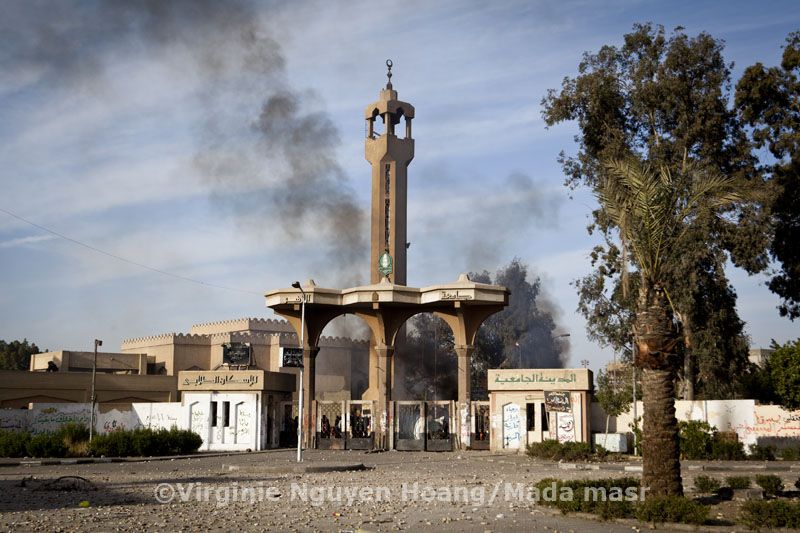
Prosecution releases 130 students and minors
Egypt’s general prosecutor Hesham Barakat ordered the release of 130 university students and minors on Sunday. They were jailed pending investigations into…
Fact-finding committee puts blame on Islamists for Rabea violence
The June 30 fact-finding committee issued its final report on Wednesday, concluding that the primary responsibility for the deaths that occurred during…
Fact-finding committee to release report on post-June 30 violence next week
The Cabinet’s fact-finding committee investigating violent events that occurred across Egypt after the mass protests of June 30, 2013 will present its final report…
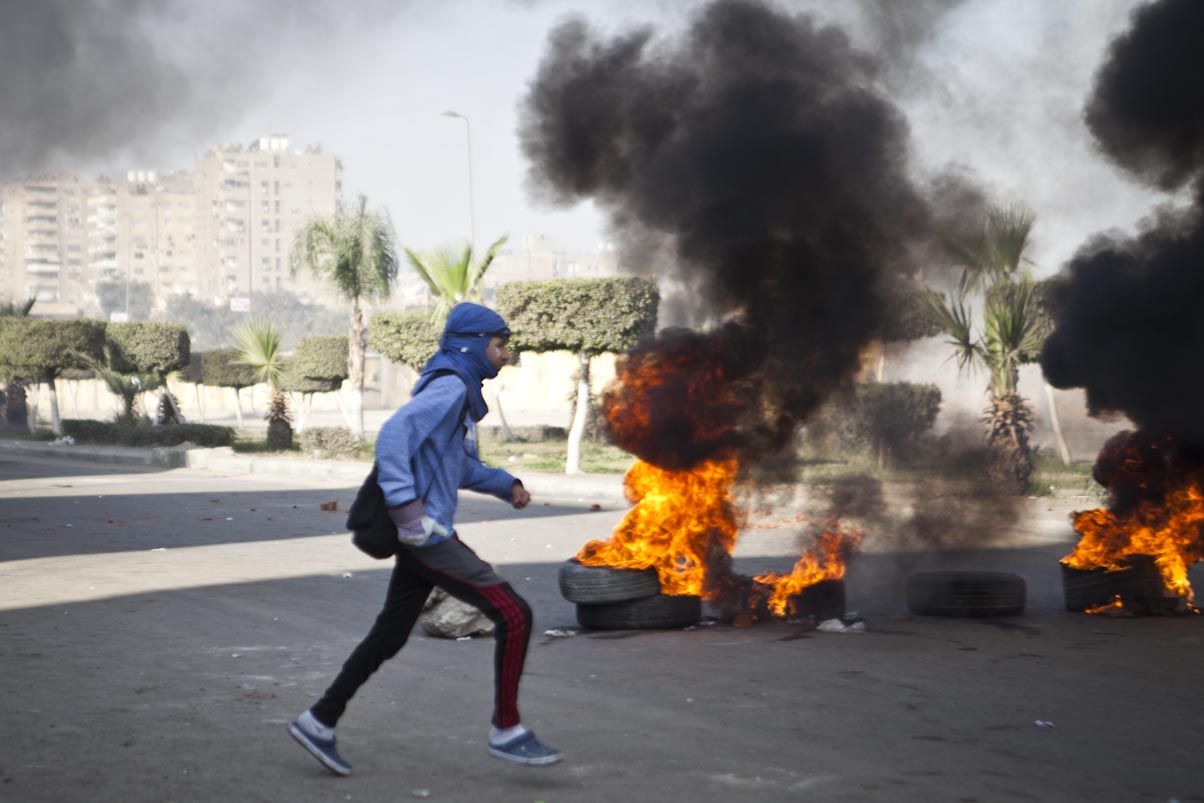
Gov’t report on post-June 30 violence to be publicly released
President Abdel Fattah al-Sisi asked the June 30 official fact-finding committee to present its conclusions to the public before sending them to…
Your support is the only way to ensure independent, progressive journalism survives.
You have a right to access accurate information, be stimulated by innovative and nuanced reporting, and be moved by compelling storytelling. Subscribe now to become part of the growing community of members who help us maintain our editorial independence.
Join us