
Experts to solve mystery of ancient sarcophagus from gold flakes found in Egyptian Museum
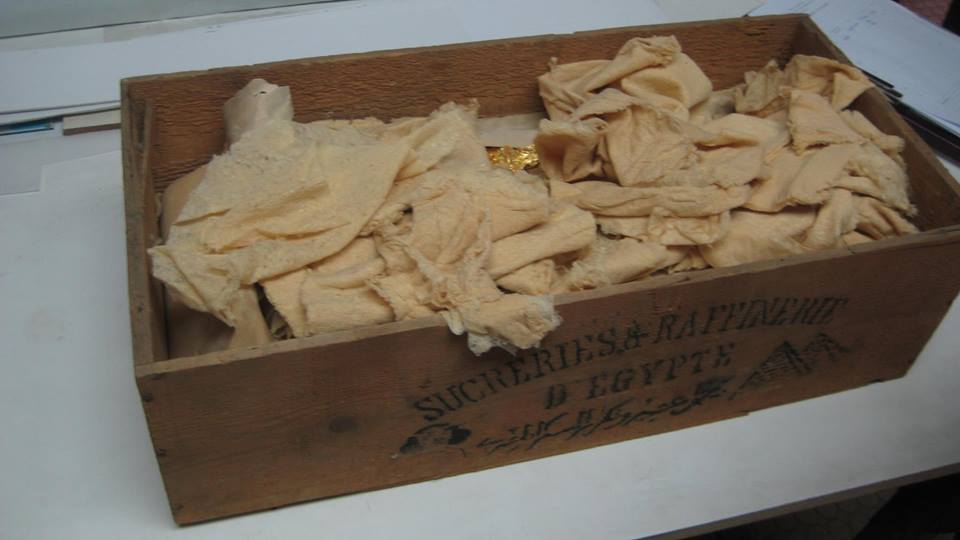
A group of Egyptologists, archaeologists and scientists from around the world are attempting to piece together 500 gold fragments found in a box in the Egyptian Museum in downtown Cairo's Tahrir Square, the Antiquities Ministry announced Wednesday.
The fragments may be linked to the sarcophagus of Tomb KV55 in Luxor’s Valley of the Kings.
While the owner of the mysterious sarcophagus has not yet been identified, several Egyptologists have speculated it may belong to the monotheist, sun-worshiping Pharaoh Akhenaton, who reigned circa 1353–1336 BC.
One team of experts is to study the box of 500 gold fragments, and another team will work on a second set from the sarcophagus of tomb KV55, according to a statement published on the ministry’s official webpage on Wednesday, titled “Ministry of Antiquities is trying to decipher the most controversial mystery coffin in the history of ancient Egypt.”
The research is being funded by a US$28,500 grant from the American Research Center in Egypt (ARCE), the ministry said.
The wooden box containing the 500 gold flakes also contains fragments of a human skull, along with a piece of paper with a note handwritten in French indicating that the gold flakes were associated with a royal sarcophagus.
Tomb KV55 and the sarcophagus were discovered by English archaeologist Edward R. Ayrton and his team in 1907. The colorful sarcophagus is on display at the Egyptian Museum, although the mystery surrounding its original owner continues to puzzle archaeologists.

Tomb KV55 is relatively small and its walls are not decorated, unlike most other tombs in the Valley of Kings. It contains a variety of remains and artifacts associated with Ancient Egypt’s late 18th Dynasty, earning it the informal title, “The Amarna Cache” — in reference to Akhenaton’s capital city Tal al-Amarna (located in modern-day Minya Governorate), dating back over 3,300 years.
The bare nature of Tomb KV55 has led some Egyptologists to speculate that the tomb was hastily constructed for royal remains from a previous era, or from another geographic location.
The results of genetic tests published in February 2010 showed that the individual buried in Tomb KV55 was both the son of Pharaoh Amenhotep III (who reigned circa 1388-1350 BC) and the father of King Tutankhamun (who reigned circa 1332-1323 BC), indicating that the owner of the sarcophagus in this tomb may have been Pharaoh Akhenaton.

أخبار ذات صلة
Staging a grand opening for the grand museum
In Cairo, sidewalks have been repainted, screens set-up and security measures tightened. People living nearby say fireworks have been test-run in Giza.…
All around the Grand Egyptian Museum
The museum will not be open to visitors until after the three-day celebration
5,200-year-old rock inscriptions discovered in Luxor Governorate
A joint expedition of archaeologists from Yale University and the Royal Museums of Art and History was able to excavate several panels of rock…
Ancient Egyptian gold workers’ tomb excavated on island in Sudan
An ancient tomb reported to contain the mummified remains of at least 12 Egyptian gold workers has been excavated in Sudan
Your support is the only way to ensure independent, progressive journalism survives.
You have a right to access accurate information, be stimulated by innovative and nuanced reporting, and be moved by compelling storytelling. Subscribe now to become part of the growing community of members who help us maintain our editorial independence.
Join us