
ElBaradei’s name removed from Nobel prize winners in primary school books
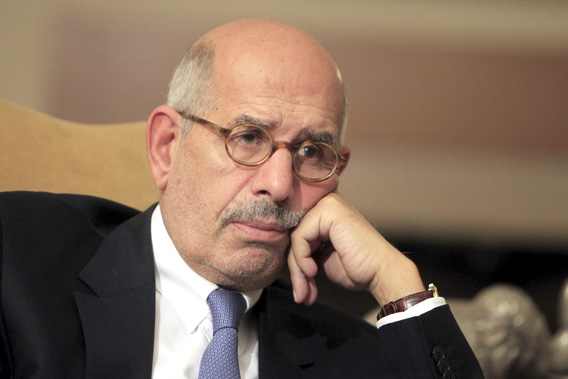
Egypt’s Education Ministry determined to remove former deputy Prime Minister and Nobel Prize winner Mohamed ElBaradei from the list of previous award winners in primary school books, the privately-owned Al-Tahrir newspaper reported on Monday.
“I have no comment on my time in office, but human values will prevail in the end,” ElBaradei told Al-Tahrir newspaper in response to the news.
ElBaradei has taken a public stance against human rights violations committed during President Abdel Fattah al-Sisi’s time in office. He was briefly named interim deputy prime minister after former President Mohamed Morsi’s ouster in 2013, but resigned in protest following the violent dispersal of the Rabea al-Adaweya sit-in that saw hundreds killed by security forces.
He won the Nobel Peace Prize in 2005, when he was director of the International Atomic Energy Agency (IAEA), in recognition of his efforts to ensure the peaceful development and use of nuclear energy.
The decision to remove ElBaradei’s name prompted public backlash, both on and offline. Columnist for the independently owned Al-Masry Al-Youm newspaper Hamdy Rizk criticized the decision, arguing the eradication of history is a crime, even though he may not be a supporter of Baradei or his views.
Prominent human rights lawyer Gamal Eid tweeted, “Egypt decides to remove Baradei’s name and picture from education materials, a desperate attempt to falsify history.”
Journalist Liliane Daoud argued that, while removing Baradei’s name does not diminish his legacy, it shows a disgraceful ignorance of history.
In response to popular backlash against the decision, ElBaradei said, “This confirms my conviction that there are still free minds, and people of conscience remain vigilant and strong … History teaches us human values will inevitably win, we are not an exception.”
The ministry received hundreds of requests to remove ElBaradei’s name from the curriculum due to his hostility towards the government, and provocative comments he made following the Rabea al-Adaweya dispersal, according to Bashar Hassan, the spokesperson for the Education Ministry, the privately owned Al-Watan newspaper reported.
Students in primary schools may not “be able to recognize the truth,” Hassan argued in defense of the decision, adding that they should be focused on language and cognitive development, not politics.
In April 2015, Education Minister Moheb al-Rafie said the ministry was actively working on “cleansing the school curriculum from lessons that incite violence,” referring in particular to historical novels and religious texts.
ElBaradei left Egypt in 2013, but has remained active in media and has frequently criticized the current government for human rights violations. He has been widely credited with helping to fuel revolutionary sentiment ahead of the January 25, 2011 revolution, and founding the Dostour Party. Since his departure from Egypt he has been widely criticized in local media for his anti-government stances.

أخبار ذات صلة
Detox | What was life like before 2011?
Something was bubbling right under the surface, threatening to overflow.
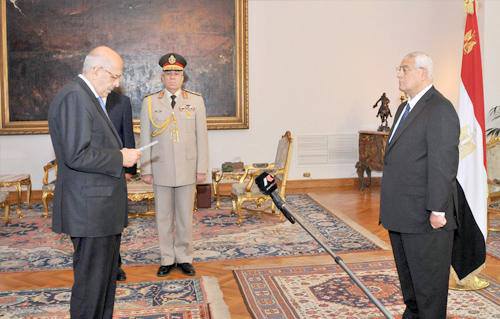
ElBaradei’s statement breaks 3 years silence on post-June 30 violence
Mohamed ElBaradei says he wasn’t aware of Mohamed Morsi’s arrest on July 3 until after it happened.
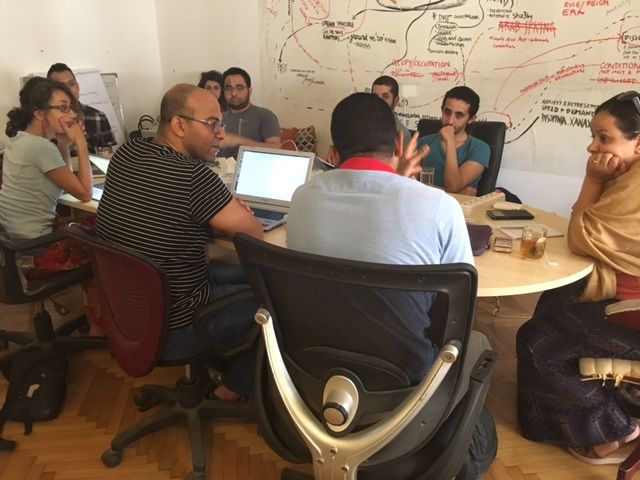
Questions about June 30: Who were we and what were we thinking? Part 2
Writers and researchers gathered at Mada to share their thoughts about their positions on June 30.
Democracy Dialogue
Global conversations inspired by Egypt's January 25 uprising
Your support is the only way to ensure independent, progressive journalism survives.
You have a right to access accurate information, be stimulated by innovative and nuanced reporting, and be moved by compelling storytelling. Subscribe now to become part of the growing community of members who help us maintain our editorial independence.
Join us