
Egyptian prosecution doubles down on dismissal of Italian Regeni investigation
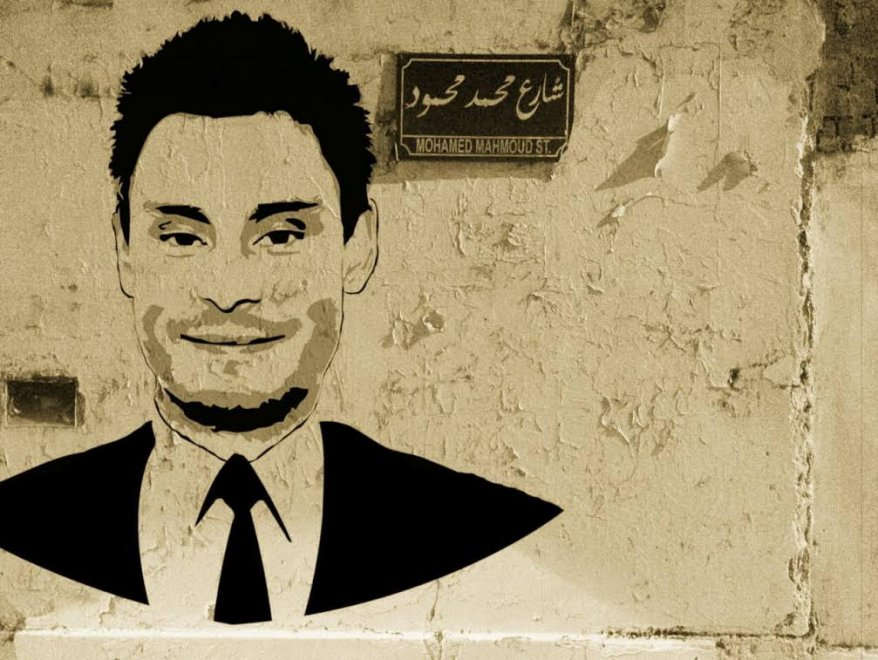
Italy and Egypt exchanged strongly-worded statements regarding the Italian investigation into the 2016 murder of Italian graduate student Giulio Regeni on Wednesday, with the Egyptian prosecution suggesting the ongoing Italian investigation is politically motivated and urging investigators to clear the four security agents whom they plan to charge. The Italian Foreign Ministry called Egypt’s statement “unacceptable” in a response on Wednesday night.
Cairo and Rome officially cooperated in a fraught joint investigation into Regeni’s murder for nearly five years, which saw Italian prosecutors repeatedly accuse Egyptian officials of deliberately trying to mislead the investigation, until Egypt announced on November 30 that it would suspend its side of the investigation.
An Egyptian government source told Mada Masr at the time of Egypt’s withdrawal from the joint investigation that there is a mutual understanding between Rome and Cairo that “Italy is doing what they want to do and Cairo is doing what we want to do.”
On December 10, the Italian prosecution pressed charges of kidnapping and killing Regeni against four security officials, while charges against a fifth suspect from the police force were dropped. In accordance with Italian law, the defendants were given 20 days following their indictment to submit a defense memorandum, the results of their own investigations, or request that the public prosecutor conduct specific investigations.
On Wednesday, the day of the deadline, the Egyptian Public Prosecution released a statement denying any connection between Regeni’s murder and the suspects, and describing the charges as “the result of erroneous conclusions which do not correspond to logic or to basic legal rules.”
Egypt maintains that Regeni was never arrested. The prosecution said that the perpetrator was still unknown, but also, as it has done previously, stated that it had firm evidence that a criminal gang had stolen Regeni’s belongings.
Wednesday’s statement also said Regeni, who was researching independent trade unions in Egypt, was being investigated by Egyptian security agencies in a way that “did not violate his human rights or the sanctity of his private life,” after receiving a complaint about his activities, but it was concluded that he did not present a threat to national security and no action was taken against him.
The prosecution claims that, based on its knowledge that Regeni was being investigated, Italy jumped to the conclusion that the security officers were responsible for the murder.
Egyptian investigations found that Regeni had spoken about Egypt’s regime with a number of independent trade union members and some street vendors belonging to different political movements, showing up in their gathering places and assuring them they could change their conditions, according to Egypt’s Wednesday statement.
Further criticizing the Italian investigation, Egypt’s prosecution reviewed the course of the joint investigation, saying that it had received four requests from its Italian counterpart, some of which it had accepted, but others it said “could not be technically implemented,” and “violated the privacy of many Egyptian citizens and violated the basic rules for protecting human rights according to international conventions.”
In its conclusion, the Egyptian prosecution laid the blame for Regini’s murder at the door of “an unknown party” that may have committed the crime to “frame the Egyptian security forces,” claiming that this confirms “the presence of parties hostile to Egypt and Italy” seeking to exploit the incident to “drive a wedge between them in light of the positive developments in their relationship in the recent period.”
The prosecution added that “a number of media outlets known for stirring up strife went along with the hostile parties” to bring about a division between Italy and Egypt.
Regeni, a PhD candidate at Cambridge University who was researching independent trade unions in Egypt, disappeared from a metro station on January 25, 2016 — the fifth anniversary of the 2011 revolution — while on his way to meet a friend in downtown Cairo. His body was found on February 3 on the side of a highway on the outskirts of the city, bearing marks of severe torture.
According to an Italian government source who spoke to Mada Masr when Egypt announced the end of its cooperation that Italy would move forward with a trial in absentia on charges that will not implicate any Egyptian security agency in having instructed the suspects to commit the crime.
In March 2016, Egypt’s Interior Ministry announced that police forces in New Cairo had tracked and killed five members of a criminal gang “specializing in the theft of foreigners,” which the ministry claimed was responsible for Regeni’s murder.
The ministry later issued a detailed statement linking these five men to Regeni’s murder and posted a photo of items in their possession, said to belong to Regeni. This account was dismissed at the time by Regeni’s family, Italian investigators and even by Egyptian prosecutors, who denied that there was a link between the gang and Regeni’s death.
The Egyptian statement on Wednesday said that its investigations concluded that those five alleged gang members stole Regeni's belongings using force, “leaving marks on him,” and that there is no reason to prosecute the theft since the gang members are deceased.
The prosecution clarified that it will announce in a separate statement the results of the investigation into the gang, their deaths, and the extent to which the police transgressed during an exchange of fire while trying to arrest them.
Italian investigators have previously questioned inconsistencies in the criminal gang narrative, asking how likely it would be that kidnappers would torture a victim and then hold onto his ID documents for months after his death. They also lamented the deaths of the suspects, who were shot dead by security forces and cannot be questioned in relation to Regeni’s murder.
One of three key witnesses cited by Rome prosecutors, known as Gamma, reportedly told investigators that one of the defendants had been overheard at a security conference in Nairobi telling another officer: “We kidnapped Regeni. We thought he was a British spy.”
Another witness told Italian investigators they had seen Regeni in a Cairo police station and in Lazoghly, the headquarters of the National Security Agency.
The Egyptian prosecution indicated that it had sent requests for legal aid to the United Kingdom, where Regeni was registered for his doctoral study, and Kenya, the home country of a witness who claimed to have heard a conversation about an incident involving an Egyptian security officer.
Egyptian prosecutors, according to the Wednesday statement, also inquired about the nature and financing of Regeni's study from the UK, while it had requested witness statements from Kenya, noting that neither country responded to the requests.

أخبار ذات صلة
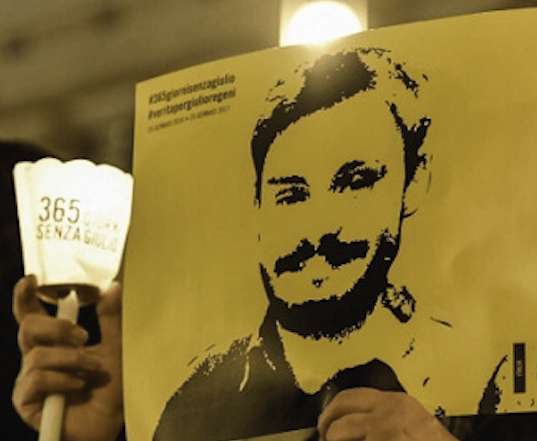
Italian court unblocks trial of Egyptian security personnel charged with Regeni murder
The trial had been suspended since July 2022

Greek migrant boat tragedy: What do we know so far?
Many of the passengers went through a hostage-like situation in Libya, their families told Mada Masr

Parliament bites back after EU deplores ‘continued lack of basic political rights and freedoms in Egypt’
Egypt's parliament said the resolution violates the independence of its prosecution and judiciary.
Trial of Egyptian security officials for 2016 murder of Giulio Regeni will not go ahead
The decision brings over six years of investigations conducted by Italy to an inconclusive end
Your support is the only way to ensure independent, progressive journalism survives.
You have a right to access accurate information, be stimulated by innovative and nuanced reporting, and be moved by compelling storytelling. Subscribe now to become part of the growing community of members who help us maintain our editorial independence.
Join us