
Egypt welcomes biggest wind farm in Middle East
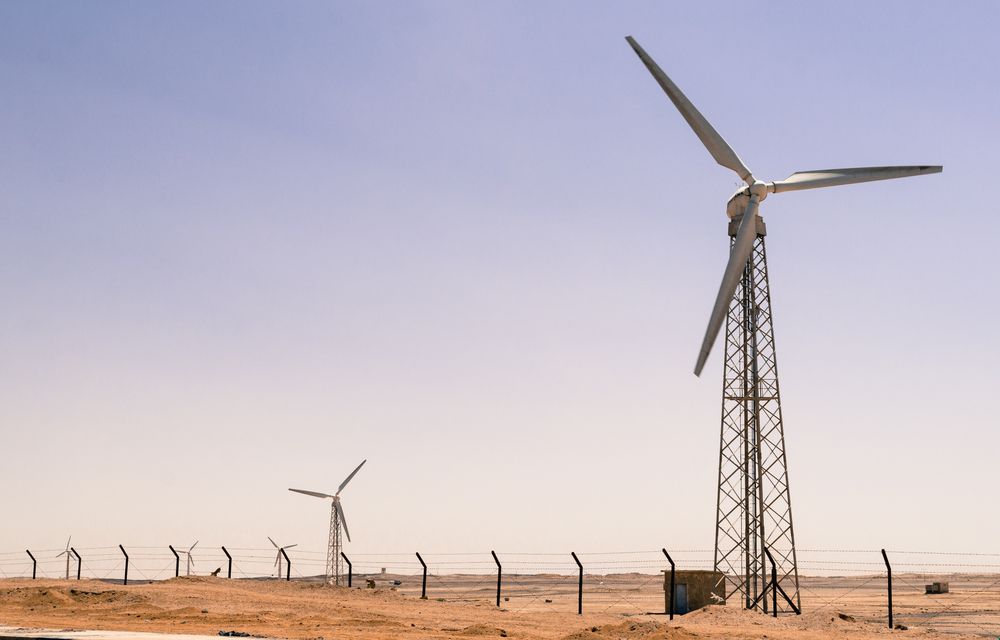
Egypt has opened the Middle East’s largest wind energy power station in the Red Sea’s Gabal al-Zeit area, officials announced Sunday as President Abdel Fattah al-Sisi joined other world leaders in Paris for the UN Climate Change Conference.
The wind farm could bring up to 800 million kW hours to the national electricity grid each year, according to Mohamed al-Sobky, executive chairman of the Egyptian New and Renewable Energy Authority (NREA).
That brings Egypt’s total government-owned wind-energy capacity to 750 MW, Sobky said. The new station is part of a larger government effort to increase electricity production, both through renewable energy projects and more traditional means. An NREA briefing claims more wind energy projects are “in the pipeline” to bring in a further 340 MW, while projects for yet another 800 MW are “in preparation.”
The German development bank KFW loaned 191.5 million euros for the project, while the European Investment bank loaned another 50 million euro and the European Union offered a 30 million euro grant. The NREA — a division of the Electricity Ministry — will own the station, Sobky said, while the Spanish wind-energy firm Gamesa will operate and maintain the wind farm for the first two years.
Initial agreements for the project were signed between 2008 and 2009, but negotiations were complicated by post-2011 political upheaval, according to Sobky.
“The timespan for the project was not exceeded,” he told Mada Masr, “but there were delays due to the political changes.”
The project "represents a major renewable energy resource that will help boost Egypt's economy, create jobs and reduce greenhouse gas pollution,” EU Delegation to Egypt Ambassador James Moran said in a statement. “The new wind farm will increase the Egyptian wind installed capacity by 35 percent, which will decrease the carbon emissions by 400,000 tons per year.”
Egypt has made a number of gestures supporting renewable energy over the past year. Sobky said the ministry has “implemented an aggressive program to reach 20 percent renewable energy in the Egyptian electricity energy mix by 2022.” In recent months, the government has also announced other major wind, solar and natural gas projects to meet domestic energy needs.
However, other policies have run counter to these green-energy goals. An ongoing energy deficit pushed the government to approve coal usage for electricity production in April 2014, and in August 2015, the Environment Ministry approved coal imports into Egyptian ports. More recently, the government also approved studies on industrial coal use.
Egypt’s proposed contribution to the UN’s climate change solutions offers a similarly mixed message. The plan is based on five pillars, three of which promote energy efficiency, while the largest focuses on the elimination of fuel subsidies. The proposal said Egypt would promote the “increased use of renewable energy as an alternative to non-renewable energy sources,” but went on to say that “renewable energy technologies … would not suffice to keep climate change manageable.”
Sisi’s speech at the climate conference on Monday further warned that Egypt and other nations in the developing world wouldn’t be able to go green with financial support from the West.

أخبار ذات صلة
How is the government preparing for the summer energy deficit?
Just before daily temperatures in Cairo peaked 30 °C in the middle of winter, the president met with the electricity and renewable…
What’s behind Egypt’s green hydrogen hype?
Many voices caution about the feasibility of establishing a national industry for the product
How will the government freeze on electricity prices for industries affect the renewable energy sector?
Renewable energy companies say the move will significantly harm the sector over the next five years
Government raises electricity tariffs for industrial producers by up to 43%
Significant price increases for commercial outlets and industrial producers' electricity costs
Your support is the only way to ensure independent, progressive journalism survives.
You have a right to access accurate information, be stimulated by innovative and nuanced reporting, and be moved by compelling storytelling. Subscribe now to become part of the growing community of members who help us maintain our editorial independence.
Join us