
Egypt to scan pyramids with advanced technology as of next month
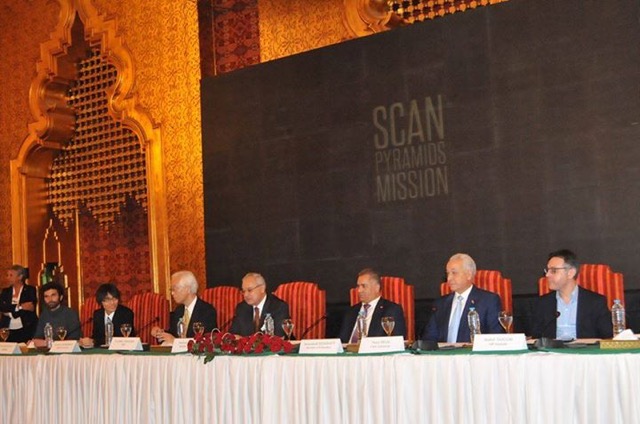
Egypt is planning in-depth surveys and technological scans of several pyramids and ancient burial sites to search for hidden tunnels and undiscovered passages, the Ministry of Antiquities said in a press release issued Sunday.
Inaugurating the international "Scan Pyramids Mission" on Sunday, Antiquities Minister Mamdouh al-Damaty said 2016 would be “a decisive year in the history of Egyptian pyramids, and would serve to uncover more of its mysteries.”
Damaty added that the use of such scanning technologies would not harm the pyramids.
Foreign technicians, Egyptologists and archaeologists are reportedly expected to play a leading role in these high-tech scans.
The mission is due to commence in early November in Giza, the minister said, where the so-called Bent Pyramid in Dahshour is the first up for scanning. Among the earliest of its kind, the pyramid was built during the reign of Pharaoh Snefru over 4,600 years ago.
The next pyramid scheduled to be scanned is the adjacent Red Pyramid, also built under the auspices of Snefru.
Moving on to the Giza plateau, the project will then study the Cheops (also known as the Great Pyramid) and Chephren pyramids, both of which are over 4,500 years old. The Great Pyramid is of particular interest as it is designed with a network of tunnels and shafts that may have been thought of as passageways to celestial bodies and stars.
In 2011, a team of scientists from the University of Leeds sent a small camera-wielding robot to explore these tunnels and shafts within Cheops Pyramid. While it discovered many intricate details, it also encountered several dead-ends and blocked passageways.
Previous attempts at robotic exploration of Cheops were conducted in 1993 and 2002.
According to the Associated Press, Canadian scientist Matthieu Klein of Laval University explained his team would utilize infrared technology to scan several meters beneath the surface of the pyramids without touching the structures.
"There could be interesting things there, even a few meters deep, two or three blocks deep," Klein argued.
On Sunday, Damaty claimed that if the technology used in the "Scan Pyramids Mission" is successful in uncovering the hidden mysteries of these ancient burial monuments, such technology could also be used to scan other ancient tombs.
Damaty pointed to the case of the burial chambers of King Tutankhamun, explaining that infrared and other scanning technologies could be used to shed further light on the claims of UK scientist Nicholas Reeves, who postulated that chambers within the young king’s tomb may actually have been intended as burial chambers for Queen Nefertiti.

أخبار ذات صلة
Looking back to see the present through the Grand Egyptian Museum
The coincidental nature behind the establishment of the Grand Egyptian Museum
Staging a grand opening for the grand museum
In Cairo, sidewalks have been repainted, screens set-up and security measures tightened. People living nearby say fireworks have been test-run in Giza.…
All around the Grand Egyptian Museum
The museum will not be open to visitors until after the three-day celebration
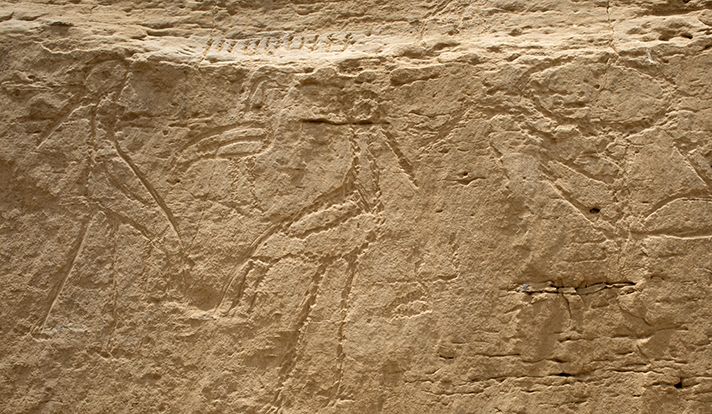
5,200-year-old rock inscriptions discovered in Luxor Governorate
A joint expedition of archaeologists from Yale University and the Royal Museums of Art and History was able to excavate several panels of rock…
Your support is the only way to ensure independent, progressive journalism survives.
You have a right to access accurate information, be stimulated by innovative and nuanced reporting, and be moved by compelling storytelling. Subscribe now to become part of the growing community of members who help us maintain our editorial independence.
Join us