
Egypt announces emergency measures to deal with energy crisis

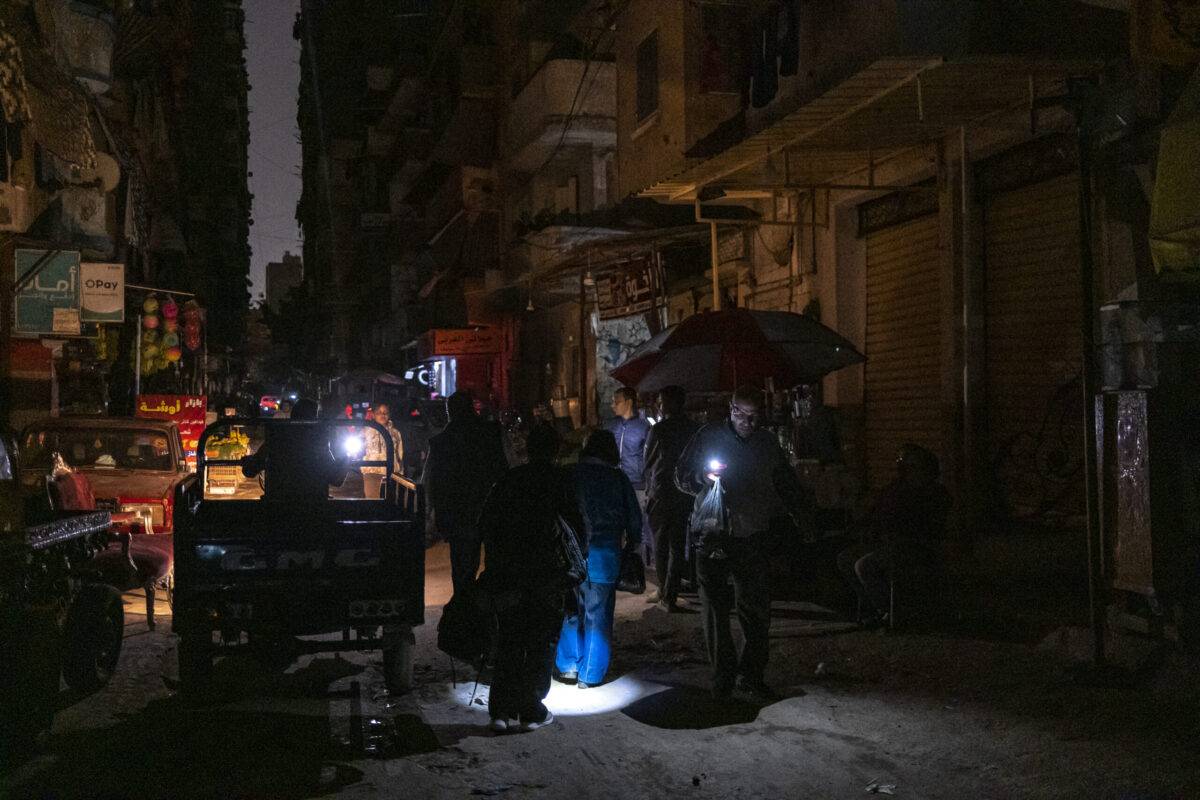
To deal with a shortage of fuel to power the nation, Prime Minister Mostafa Madbuly announced during a televised Thursday evening presser a series of measures set to last until the end of August at least, and which include ongoing cuts and outages as well as a mandatory work-from-home day for civil servants.
While officials have blamed the power outages on the summer surge in demand consuming the natural gas that powers most of the national network, political and energy sector sources who previously spoke to Mada Masr pointed to more chronic issues, including the degradation of some of the network’s power stations, and a steady decline in Egypt’s natural gas production over recent years — issues further compounded by the ongoing economic crisis.
The new measures, which update plans announced earlier in the week, could be extended into September if the heatwave persists. They include:
- Ongoing efforts to reduce the load on the national grid via cuts twice daily
- The cuts will only affect residential areas, while hospitals, services and strategic areas will be exempted, as will tourist and coastal areas given that they contribute to public revenue
- A timetable for how the cuts will affect different neighborhoods nationwide will be published by Monday at the latest
- All civil servants, except those with public-facing roles, will work online from home on Sundays, starting from August 6
- Further measures will be taken to rationalize electricity consumption in all public places managed by the government, including street lighting, lighting service buildings and so forth
- All sports matches will be played before dusk to save on lighting stadiums and indoor pitches as part of plans to rationalize energy consumption at sporting facilities
- An additional US$250–300 million worth of fuel oil (mazut) will be imported until the end of August
- A central crisis committee will be formed and will convene daily to oversee the implementation of the decisions
Madbuly also called on the public to rationalize home consumption, by taking measures such as not turning air conditioning units down below 25C.
The cuts will continue, said the prime minister, as a way of reducing the load on the national grid as long as temperatures are over 35C.
Speaking at the Thursday press conference, with the ministers of electricity and petroleum sitting alongside him, Madbuly stressed that the crisis is a result of the heatwave, denying that Egypt is facing natural gas shortages or problems in the Zohr gas field, which represents around 38 percent of national gas output alone.
Based on consumption rates last year, the state set aside around 129 million cubic meters of natural gas and diesel per national power plant per day, Madbuly said. Those quantities, he continued, were surpassed for only three days during July 2022.
As for natural gas, Egypt produces sufficient natural gas to meet its national demand, Madbuly continued, while it produces some mazut volumes and exports others. The government stopped exporting mazut in April, he said, to facilitate fuelling power plants, while the government always halts natural gas exports over the summer to meet the seasonal surge in domestic consumption.
But on July 17, continued the prime minister, power stations nationwide consumed the maximum possible amount of fuel — both natural gas and mazut — as the load on the national grid increased to 35.5 gigawatts.
Egypt’s national grid has an installed capacity of 59 gigawatts total load.
But given the heatwave continued for over 10 consecutive days, Madbuly said, gas and mazut consumption rose to between 144 million and 146 million cubic meters per day, while on Wednesday, it rose to 152 million cubic meters. The power plants themselves also require more fuel to work at the same rate of efficiency while it’s hot, he continued.
Justifying the government’s course of action thus far, Madbuly said that the original plans for the cuts, which were set to last only until the middle of the week ending on Thursday, were based on the government’s hope that the heatwave would pass quickly, but that after consulting the Egyptian Meteorological Authority and finding that the heatwave is projected to last until August, the government extended the plan for the cuts.
Were the government not to have developed the national grid and undertaken energy projects over recent years, he said, the public would currently be complaining instead that they have only three hours of electricity per day, instead of complaining of cuts lasting around three hours per day.
“The whole affair comes down to the heat, to how hot it is and the unprecedented rise in temperature, the real problem is the extreme rise in temperature,” he affirmed.
Closing the presser, Madbuly encouraged the public to follow what is happening worldwide given the unprecedented global heatwave.
But Madbuly’s heat-centric explanation of the crisis overlooks a bigger energy problem noted to Mada Masr by multiple sources, who said that Egypt’s natural gas resources have been in a steady decline in production in recent years.
The once-plentiful Zohr field, which supplies around 38 percent of national output, saw production drop in April 23 percent below supposed capacity amid operational problems that appeared in recent years due to government decisions to speed up the extraction of gas. Early acceleration of gas extraction has also sped up the depletion of most existing fields, causing a general downturn in Egypt’s natural gas production.

أخبار ذات صلة
Govt temporarily lengthens power cuts nationwide, 3 hours of outages in Cairo
Cabinet announced Sunday evening a temporary one-hour increase to the nationwide power cuts.

Power outages sweep Egypt again amid high demand, decline in natural gas output
“The distribution can be uneven or deliberately avoid certain areas”
Cabinet signs off on deal with company previously convicted of bribing Egyptian officials
In its January 13 meeting, the Cabinet approved a request from the state-owned Egyptian Electricity Holding Company (EEHC) to ink an energy deal…
Govt weighs higher fertilizer export quota to offset rising fuel costs amid Iran war
The government is holding consultations to increase the price of gas it supplies to fertilizer manufacturers — the single largest energy-consuming industry in…
Your support is the only way to ensure independent, progressive journalism survives.
You have a right to access accurate information, be stimulated by innovative and nuanced reporting, and be moved by compelling storytelling. Subscribe now to become part of the growing community of members who help us maintain our editorial independence.
Join us